

Piston Air Compressor Runs but Produces No Air: Causes and Solutions
Reviewed by the PhuAir Technical Department – Updated: September 10, 2026
Quick Answer: When a piston air compressor continues running (the motor is turning) but fails to produce compressed air or the pressure in the tank does not increase, the issue is often related to the system's ability to transmit power, draw in air, compress air, or retain pressure. The key areas to inspect first include the drive belt/pulleys, air filter, intake and exhaust valves (reed valves) in the Airend, piston rings, pilot valve/unloader assembly, check valve, and discharge piping. Rather than dismantling the entire Airend without a clear diagnosis, inspect components in sequence, starting with external drive components and moving toward the internal valve system, using actual operating data instead of guesswork.
Quick Diagnostic Table
Symptoms | Suspected Area | Next Step |
|---|---|---|
The motor runs, but the Airend pulley does not rotate or rotates very slowly | Drive belt, pulleys | Check belt tension, belt condition, and pulley alignment |
The Airend runs, but there is no clear suction at the intake port | Airend intake/exhaust valves | Inspect the reed valves for dirt buildup, cracks, or breakage |
Air continuously escapes around the air filter neck | Pilot valve/unloader assembly | Inspect the valve and unloading mechanism |
Air escapes forcefully from the piping or discharge valve | Discharge line, fittings, drain valve | Inspect and identify the leak location |
Pressure rises very slowly, accompanied by excessive oil vapor from the crankcase | Piston rings/cylinder | Check sealing performance and piston ring condition |
Pressure drops immediately when the machine stops, or air flows backward toward the Airend | Check valve | Inspect the gasket and the valve's opening and closing operation |
Airflow decreases and the intake is restricted | Air filter | Inspect and clean or replace the filter according to its condition |
Key point: If you immediately conclude that the piston or piston rings are damaged, or replace the entire Airend without completing basic inspections, repair costs may increase without necessarily resolving the root cause. All technical diagnoses must be based on actual data and operating conditions at the site.
1. Why You Should Not Immediately Conclude What the Cause Is
An air compressor that runs but fails to build pressure may have an issue with several different components, ranging from external parts (the drive belt and air filter) to internal Airend components (valves, piston rings, the unloader, and the check valve). The same symptom may have entirely different root causes depending on the machine model and operating conditions. Therefore, the problem should be narrowed down using actual data before dismantling components or replacing spare parts.
2. Why Does a Piston Air Compressor Run but Produce No Air?
2.1. The Drive Belt/Pulleys Are Broken, Loose, or Slipping
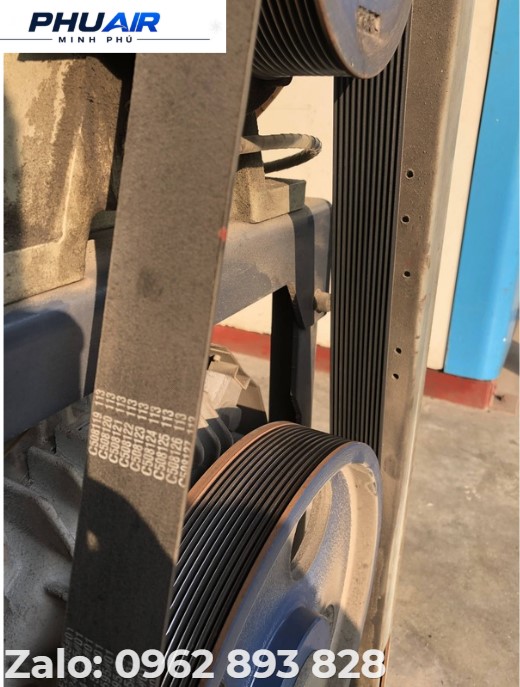
If the motor is still running but the Airend pulley is not rotating or is rotating very slowly, the Airend will be unable to carry out the air intake and compression processes. This is a simple but common cause that should be ruled out first because it is easy to inspect and involves relatively low risk.
How to inspect: Observe the drive system while the motor is running to check whether the drive belt is broken, loose, or slipping out of the pulley grooves. Check the belt tension, belt surface condition, and alignment between the motor pulley and the Airend pulley.
2.2. Clogged Intake Air Filter
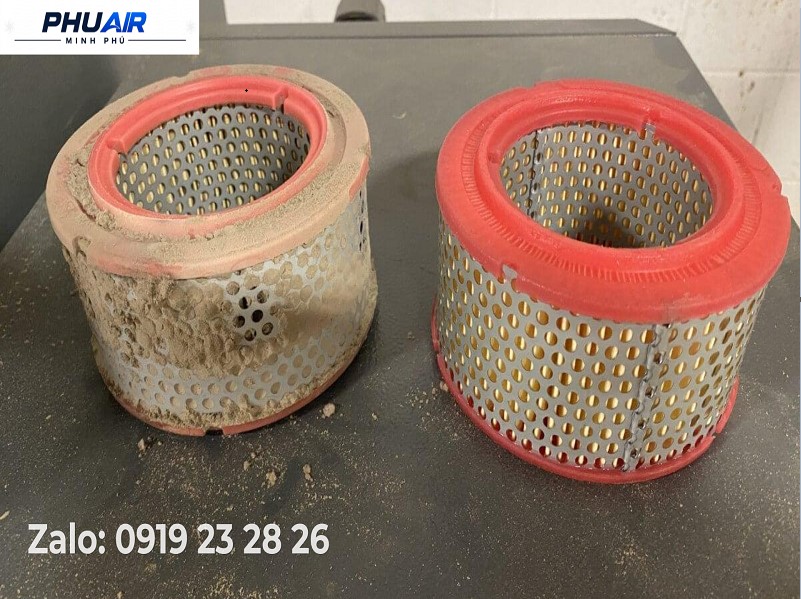
A piston air compressor must draw in ambient air through an air filter before delivering it to the compression chamber. An air filter that accumulates excessive dust over time will restrict intake airflow, reduce the amount of air entering the piston cylinder, and consequently reduce compressed air output.
How to inspect: Check whether the filter has a thick layer of dust, whether the compressor is installed in a dusty environment, and whether the filter has been cleaned or serviced regularly. If the filter is dirty, clean or replace it in accordance with the manufacturer's instructions.
2.3. Damaged or Leaking Airend Intake/Discharge Valves (Reed Valves)
A piston air compressor generates compressed air through the reciprocating movement of the piston inside the cylinder. During the intake stroke, the piston moves downward, increasing the volume of the compression chamber and drawing in air through the intake valve. As the piston moves upward, the intake valve closes, and the air is compressed until the conditions are sufficient for it to pass through the discharge valve into the receiver.
After prolonged operation, the steel reed valves may become bent, broken, covered with carbon deposits, or obstructed by foreign objects, preventing them from sealing properly. As a result, air leaks backward during compression, significantly reducing the actual volume of air delivered to the receiver.
Corrective action: Disconnect the power supply and release all pressure → inspect the intake/discharge valve assembly → examine the reed valves and their contact surfaces. If only deposits are present, clean the components using an appropriate method. If a reed valve is cracked, broken, or otherwise damaged, replace it with the correct configuration for the Airend. Do not remove the cylinder head while the system is still pressurized.
2.4. Worn Piston Rings or Loss of Sealing
Piston rings maintain the seal between the piston and the cylinder wall. When the rings become worn, lose their elasticity, stick in their grooves, or are installed incorrectly, compressed air may leak into the crankcase instead of remaining in the compression chamber. As a result, the Airend continues running, but its ability to build pressure is significantly reduced.
One notable sign is pressure rising very slowly, accompanied by excessive oil mist around the crankcase/Airend area. This warrants further inspection rather than simply cleaning the air filter or adjusting the pressure settings.
How to inspect: Check the condition of the piston rings, piston-to-cylinder sealing, cylinder wall condition, and piston ring clearances against the technical documentation for the specific model. If the machine has recently undergone a major overhaul, also verify the installation.
2.5. Faulty Pilot Valve/Unloader Assembly
The pilot valve (unloading mechanism) is involved in switching the Airend's operating state. If the valve leaks or becomes stuck in the open position, air may be discharged into the atmosphere instead of being stored in the receiver.
Signs to look for: The compressor continues running, an abnormal hissing sound is heard around the air filter inlet, and receiver pressure fails to rise or rises very slowly.
How to inspect: Check the pilot valve, valve opening and closing mechanism, gasket/O-ring condition if fitted, unloader mechanism, and any air leakage while the compressor is operating. If the valve is confirmed to be stuck or leaking, repair, adjust, or replace it as appropriate for the machine's configuration.
2.6. Stuck Check Valve or Damaged Gasket
The check valve is located between the discharge line from the Airend and the air receiver. If the valve becomes stuck open or its gasket is damaged, air may flow back from the receiver into the Airend when the compressor stops. This can prevent the system from retaining pressure or cause the compressor to restart repeatedly to compensate for pressure loss.
How to inspect: Observe whether pressure drops rapidly immediately after the compressor stops, and check the gasket and the check valve's opening and closing mechanism.
2.7. Severe Leakage from Piping or Drain Valves
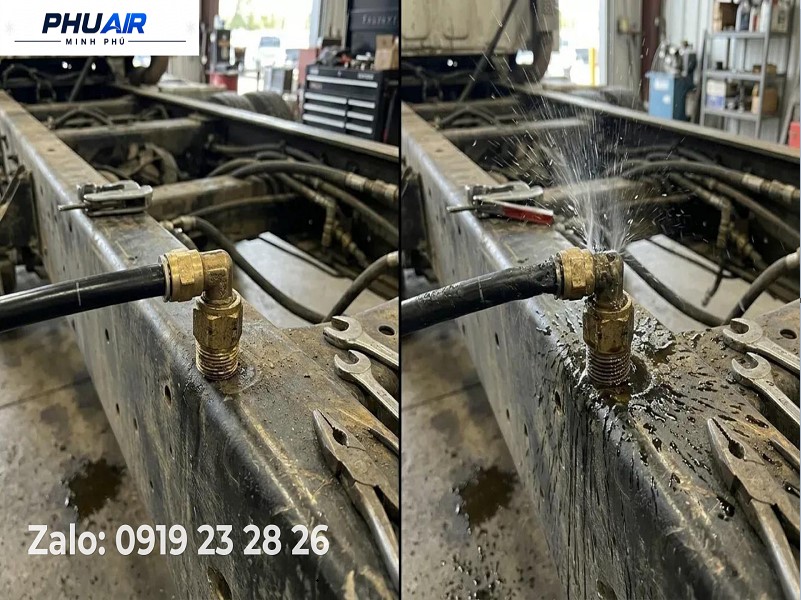
Air leaks are another factor to consider when a compressor appears to be producing no air. The compressor may actually be generating air, but the air is not being retained in the system. Areas to inspect include the discharge piping, fittings, automatic/manual drain valves, and loose or cracked connections.
Inspection method: Check suspected leak points using an appropriate leak detection method (for example, leak detection solution applied to joints), provided conditions are safe. Do not inspect only the Airend and immediately conclude that it is faulty.
3. Quick Comparison Table: Is the Compressor Failing to Draw in Air, or Is the Air Being Lost?
Symptom | Potential Cause |
|---|---|
The Airend pulley does not rotate or rotates slowly. | Drive belt, pulley |
There is almost no suction force at the intake port. | Intake/discharge valves, intake air path |
Abnormal behavior at the intake port, with air blowing back out. | Pilot valve/unloader |
The Airend runs, but pressure rises very slowly. | Valves, piston rings, filter, or air leaks |
Pressure drops rapidly as soon as the compressor stops. | Check valve |
A clear hissing sound is heard along the piping. | Air leaks in the air line |
Excessive oil mist is present along with weak pressure. | Piston rings/piston sealing |
The air filter is severely dirty. | Restricted air intake |
These signs can help narrow down the possible causes, but they do not replace actual measurements and verification.
4. Recommended Inspection Procedure for a Piston Air Compressor That Runs but Produces No Air
Do not disassemble the compressor immediately. Follow a systematic procedure, starting with external components and moving inward:
Isolate the power supply and release pressure: Stop the machine, disconnect the power supply, implement LOTO where applicable, and release all residual pressure to 0 bar before opening or removing any component.
Inspect the drive system (belt and pulleys): Check belt tension, belt condition, and pulley alignment. An excessively loose belt can reduce power transmission from the motor to the Airend.
Inspect the air filter: Remove and inspect the filter assembly in accordance with the machine's instructions, and assess the degree of contamination.
Inspect the pilot valve and unloader: Pay particular attention if air is escaping around the air filter.
Inspect the check valve: This is especially important if pressure drops immediately when the compressor stops or the system cannot retain pressure.
Inspect the intake/discharge valves (reed valves): If the external checks do not reveal the cause, remove the cylinder head only after the power supply has been disconnected and all pressure has been fully released.
Reach a conclusion only after sufficient data has been collected: If the cause remains unidentified, have a qualified technician inspect the piston rings and cylinder.
5. Mistakes to Avoid When Repairing a Piston Air Compressor
Do not remove the cylinder head while the system is pressurized — this is a serious safety hazard. Residual pressure in the cylinder or piping can cause components to be ejected when bolts are removed.
Do not arbitrarily increase the pressure to “force the compressor to build pressure” — this does not address the root cause and may increase the load on the equipment.
Do not replace piston rings, valves, or drive belts before identifying the cause — the same symptom can originate from different components. Inspect systematically instead of replacing parts based on guesswork.
Do not disassemble the Airend without the necessary expertise — basic checks of the air filter and drive belt may be possible, but disassembling the valve assembly or piston assembly requires specialized tools and careful attention to sealing.
6. When Should You Call a Technician for an Inspection?
Stop attempting to troubleshoot the machine yourself and request a technical inspection if the compressor continues running but pressure does not increase, there is an unusually loud air leak, excessive oil mist is present, the cylinder head or Airend needs to be removed, the intake/discharge valves may be cracked or broken, the piston rings or cylinder may be worn, or the machine does not operate as expected after a recent overhaul.
When contacting a technician, prepare the following information: a photo of the machine nameplate/model, machine power rating, current pressure shown on the gauge, a video of the compressor running, photos or videos of the intake port and air filter, a description of where the hissing sound originates, and the most recent repair and maintenance history.
7. Frequently Asked Questions (FAQ)
1. Why does a piston air compressor run but produce no air?
Potential causes include the drive belt/pulley, air filter, intake/discharge valves, piston rings, pilot valve/unloader, check valve, and air leaks. The cause cannot be determined simply from the fact that the motor is still running.
2. Does a piston air compressor that runs without producing air necessarily have a damaged cylinder or worn piston rings?
Worn piston rings or a scored cylinder typically result in the compressor still producing some air, but pressure rises very slowly and remains low. If the compressor produces no air at all (pressure remains at 0), the primary causes are a broken or loose drive belt, faulty reed valves, or a stuck check valve.
3. Does a piston air compressor that fails to build pressure definitely have worn piston rings?
No. Piston rings are only one of several possibilities. Check the drive belt, air filter, intake/discharge valves, pilot valve, check valve, and air lines before reaching a conclusion.
4. Why does air escape through the air filter while the compressor is running?
If air continuously escapes around the air filter inlet, inspect the pilot valve/unloader assembly and related components.
5. Can a dirty air filter prevent the compressor from building pressure?
Yes. A clogged air filter restricts the amount of air entering the compression chamber, thereby reducing the compressor's airflow capacity.
6. What should be checked if pressure drops immediately after the compressor stops?
This is a typical sign of a check valve stuck open or a damaged gasket, allowing air from the receiver to flow back into the Airend. The check valve should be inspected first.
7. Is it advisable to remove the cylinder head or Airend to inspect the valves yourself?
Not unless you have the necessary expertise and have followed the correct energy isolation, LOTO, and pressure release procedures. All residual pressure must be reduced to 0 before disassembly.
8. Can the pressure setpoint be increased to make the compressor produce more air?
No. Arbitrarily increasing the pressure to compensate for a mechanical fault or insufficient airflow does not address the root cause and may increase the load on the equipment.
9. What should be checked if the compressor still produces no air after the Airend has been repaired?
Recheck the installation, intake/discharge valves, piston rings, drive system, air filter, and unloading mechanism in accordance with the documentation for the specific machine model.
10. How can you help a technician diagnose the problem more quickly?
Provide the brand and machine model, power rating, a photo of the nameplate, current pressure, symptoms at the intake port, any air leakage sounds, the condition of the air filter and drive belt, and the repair/maintenance history.
Conclusion
A piston air compressor that runs but produces no air should not immediately be diagnosed as having a faulty piston or worn piston rings. The appropriate approach is to inspect components in sequence, from the outside inward: drive belt/pulley → air filter → pilot valve/unloader → check valve → intake/discharge valves → piston rings/cylinder. Cross-check the findings against actual operating data and the technical documentation for the specific model before deciding which parts to replace.
PhuAir Can Help Inspect Your Piston Air Compressor
If your piston air compressor is still running but produces no air or fails to build pressure, do not rush to replace the valves or piston rings. Send PhuAir the following information:
📷 A photo of the machine nameplate/model
⚙️ Machine power rating
📊 Current pressure shown on the gauge
🎥 A video of the compressor running
🎥 Photos or videos of the intake port and air filter, if available
🔊 A description of where the hissing sound originates
🛠️ The most recent repair and overhaul history
Using this information, the PhuAir technical team can narrow down the possible causes before deciding whether an inspection or parts replacement is necessary.