

Piston Air Compressor Head Overheating: Causes and Solutions
A piston air compressor with an overheating compressor head is a common concern for operators, especially when the compressor head heats up quickly, the machine runs for a long time but builds pressure slowly, or unusual noises occur.
A piston compressor head naturally generates heat during the compression process, so being warm or hot during operation does not necessarily indicate a fault. The key concern is whether the compressor head is hotter than normal operating conditions would suggest and whether additional symptoms appear, such as poor pressure buildup, oil consumption, vibration, knocking noises, or shutdown due to thermal protection.
To identify the correct cause, inspect the following in sequence: heat dissipation, lubricating oil, intake and discharge valves, piston, piston rings and cylinder, and operating conditions.
1. Is an Overheating Piston Air Compressor Head a Sign of a Fault?
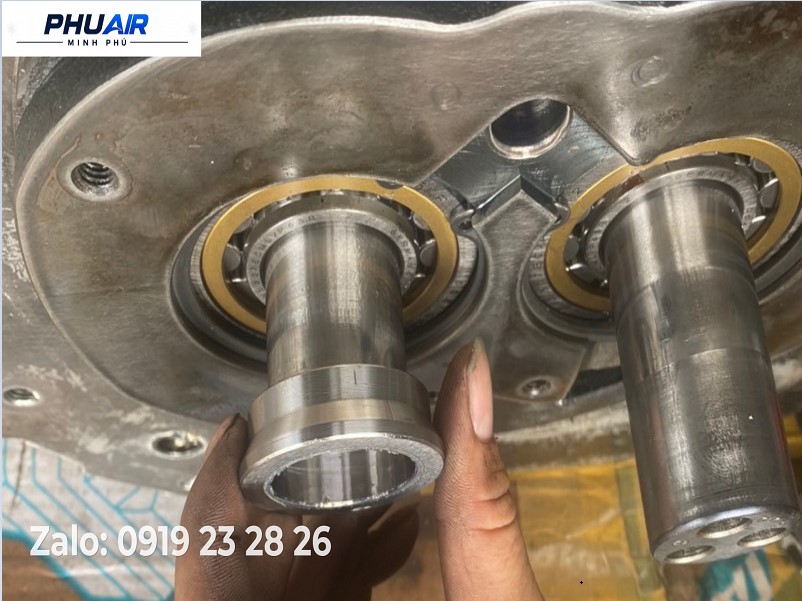
Not every case of a hot compressor head indicates a machine fault.
During piston air compression, heat is generated in the compression chamber and transferred to the compressor head body. Therefore, the compressor head may normally be hotter than the surrounding environment.
However, an inspection is necessary if the compressor head exhibits any of the following symptoms:
Heats up abnormally quickly.
Temperature continues to rise while the machine is operating.
The machine runs longer than usual.
Pressure builds up slowly.
Pressure no longer reaches its previous level.
Unusual knocking or other abnormal noises occur.
The machine vibrates excessively.
The oil shows abnormal signs.
The thermal protection device trips or the machine shuts down automatically.
Do not rely solely on touching the compressor head by hand to assess its temperature. For a technical diagnosis, use an appropriate measurement method and compare the results with the specifications for the exact compressor model.
2. Common Signs of Abnormal Overheating in a Piston Compressor Head
Symptom | What to Check | Recommended Action |
|---|---|---|
Compressor head heats up quickly | Cooling fins and cooling conditions | Clean the cooling fins and check heat dissipation |
Compressor head overheats + slow pressure buildup | Valves, piston rings, piston, and cylinder | Inspect the compression system |
Compressor head overheats + insufficient oil | Oil level and oil leaks | Identify and address the cause |
Compressor head overheats + knocking noise | Piston, piston rings, bearings, and drive mechanism | Perform a mechanical inspection |
Compressor head overheats + excessive dust | Cooling fins | Clean the compressor head |
Compressor head overheats + poor compressor room ventilation | Ventilation and ambient temperature | Improve ventilation conditions |
Compressor runs continuously and the compressor head overheats | Load and compressed air demand | Check the operating cycle |
3. Causes of Compressor Head Overheating in Piston Air Compressors
1. Dirty Compressor Head Cooling Fins
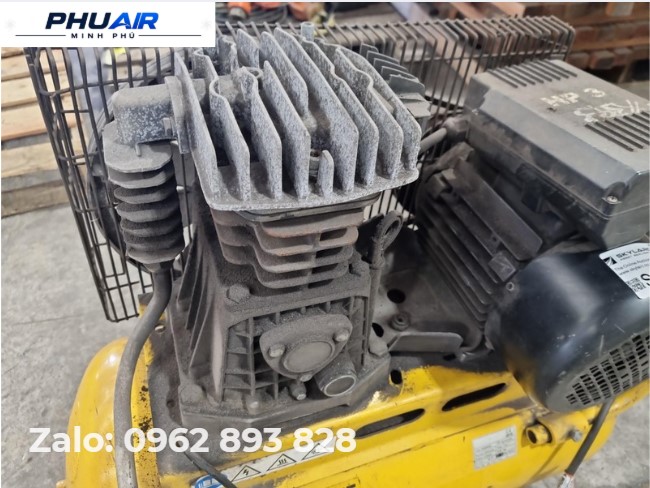
This is one of the first causes that should be checked.
A piston compressor head typically has cooling fins that transfer heat from the cylinder body and compressor head to the surrounding environment.
After prolonged operation, dust, oil, and contaminants can accumulate on the cooling fin surfaces.
When dirt builds up excessively:
Cooling surfaces become covered - heat transfer efficiency decreases - heat accumulates - the compressor head becomes hotter.
This condition is more common in machines operating in environments with:
High dust levels.
Oil or oil mist.
High ambient temperatures.
Enclosed installation spaces.
Corrective Action
Stop the machine, isolate the energy sources, and clean the cooling fins using a method appropriate for the equipment.
Avoid cleaning methods that could bend or damage the cooling fins.
2. Poor Ventilation in the Compressor Room
The air surrounding the machine also directly affects its heat dissipation capability.
If the machine is installed in an enclosed space and hot air cannot escape, heat from the compressor head will have difficulty dissipating into the surrounding environment.
The process can be understood as follows:
The compressor head generates heat - heat transfers to the air - hot air cannot escape - heat accumulates around the machine - cooling efficiency decreases.
What Needs to Be Checked?
Is the machine installed too close to a wall or other obstacles?
Can hot air escape from the machine area?
Is the compressor room excessively hot?
Are there other heat sources near the machine?
Are the ventilation openings blocked?
Corrective Action
Improve airflow around the machine and prevent hot air from becoming trapped in the room.
3. Insufficient or Unsuitable Lubricating Oil
Lubricating oil reduces friction between moving components.
When the oil level is low or the oil is unsuitable, lubrication may be inadequate, resulting in increased friction and heat generation.
What Needs to Be Checked?
Oil level.
Oil type.
Oil condition.
Signs of leakage.
Oil change and maintenance history.
Do not arbitrarily mix oils or switch to a different oil type simply because the machine is overheating.
The appropriate oil must be selected according to the manufacturer's requirements and the machine's design.
4. Faulty Intake or Discharge Valves
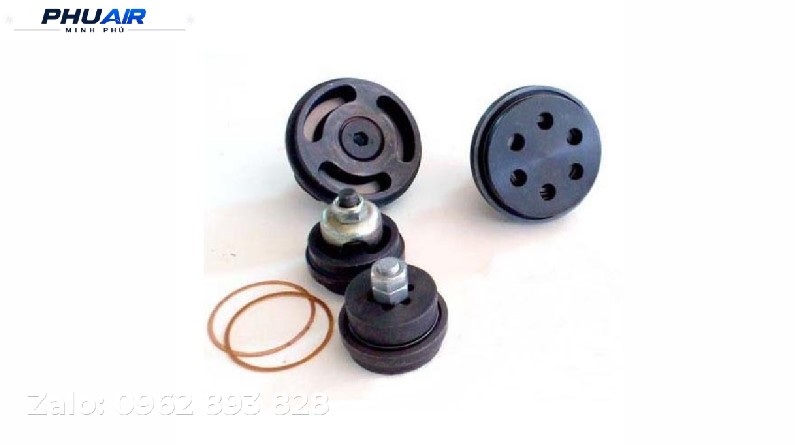
This is a particularly important cause to consider if the machine exhibits the following symptoms:
Overheating compressor head + slow pressure buildup.
In a piston air compressor, the intake and discharge valves must open and close correctly according to the piston's operating cycle.
If the valves are:
Covered with carbon deposits or residue.
Stuck.
Bent.
Cracked.
Broken.
Not sealing properly.
the air intake and discharge processes will be affected.
As a result, the machine may experience both reduced compression efficiency and abnormal heat generation.
Corrective Action
Inspect the valve assembly according to the design of the specific compressor model.
If any valve plates are found to be cracked, broken, or deformed, assess their actual condition to determine whether cleaning, repair, or replacement is required.
Do not replace a valve with one that does not match the specified configuration.
5. Worn or Stuck Piston Rings
Piston rings help seal the gap between the piston and the cylinder wall.
When piston rings become worn or stuck, more compressed air may leak past the piston.
Possible consequences include:
Reduced sealing - reduced compression efficiency - longer operating periods - increased heat generation.
Associated symptoms may include:
Slow pressure buildup.
Extended operating time.
Reduced airflow.
Oil consumption.
Abnormally high compressor head temperature.
If worn or stuck piston rings are suspected, inspect the piston and cylinder walls as well rather than replacing the rings alone.
6. Worn Piston or Cylinder
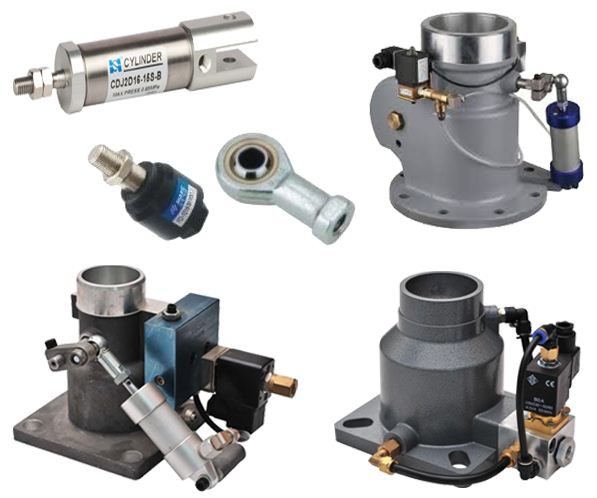
When the piston or cylinder wall becomes worn, the compression chamber may no longer seal properly.
This condition should not be diagnosed based solely on one symptom: an overheating compressor head.
Multiple factors should be assessed together:
Pressure-building performance.
Machine operating duration.
Airflow.
Oil condition.
Noise.
Vibration.
Piston ring condition.
If the machine has been in service for many years and exhibits overheating + weak airflow + slow pressure buildup, the piston, piston rings, and cylinder assembly should be included in the inspection.
7. High-Load Operation or Excessively Long Operating Periods
A piston air compressor operating at a high duty cycle generates more heat than one with adequate rest periods.
If compressed air demand increases, the machine may experience:
Longer operating periods - more compression cycles - greater heat accumulation.
Therefore, operating conditions must also be assessed rather than inspecting the compressor head alone.
What Needs to Be Checked?
How long does the machine run during each cycle?
Does it operate continuously?
What is the current operating pressure?
Has compressed air demand increased compared with previous conditions?
Does the machine have sufficient capacity to meet the required demand?
If the machine runs continuously because compressed air demand is too high, repairing the compressor head alone may not resolve the root cause.
8. Problems with the Drive Belt or Drive Mechanism
For piston air compressors that use belt-driven transmission, inspect the following components:
Drive belt.
Pulley.
Alignment.
Belt tension.
Bearings.
Rotating components.
An excessively tight drive belt or abnormal friction in the rotating mechanism can place additional load on the motor and cause overheating.
If the compressor head overheats alongside vibration or unusual noise, these mechanical components should also be inspected.
3. Inspection Procedure for a Piston Air Compressor with an Overheating Compressor Head
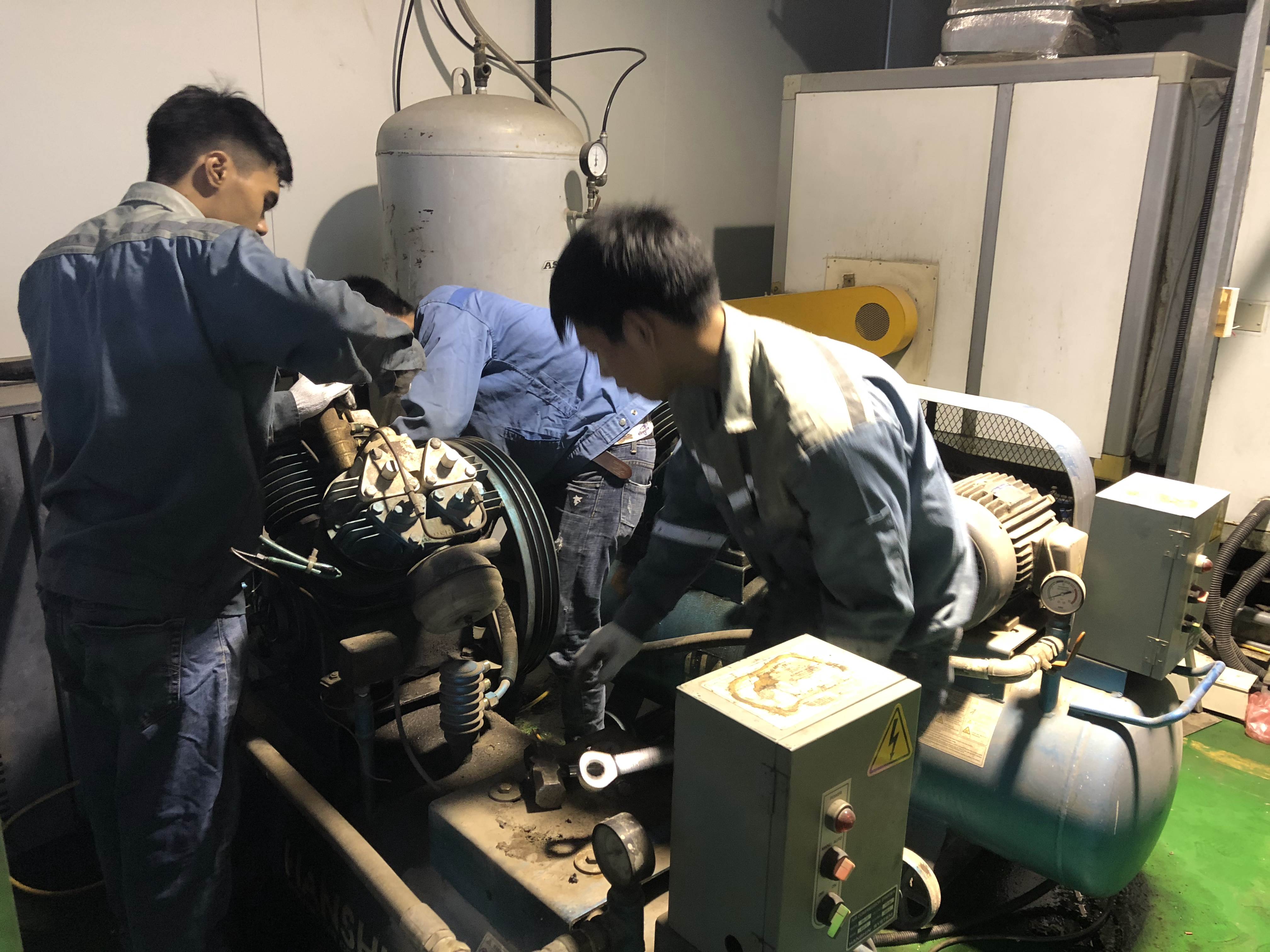
Step 1: Stop the Machine and Ensure Safety
Before inspection:
Stop the machine.
Disconnect and isolate the power supply.
Release all remaining pressure in the system and air receiver according to the safety procedure.
Wait for the compressor head to cool down.
Only proceed with disassembly or assembly after confirming that conditions are safe.
Do not disassemble the compressor head or any pressurized components while the system is still under pressure.
Step 2: Inspect the Exterior of the Compressor Head
Inspect the following:
Cooling fins.
Dust and dirt buildup.
Oil deposits.
Signs of leakage.
Drive belt.
Pulley.
Piping.
The area around the machine.
This step can help identify straightforward causes without having to disassemble the compressor head.
Step 3: Check the Oil
Check the following:
Oil level.
Oil condition.
Type of oil being used.
Signs of leakage.
If the oil level is low, identify the cause before simply adding more oil.
Step 4: Check Operating Conditions
Record the following:
Operating pressure.
Operating duration.
Operating frequency.
Compressed air demand.
Ambient temperature.
Ventilation conditions.
This information is essential for distinguishing between overheating caused by operating conditions and overheating caused by a technical fault.
Step 5: Inspect the Intake and Discharge Valves
If the machine exhibits the following symptoms:
Overheating + slow pressure buildup + reduced airflow, inspect the valve assembly.
Check the condition of:
Deposits and carbon buildup.
Valve plates.
Sealing surfaces.
Opening and closing operation.
Cracks, breakage, or deformation.
Step 6: Inspect the Piston, Piston Rings, and Cylinder
If external causes do not explain the overheating, a more in-depth inspection is required.
This is particularly important when the following symptoms occur together:
Overheating - poor pressure buildup - prolonged operation - oil consumption or unusual noises.
At this stage, the condition of the piston, piston rings, and cylinder must be assessed.
4. How Should an Overheating Piston Compressor Head Be Troubleshot?
The following inspection sequence is recommended:
1. Safety and pressure release
2. Inspect the cooling fins
3. Check ventilation
4. Check the oil
5. Check the load and operating duration
6. Inspect the intake and discharge valves
7. Inspect the piston, piston rings, and cylinder
8. Inspect the drive mechanism
9. Conduct a test run and monitor the machine
This sequence helps prevent the mistake of replacing components immediately just because the machine is overheating.
When Should the Machine Be Stopped for Immediate Inspection?
Do not allow the machine to continue operating for an extended period if the compressor head is abnormally hot and one or more of the following symptoms occur:
The machine builds pressure very slowly.
The machine cannot reach its previous operating pressure.
Metallic knocking noises are present.
Severe vibration occurs.
A burning smell is detected.
The oil shows abnormal signs.
The machine frequently shuts down due to protective devices being activated.
The temperature continues to rise during operation.
If cleaning the exterior does not resolve the overheating, proceed to inspect the oil, valves, and piston assembly rather than repeatedly restarting the machine for further testing.
5. Common Mistakes When Troubleshooting an Overheating Piston Compressor Head
Mistake 1: Assuming That a Hot Compressor Head Is Normal
The compressor head can become hot during operation, but abnormally high temperatures accompanied by changes in performance require investigation.
Mistake 2: Cleaning Only the Compressor Head
Cleaning the cooling fins will solve the problem only if inadequate heat dissipation is the actual cause.
Mistake 3: Replacing the Piston Rings Immediately
Piston rings are only one possible cause. The valves, piston, and cylinder must also be inspected.
Mistake 4: Repeatedly Test-Running an Overheated Machine
If the machine is already showing abnormal symptoms, continued operation may cause the damage to become more severe.
Mistake 5: Ignoring Compressed Air Demand
If the machine must run for too long because compressed air demand has increased or the system has air leaks, repairing the compressor head may not resolve the underlying reason for excessive operation.
6. FAQ - Frequently Asked Questions
Is It Normal for a Piston Air Compressor Head to Become Hot?
A piston compressor head can become hot during air compression. However, if the temperature rises abnormally or is accompanied by slow pressure buildup, unusual noises, vibration, oil consumption, or shutdown due to protective devices, the machine should be inspected.
Why Does a Piston Air Compressor Overheat and Build Pressure Slowly?
Possible causes include intake or discharge valve problems, worn piston rings, piston or cylinder issues, lubricating oil problems, inadequate heat dissipation, or operating conditions. Diagnosis should be based on multiple symptoms rather than temperature alone.
Can Dirty Cooling Fins Cause a Piston Compressor Head to Overheat?
Yes. Dust and other contaminants accumulating on the cooling fins can reduce heat transfer, making it more difficult for heat to dissipate into the surrounding environment.
Can Low Oil Cause a Piston Air Compressor to Overheat?
Insufficient oil is one possible cause, but it is not the only one. Valve problems, piston rings, cylinder condition, cooling performance, and operating conditions may also contribute.
Should You Continue Operating a Machine When the Compressor Head Is Extremely Hot?
If the temperature rises abnormally or the machine exhibits unusual noises, vibration, a burning smell, poor pressure buildup, or activation of thermal protection, stop the machine and identify the cause before resuming operation.
8. Conclusion
An overheating piston compressor head must be diagnosed according to the underlying cause. Do not rely solely on how hot the surface feels or replace components based on guesswork.
The main causes to investigate include:
Dirty cooling fins.
Poor ventilation.
Insufficient or unsuitable lubricating oil.
Intake or discharge valve problems.
Worn or stuck piston rings.
Worn piston or cylinder.
High-load operation or excessively long operating periods.
Problems with the drive belt or drive mechanism.
If the machine exhibits compressor head overheating + slow pressure buildup, do not focus exclusively on the cooling system. Include the intake valves, discharge valves, piston rings, piston, and cylinder in the inspection procedure.
If you need diagnostic support from PhuAir, provide the machine model, motor power, operating pressure, operating time before overheating, pressure-building performance, oil level, and photos of the compressor head. This information helps technicians narrow down the possible causes before deciding whether repairs or spare part replacements are necessary.