

Screw Air Compressor Repeatedly Switching Between Load and Unload: Causes & Solutions
Article reviewed by the PhuAir Technical Department - Updated: 08/09/2026
1. What Does It Mean When an Air Compressor Repeatedly Switches Between Load and Unload?
In precision machining workshops, woodworking facilities, plastic injection molding plants, and many other production lines, screw air compressors automatically switch between two states, LOAD and UNLOAD, to meet compressed air demand.
Normally, when system pressure drops to the Load threshold, the compressor draws in air and increases its air supply. When pressure reaches the Unload threshold, the compressor switches to the unloaded state according to the system's control logic.
However, if the compressor switches between Load and Unload at very short intervals and repeats this cycle continuously, while compressed air demand remains relatively stable, this may indicate a condition that requires inspection.
This phenomenon is commonly referred to as rapid cycling or short cycling.
One important point must be established from the outset:
A compressor that repeatedly switches between Load and Unload is not necessarily faulty.
If compressed air demand is low, the compressor may quickly reach the Unload pressure threshold and switch to the unloaded state. This may be normal operating behavior.
Conversely, if the Load/Unload cycle is abnormal, pressure fluctuates significantly, or the compressor repeatedly changes state despite a stable load, both the air compressor and the compressed air system should be inspected.
2. Quick Answer: Why Does an Air Compressor Repeatedly Switch Between Load and Unload?
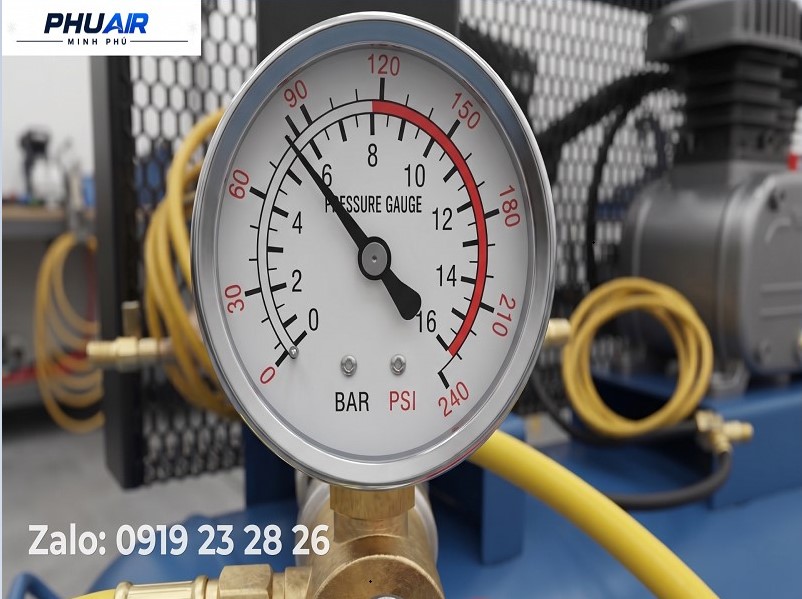
Under normal operating conditions, a screw air compressor may operate according to the following cycle:
Pressure drops → LOAD → pressure rises → UNLOAD → pressure drops → LOAD…
Therefore, switching between Load and Unload is not, by itself, a fault.
The condition that warrants inspection is when the cycle occurs very rapidly compared with the machine's and system's normal operating conditions, especially when air demand does not change significantly.
Common causes include:
- The Load/Unload pressure band is set too narrow.
- The compressor capacity is significantly greater than the air demand.
- The air receiver capacity is unsuitable for the load characteristics.
- The discharge piping is undersized, or the piping layout or check valve location is unsuitable.
- System air demand fluctuates significantly.
- The pressure sensor provides incorrect readings or an intermittent signal.
- The Inlet Valve or modulating valve operates unstably.
- The Load/Unload solenoid valve has a problem.
- The control air line is leaking, or the multi-compressor sequencing system is not optimized.
- Air leakage or abnormal pressure drop in the system causes rapid changes in the control state.
Note: Do not replace valves, sensors, or other components solely because the compressor repeatedly switches between Load and Unload. Identify the cause before replacing any parts.
Work involving the electrical cabinet, control valves, or disassembly of components must be performed by qualified personnel in accordance with the manufacturer's instructions and appropriate energy isolation procedures.
3. Does Continuous Load/Unload Cycling Definitely Indicate a Fault?
Before concluding that the compressor has a problem, one question must be answered:
What is the system's air demand at that time?
Cases That May Be Normal
If only a few production lines are operating; multiple air-consuming devices have just stopped; the plant is outside peak operating hours; or air demand is significantly lower than the compressor's supply capacity,
the compressor may quickly reach the Unload pressure threshold.
In this case, frequent Load/Unload switching does not necessarily indicate a fault.
Cases That Require Inspection
Pay closer attention if air demand is relatively stable; the compressor continues switching between Load and Unload; system pressure fluctuates abnormally; the Inlet Valve opens and closes unstably; the pressure displayed by the sensor differs significantly from the actual pressure; or the compressor generates an Alarm/Fault or abnormal noise.
Therefore:
Do not conclude that the compressor is faulty based solely on the number of Load/Unload cycles.
Evaluate load demand - pressure - flow rate - system configuration - control logic together.
4. Quick On-Site Troubleshooting Table
Symptom | Suspected Cause | Inspection Approach |
|---|---|---|
The compressor loads, quickly unloads, and then loads again | Load/Unload pressure band too narrow; receiver capacity unsuitable; low load demand | Check settings against the manufacturer's recommendations and assess actual air demand |
The compressor quickly reaches Unload pressure even though equipment is still operating | Compressor capacity/flow rate exceeds actual demand | Evaluate FAD and system load demand |
The pressure value on the controller fluctuates rapidly, but pressure at the inspection point changes slowly | Pressure sensor or pressure tapping location problem; possible pressure drop in the air line/filter | Compare pressure readings at different points and check differential pressure according to the system configuration |
The Inlet Valve does not operate decisively when switching states | Problem with the modulating valve, Inlet Valve, or related control circuit | Inspect according to the diagram for the specific compressor model |
The compressor repeatedly switches between Load and Unload, accompanied by a hissing sound from the control air line | Control air leakage or a control valve that does not seal properly | Inspect the control air line and sealing points |
Pressure drops rapidly even though air consumption has not increased correspondingly | Air leakage or air loss in the system | Check the entire system for leaks |
Multiple compressors operating in parallel repeatedly change states together | Multi-compressor sequencing logic is not optimized | Inspect the Master Controller or sequencing system |
5. Explanation of the Main Causes
5.1. Load/Unload Pressure Band Is Too Narrow
Screw air compressors typically use pressure thresholds to determine when to switch to Load or Unload.
If the pressure band is set too narrow for the system's characteristics, even a small pressure change may cause frequent state switching.
However, do not arbitrarily set a fixed pressure value for every compressor.
The appropriate thresholds depend on the compressor model, power rating, operating pressure, flow rate, control system, and production line requirements.
Therefore, compare the settings with the manufacturer's specifications and the actual system operating conditions.
5.2. Compressor Capacity Exceeds Air Demand
This is an easily overlooked cause.
For example, if a plant consumes only a small amount of air but uses a compressor with a high power rating and flow capacity, the compressor may quickly reach the Unload threshold.
When some air is consumed, pressure drops back to the Load threshold, and the compressor resumes supplying air.
In this case, the compressor is not necessarily faulty.
Potential solutions include reassessing air demand, optimizing the pressure band, selecting an appropriately sized receiver, using a compressor with a more suitable capacity, or coordinating multiple compressors according to actual demand.
5.3. Air Receiver Capacity Is Unsuitable
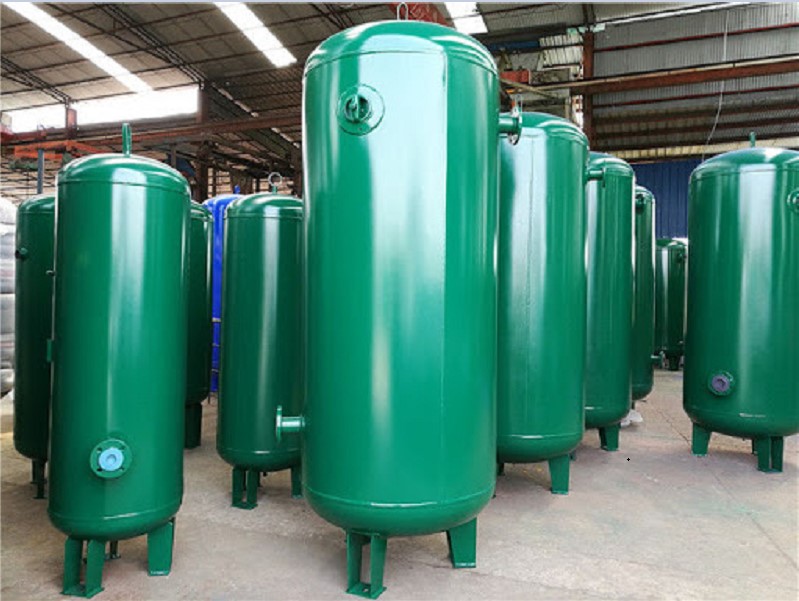
The Receiver Tank acts as a buffer that helps reduce pressure fluctuations and accommodate short-term variations in load demand.
If the receiver capacity is unsuitable for the air consumption characteristics, system pressure may change more rapidly, causing the compressor to switch operating states more frequently.
However, a fixed receiver capacity ratio should not be applied to every system.
Receiver selection should take into account the compressor's FAD, allowable pressure range, load characteristics, variations in air demand, piping configuration, and compressor control mode.
If receiver capacity needs to be selected or increased, it should be calculated based on actual operating conditions rather than compressor power rating in kW alone.
5.4. Pressure Sensor Provides Incorrect Readings or an Intermittent Signal
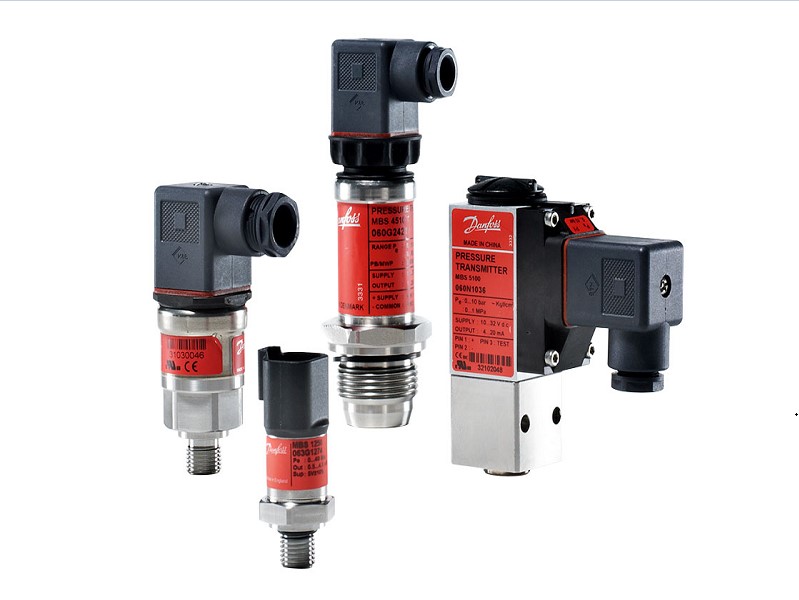
If the pressure sensor sends an unstable signal, the controller may register a pressure value that differs from the actual pressure.
As a result, the compressor may switch between Load and Unload at the wrong time.
Watch for the following signs:
The pressure value on the display fluctuates abnormally.
The displayed pressure does not match the mechanical pressure gauge or a reference measurement point.
The compressor changes operating states even though air consumption conditions remain almost unchanged.
The sensor signal is intermittent.
Inspect the following sequence:
Sensor → signal wiring → connectors → pressure sensing line → controller
Refer to the wiring diagram for the specific compressor model.
5.5. Unstable Operation of the Inlet Valve or Modulating Valve
The Inlet Valve and modulating valve help regulate the amount of air entering the Airend.
If a valve is stuck, contaminated, worn, or its control mechanism does not operate correctly, the Load/Unload transition may become unstable.
Do not conclude that a valve has failed based solely on its opening and closing behavior.
Inspect the control signal, associated solenoid valve, control air line, valve mechanism, and sealing condition.
5.6. Load/Unload Solenoid Valve Problems
Depending on the configuration of each model, the solenoid valve may be involved in controlling the Load/Unload state.
Potential problems include an unstable solenoid coil, a stuck valve, air leakage, an incorrect control signal, or a blocked or leaking control air line.
Therefore, do not assume that "continuous Load/Unload cycling = faulty solenoid coil."
Inspect the entire control sequence rather than replacing the coil immediately.
5.7. Control Air Leakage or Compressed Air Leakage
Air leakage can change the system's pressure conditions and cause the compressor to adjust its operating state more frequently.
For the control air line, leakage can affect the operation of control valves.
For the compressed air network, significant leakage results in the loss of air produced by the compressor.
If the compressor runs frequently but actual air consumption does not correspond to its operating pattern, inspect the entire system for leaks.
5.8. Fluctuating Load Demand or Poor Multi-Compressor Coordination
Not every case of continuous Load/Unload cycling originates from a compressor component.
An air-consuming device that switches on and off cyclically may cause system pressure to fluctuate.
In systems with multiple compressors operating in parallel, an unsuitable central controller or load-sharing logic may also cause the compressors to change operating states repeatedly.
In such cases, inspect the entire system rather than focusing on a single compressor.
6. On-Site Inspection Procedure
Step 1 - Record Operating Parameters
Before intervening, record the Load pressure, Unload pressure, actual pressure at a suitable measurement point, time between Load/Unload transitions, machine status, any Alarm/Fault, and the number of air-consuming devices in operation.
The objective is to determine whether the condition is genuinely abnormal or simply reflects low air demand.
Step 2 - Assess Air Demand
Check how many production lines are operating, which equipment is consuming air, whether any high-consumption equipment has just switched on or off, and whether air demand fluctuates cyclically.
If the load is significantly lower than the compressor's supply capacity, assess capacity-to-load matching before concluding that the compressor is faulty.
Step 3 - Inspect the Receiver and Piping
Inspect the receiver capacity, operating pressure, installation location, piping layout, check valves, and potential sources of pressure drop.
Compare these conditions with the manufacturer's requirements and the actual load characteristics.
Do not modify the piping layout or remove valves while the system remains pressurized.
Step 4 - Check the Sensor and Control Signal
Compare:
Actual pressure ↔ sensor reading ↔ value displayed on the controller
If an abnormal discrepancy is found, a technician should inspect the following sequence:
Sensor → signal wiring → connectors → pressure sensing line → controller
Electrical measurements or connector disconnection should only be performed by qualified personnel after applying the appropriate safety procedures.
Step 5 - Inspect the Valves and Control Air System
For qualified technicians only.
After isolating energy sources according to the LOTO procedure and confirming that the system is safe, inspect the following components according to the specific model configuration: Inlet Valve, modulating valve, Load/Unload solenoid valve, control air line, sealing points, and actuator.
Do not bypass the solenoid valve, sensor, or protective mechanisms merely to force the compressor to continue operating.
Step 6 - Check the Entire System for Leaks
Use a leak detector or an appropriate method to identify air loss points.
Prioritize inspection of the main piping, connectors, valves, couplings, air-consuming equipment, and locations with abnormal hissing sounds.
Step 7 - Isolate Energy Before Disassembly
If a valve, pipe, or internal machine component needs to be removed:
Stop the compressor according to the prescribed procedure.
Isolate the electrical supply and all other relevant energy sources.
Apply LOTO.
Release residual pressure from the relevant chambers and piping according to the manufacturer's instructions.
Verify that no hazardous energy remains before removing any components.
Do not rely solely on a 0 bar reading on a single gauge to confirm that the system is safe.
Step 8 - Verify Operation After Maintenance
After repairs or adjustments are completed, restore the system according to the prescribed instructions, check all connections, confirm that protective devices remain functional, set Load/Unload parameters according to the manufacturer's recommendations, and restart the compressor to monitor its operating cycle.
Compare the results with previous operating data or the manufacturer's specifications, rather than applying a fixed Load/Unload cycle duration to every compressor.
7. Mistakes to Avoid
Do Not Change Pressure Thresholds Without Proper Assessment
Do not adjust Load/Unload settings merely to reduce the number of state transitions without understanding the control logic and the compressor's pressure limits.
Do Not Bypass Protective Systems
Do not bypass overtemperature protection, overcurrent protection, sensors, interlocks, or controller protection functions.
Such actions may disable protective functions and cause serious equipment damage.
Do Not Replace Components Based Solely on Symptoms
Continuous Load/Unload cycling may be related to load demand, the receiver, sensors, valves, control air, or control logic.
Identify the cause before replacing any components.
Do Not Use Oil or Spare Parts That Do Not Meet the Required Specifications
Lubricating oil and spare parts must be suitable for the specific model and the manufacturer's requirements.
Do not assume that one type of oil or spare part is suitable for all screw air compressors.
8. Frequently Asked Questions
Does an Air Compressor That Continuously Switches Between Load and Unload Definitely Have a Fault?
No.
If air demand is low or the system configuration causes the compressor to reach the Unload threshold quickly, this may be normal operating behavior.
If the condition persists despite stable air demand, inspect the settings, receiver, sensor, valves, and control system.
Why Does the Compressor Unload Immediately After Loading?
Possible causes include:
An excessively narrow Load/Unload pressure band.
Compressor capacity exceeding the load demand.
An unsuitable receiver.
Incorrect pressure sensor readings.
Unstable valve or control system operation.
Determine the cause based on the compressor model and system conditions.
Can Air Leakage Cause Continuous Load/Unload Cycling?
Yes, it can.
Significant leakage causes air loss and makes system pressure change more rapidly, requiring the compressor to adjust its operating state more frequently.
Does Continuous Load/Unload Cycling Mean the Airend Is Worn or Weak?
This cannot be concluded from this symptom alone.
First inspect air demand, the receiver, pressure, sensors, control valves, and system leakage.
9. When Should You Contact PhuAir Technicians?
Contact a technician if:
The compressor continuously switches between Load and Unload despite relatively stable air demand.
Pressure fluctuates abnormally.
The sensor provides incorrect readings or an intermittent signal.
The Inlet Valve or solenoid valve operates unstably.
The compressor displays an Alarm/Fault.
The condition is accompanied by high temperature, vibration, or abnormal noise.
Inspection inside the electrical cabinet or valve assembly is required.
Information to Prepare Before Contacting PhuAir
Compressor manufacturer.
Model.
Power rating.
Serial number.
Load/Unload pressure settings.
Actual pressure.
Time between Load/Unload transitions.
Alarm/Fault codes.
Photo of the machine nameplate.
Photo of the controller display, if available.
This information helps technicians determine more quickly whether the problem lies in the control system, valve assembly, or operating characteristics of the entire compressed air system.
PhuAir supports root cause assessment and recommends appropriate inspection procedures based on the compressor model, operating parameters, and actual equipment conditions.
Conclusion
An air compressor that repeatedly switches between Load and Unload is not necessarily faulty.
First, distinguish between:
Low air demand / fluctuating load demand
and
Abnormal short cycling.
Then inspect the system in the following sequence:
Load demand → Load/Unload settings → Receiver → Pressure and sensors → Control valves → Control air → Leakage → Control logic
Most importantly, do not replace components or bypass protective systems before identifying the cause.
If your compressor is experiencing this condition, prepare the manufacturer, model, power rating, serial number, Load/Unload pressure settings, cycle duration, and any fault codes so that PhuAir can provide a more accurate diagnosis.