

Compressed Air Leaks Causing an Air Compressor to Run Continuously: Causes and Inspection Methods
When an air compressor has to run under load longer than usual, or even almost continuously despite no increase in air demand, compressed air leaks are one of the causes that should be investigated.
The mechanism is relatively simple:
Air Leaks → Air Loss → Increased System Air Demand → The Compressor Must Produce Additional Air to Compensate → Increased LOAD Time → Difficulty Meeting UNLOAD/Auto Stop Conditions.
This condition not only increases the compressor's operating time but also causes the system to consume energy producing air that does not directly serve production needs.
This article helps you understand why air leaks cause an air compressor to run continuously, where leaks commonly occur, and how to inspect each area.
1. Quick Answer: Why Do Air Leaks Cause an Air Compressor to Run Continuously?
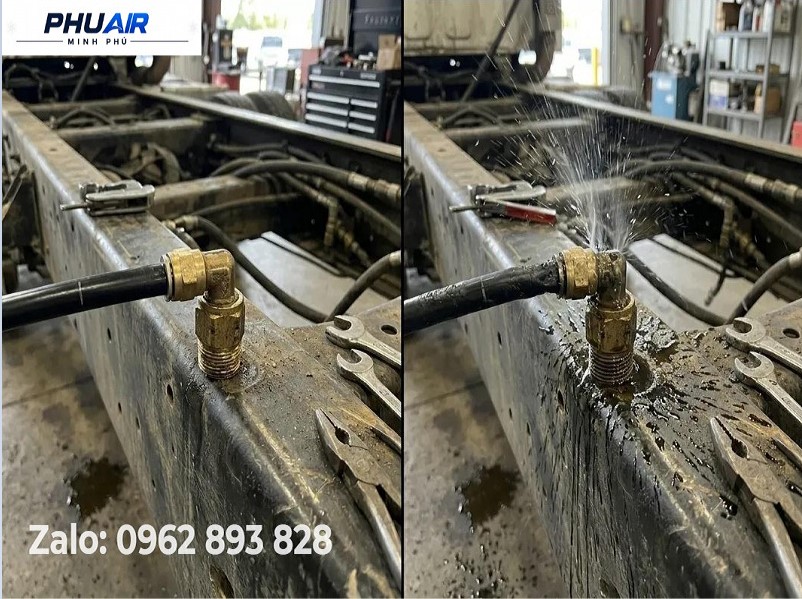
When the Compressed Air System Develops Leaks, Some of the Air Continuously Produced by the Compressor Escapes.
If the total amount of air required by the system and the amount lost through leaks are high, the compressor must continue producing air to compensate for the losses.
This can be illustrated as follows:
Compressor Produces Air → Air Enters the System → Some Air Escapes Through Leaks → Pressure Drops or Rises Slowly → Compressor Continues to LOAD → Runtime Increases.
If the amount of air produced by the compressor is not sufficiently greater than the combined air demand and leakage, the compressor may struggle to reach the threshold required to switch to UNLOAD, or it may remain in the Load state for an extended period.
Note: Load/Unload/Auto Stop logic depends on the compressor type, controller, and system configuration. Not all air compressors operate on the same cycle.
⚠️ Why Should Air Leaks Not Be Ignored?
Air leaks force the compressor to produce additional air that is not needed for production. If this condition persists, compressor runtime may increase, leading to:
- Increased power consumption.
- Increased motor operating hours.
- Increased load on the cooling and lubrication systems.
- Reduced overall compressed air system efficiency.
Potentially increased maintenance requirements if the compressor has to operate more than usual.
The actual impact depends on the leakage flow rate, system pressure, operating hours, and compressor configuration.
2. How Does an Air Compressor Normally Operate?
For air compressors equipped with Load/Unload control, the controller monitors pressure and adjusts the operating state according to the system's air demand.
A cycle can be described simply as follows:
Air Production → Pressure Rises → Unloading Conditions Are Met → UNLOAD → Pressure Drops → LOAD Resumes.
Depending on the compressor configuration, after a period in Unload mode, the controller may initiate Auto Stop to reduce unloaded running time.
When the pressure drops to the Load threshold, the compressor resumes air production.
Note: The terms Cut-in, Cut-out, Load, Unload, and Auto Stop, as well as the specific control logic, may differ between manufacturers and models.
3. What Happens When the System Develops Air Leaks?
Suppose the compressor is supplying air to a production system.
Air may escape through:
- Fittings.
- Valves.
- Pipelines.
- Flexible hoses.
- Filters.
- Drain valves.
- Air-consuming equipment.
- System connection points.
In this situation:
Compressed air leaks cause air loss → air production demand increases → pressure recovers slowly → the air compressor must remain in LOAD mode longer → runtime increases and more energy is consumed.
If the amount of air produced by the compressor exceeds the combined air demand and leakage, the pressure can still rise until the compressor meets the conditions for UNLOAD.
Conversely, if air production is approximately equal to or lower than the combined demand, the compressor may have to remain in Load mode for an extended period.
4. Why Can Air Leaks Cause the Compressor to Run Continuously?
This can be understood by comparing the air production capacity with the total air demand of the system:
Condition | Possible Result |
|---|---|
Compressor air production > air demand + leakage | Pressure continues to rise, and the compressor may meet the conditions for UNLOAD. |
Compressor air production ≈ air demand + leakage | Pressure rises slowly, and LOAD time is extended. |
Compressor air production < air demand + leakage | Pressure may fail to reach the required threshold, and the compressor continues to LOAD. |
The key point is:
Air leaks increase the system's “air demand.”
Therefore, if a compressor that previously operated normally begins running longer even though production demand has not changed, it may have developed air leaks or the air demand may have changed.
Do not draw conclusions based on runtime alone. An actual inspection is required to distinguish between:
- Increased air demand.
- Air leaks.
- Reduced air production efficiency.
- Load/Unload control issues.
- Other problems in the air distribution system.
5. Signs That the Compressor May Be Running Continuously Due to Air Leaks
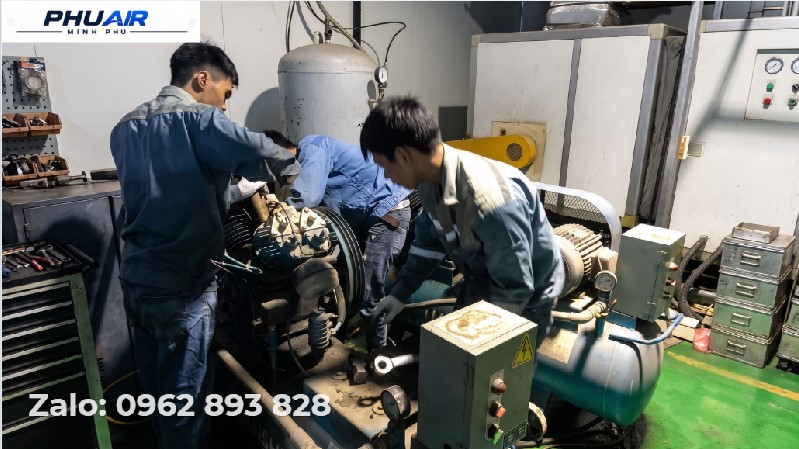
Some Signs Worth Checking:
5.1. The Compressor Runs More Frequently Even Though Production Demand Has Not Increased
If the compressor was operating normally before but its Load time has increased significantly recently, check whether air leaks have developed or air demand has changed.
5.2. The System Pressure Drops Even After Air-Using Equipment Has Stopped
When air-consuming equipment has stopped but the pressure still drops faster than normal, this may indicate that air leaks need to be checked.
5.3. Hissing Sounds Can Be Heard
Air leaks at joints, flexible hoses, valves, or end-use equipment can sometimes be detected by hissing sounds, especially when the production area is quiet.
5.4. The Compressor Reaches the Set Pressure but the Pressure Drops Quickly Afterwards
If the compressor reaches the set pressure but the pressure drops quickly when air demand is low, check the following:
- Pipeline air leaks.
- Valves that do not seal properly.
- Drain valves.
- End-use equipment.
- Unexpected air consumption points.
However, a pressure drop alone is not conclusive evidence of an air leak. Inspection must be carried out according to the actual system configuration.
6. Where Do Air Leaks Commonly Occur?
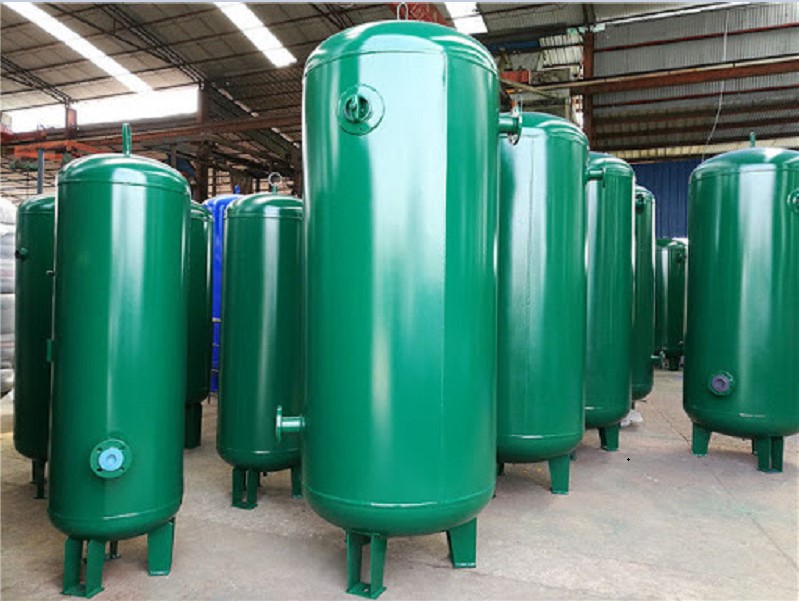
Compressed air leaks can occur at multiple points throughout the system:
Compressor → air receiver → filters → valves → piping → flexible hoses → end-use equipment
A single small leak may go unnoticed, but multiple leaks can combine to cause significant air losses.
Location | Signs to check |
|---|---|
Joints and fittings | Aged seals, loose connections, leaking threads, or damaged fittings |
Piping and flexible hoses | Cracks, hardened hoses, physical damage, or leaking connections |
Valves and accessories | Failure to seal completely or unusual hissing sounds |
Condensate drain valves | Failure to close fully or continuous leakage |
Filters and air treatment equipment | Signs of leakage around seals, connections, or equipment housings |
End-use equipment | Leaks from cylinders, solenoid valves, air guns, or other pneumatic equipment |
Locations Requiring Special Attention
Check valve: If the valve is suspected of failing to hold pressure, its pressure-retention capability and flow direction should be checked according to the system configuration.
Safety valve: If abnormal hissing is detected at a safety valve, do not adjust or dismantle it yourself. A qualified technician must inspect and address the issue in accordance with the equipment's safety requirements.
7. How to Inspect a Compressed Air System for Leaks
Inspect one area at a time rather than attempting to check the entire system at once.
Step 1: Determine Current Air Demand
If production conditions permit, identify which equipment is actively consuming compressed air.
Compare the current operating condition with previous performance:
How long does the compressor run?
How have the LOAD/UNLOAD durations changed?
How does system pressure rise and fall?
Has any new equipment been added?
The objective is to determine whether air demand has increased or air loss may have developed.
Step 2: Inspect When Air Demand Is Low
When a production area is temporarily shut down or pneumatic equipment has reduced its consumption, monitor:
System pressure.
Load/Unload status.
How long the compressor continues running.
Locations showing signs of air leakage.
If air demand has decreased significantly but the system still loses pressure quickly or the compressor continues producing air, investigate possible leaks.
This is an indication for further investigation, not conclusive proof of leakage.
Step 3: Isolate Individual Areas
Divide the system into sections:
Compressor area → air receiver area → main piping → branch lines → end-use equipment.
Dividing the system into sections helps identify areas with potentially high air losses instead of conducting an unfocused inspection.
Step 4: Locate the Leaks
For suitable, accessible locations, the following methods may be used:
Direct visual inspection.
Listening for hissing sounds.
A suitable leak-detection solution or soapy water.
Ultrasonic leak-detection equipment for more detailed inspections.
If bubbles form continuously at a joint, this indicates a location that requires attention.
Do not spray solutions onto electrical equipment, controllers, connectors, or any location where the manufacturer prohibits their use.
Step 5: Repair and Recheck
After identifying a leak:
Tighten or correct the connection if appropriate and permitted by the repair procedure.
Replace damaged seals or fittings.
Replace cracked or damaged hoses or piping components.
Repair or replace leaking valves or end-use equipment.
Recheck the system after the repair.
For pressurized components, safety valves, air receivers, or equipment requiring dismantling, isolate energy sources and release pressure in accordance with the manufacturer's procedures and applicable safety regulations.
8. What Can Operators Check?
To avoid unsafe work, inspections can be divided into two levels.
Operators can:
Monitor pressure on the existing HMI or pressure gauge.
Record Load/Unload durations.
Observe changes in air demand.
Listen for hissing at accessible locations.
Check whether end-use equipment has stopped operating.
Record suspected leak locations and take videos if necessary.
Technicians should handle:
Detailed leak inspections.
Check valve and functional valve inspections.
Condensate drainage system inspections.
Piping and distribution branch inspections.
Airflow or air-demand measurements when necessary.
Inspections involving dismantling components or isolating pressure.
Never dismantle valves, piping, or pressurized equipment before isolating the system and releasing pressure in accordance with the required safety procedures.
9. Why Do Compressed Air Leaks Increase Electricity Costs?
When leaks occur:
Air leakage → air loss → additional compressed air production → increased Load time → higher electricity consumption.
In other words, the compressor uses energy to produce air that does not directly contribute to the production process.
The increase in electricity consumption cannot be expressed as one fixed percentage for every factory.
An accurate assessment requires consideration of:
Leak flow rate.
Operating pressure.
Compressor power rating.
Load/Unload duration.
Daily operating hours.
Number and location of leaks.
Actual air demand on the production line.
Therefore, measuring and locating leaks provides a better basis for evaluating losses than estimating them using a universal percentage.
10. Common Mistakes When Addressing Air Leaks
❌ Inspecting only the compressor and ignoring the piping
Leaks may occur in the distribution system or at end-use equipment, not necessarily inside the compressor itself.
❌ Repairing only large leaks
Multiple small leaks can combine to cause significant air losses.
❌ Increasing compressor pressure to compensate for leaks
Increasing pressure does not address the root cause and may alter the operating conditions of the entire system.
❌ Dismantling valves or pressurized equipment without proper precautions
These tasks must be performed after energy isolation, pressure release, and compliance with the applicable technical procedures.
❌ Assuming the compressor is underperforming simply because it runs continuously
Extended operating time may be associated with leaks, increased air demand, control issues, or several other causes.
Identify the cause before replacing any parts.
11. When Should You Call a Technician?
Request a technical inspection if:
The compressor remains in Load mode for an unusually long time.
System pressure no longer reaches its previous operating level.
Pressure drops quickly despite low air demand.
Hissing is detected in an inaccessible area.
A check valve or functional valve is suspected of leaking.
Leakage is suspected in pressurized equipment.
Accessible areas have been checked but the cause remains unknown.
When contacting a technician, provide:
Compressor model.
Serial number, if available.
Set pressure and actual pressure.
Load/Unload duration.
When the problem first appeared.
The area where the leak is suspected.
Photos or videos of the site.
This information helps technicians narrow down the possible causes more efficiently and reduces unnecessary parts replacement.
12. Conclusion
Compressed air leaks can cause a compressor to run longer or almost continuously through a clear sequence:
Air leakage → air loss → increased air demand → additional air production → increased LOAD time → difficulty reaching the conditions required for UNLOAD/Auto Stop.
If production demand has not increased but the compressor is running more frequently, do not immediately conclude that the airend or motor is faulty.
Follow this inspection sequence:
Determine air demand → monitor Load/Unload → isolate system areas → locate leaks → repair → recheck.
This approach helps identify the actual cause and avoids replacing components without sufficient evidence.
Need Help Inspecting Compressed Air Leaks?
If your compressor runs continuously even though air demand has not increased, send the following information to PhuAir:
Compressor model and Serial Number.
Set pressure and actual pressure.
Load/Unload duration, if available.
Photos of the HMI or pressure gauge.
A video of hissing sounds or the suspected leak location.
A description of when the continuous operation began.
The technical team can use the actual operating data to narrow down the possible causes before recommending repairs or replacement parts.