

How Much Does It Cost to Repair a Screw Air Compressor That Runs but Produces No Air?
Is your screw air compressor still running but failing to draw in air, with pressure failing to increase or airflow lower than normal? This is a situation that causes many businesses to worry about expensive repairs or an Airend overhaul.
However, a machine that runs but produces no air does not necessarily mean that the Airend has failed and requires an overhaul. The cause may lie in the intake valve, solenoid valve, control system, air filter, control air lines, or the air distribution system itself.
Therefore, to determine the repair cost, the first step is to identify the exact cause and extent of the damage.
1. Quick Answer: How Much Does It Cost to Repair a Screw Air Compressor That Runs but Produces No Air?
There is no fixed price that applies to every screw air compressor.
Repair costs depend primarily on:
The cause of the fault.
The machine brand and model.
The machine's power rating and configuration.
The spare parts that need to be replaced.
The extent of the damage.
The scope of work: inspection, fault repair, spare parts replacement, or Airend overhaul.
The conditions for disassembly, installation, and repair at the factory or workshop.
If the cause is limited to a control component or an external part, the scope of repair may be significantly smaller than in cases where the Airend has actually suffered wear or mechanical damage.
Therefore, an Airend overhaul should not be quoted based solely on the symptom “the machine runs but produces no air.”
2. What Fault Causes a Screw Air Compressor to Run but Produce No Air?
This refers to a condition in which the machine starts and the motor continues to operate, but:
Pressure does not increase or increases very slowly.
The air supply is lower than normal.
The machine cannot meet air demand.
The machine runs for an extended period, but system pressure still fails to reach the required level.
Two groups of causes must be distinguished:
Group 1: The Machine Does Not Generate Enough Air
Possible causes may involve:
Air filter → intake valve → solenoid valve/control mechanism → control air system → Airend assembly.
Group 2: The Machine Generates Air, but the System Does Not Receive Enough Air
Possible causes may lie in:
Valves and piping → points of use → air leaks → increased air demand.
These two situations require completely different troubleshooting approaches and can result in significantly different repair costs.
3. Why Can Repair Costs Vary So Significantly?
Screw air compressors rely on multiple systems working together to generate and supply compressed air.
These can be divided into two main groups:
Group | Components Potentially Involved |
|---|---|
External and control systems | Air filter, intake valve, solenoid valve, sensors, control air lines, controller |
Air-generating mechanical assembly | Airend, bearings, seals, and related components |
If the fault lies in the control system or an external component, the repair may be limited to servicing or replacing the specific faulty part.
Conversely, if an inspection reveals signs of wear or mechanical damage to the Airend, the scope of work may be greater and require a more detailed assessment.
The key is to diagnose the problem before deciding on major repairs.
4. What Factors Affect Air Compressor Repair Costs?
4.1. Causes of the Problem
This is the most important factor.
The same symptom—“the machine runs but produces no air”—can have several possible causes:
Restricted air filter.
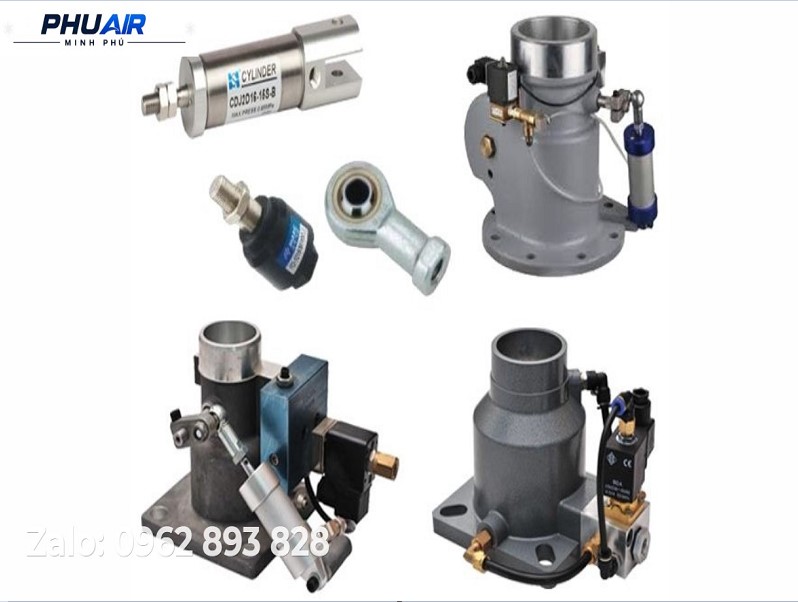
Intake valve not operating correctly.
Faulty solenoid valve or control mechanism.
Blocked or leaking control air line.
Faulty check valve or related valves.
Air leaks in the compressed air system.
Reduced Airend performance.
Internal mechanical damage to the Airend.
Therefore, a single repair price for this fault cannot be applied to every case.
4.2. Machine Brand and Model
Each model may have different:
Valve configurations.
Control systems.
Spare part numbers.
Airend configurations.
Repair procedures and technical requirements.
Therefore, when receiving a repair request, it is necessary to identify the correct brand, model, power rating, and machine configuration before recommending a solution.
4.3. Spare Parts Requiring Replacement
The cost also depends on the type and number of spare parts that need to be replaced.
Depending on the actual condition, the components involved may include:
Air filter → intake valve → solenoid valve → check valve → sensor/control mechanism → Airend components.
Do not assume that the entire assembly needs to be replaced before an inspection has identified which components are actually faulty.
4.4. Extent of the Damage
The same component may require different repair approaches depending on the extent of the damage.
For example:
A valve is restricted, or the control mechanism is not operating correctly.
A spare part needs to be replaced.
Multiple related components are damaged.
The Airend shows signs of reduced performance.
The Airend has mechanical damage requiring specialized repair.
Therefore, “the machine runs but produces no air” is a symptom, not sufficient evidence for determining the repair cost.
4.5. Scope of Repair
The cost also depends on the scope of work:
Scope of Work | Recommended Approach |
|---|---|
Inspection and fault identification | Inspect the machine and related systems. |
External fault resolution | Clean or service the relevant component if permitted by the manufacturer. |
Spare part replacement | Replace with the correct part number and configuration. |
Airend assembly repair | Proceed when supported by technical findings. |
Airend overhaul | Disassemble, inspect, and restore or replace components according to their condition. |
Airend assembly replacement or alternative solution | Consider when repair is no longer technically or economically appropriate. |
5. Can Repair Costs Be Estimated by Cause?
It is possible to group faults to understand the potential scope of work, but a fixed price table should not be used without pricing data approved by PhuAir.
Cause Category | Potential Scope of Work |
|---|---|
Dirty or restricted air filter | Inspect, clean, or replace according to the manufacturer's instructions. |
Faulty solenoid valve/control mechanism | Inspect and replace the relevant component if a fault is confirmed. |
Inspect the mechanism and repair or replace components according to the configuration. | |
Problem with the control air line | Identify and resolve the blockage or leak. |
Faulty check valve or related valve | Inspect and replace if necessary. |
System air leaks | Locate and repair the leaks. |
Reduced Airend performance | Carry out a detailed inspection. |
Mechanical damage to the Airend | Assess repair, overhaul, or replacement options. |
Note: These categories describe potential scopes of work; they are not a fixed price list. The actual cost depends on the brand, model, spare parts, extent of damage, and inspection findings.
6. How to Inspect the Machine to Estimate Repair Costs Before Quotation
Do not decide to overhaul the Airend immediately based solely on the information that “the machine runs but produces no air.”
The inspection should begin with the least invasive checks and gradually expand as necessary.
Step 1 – Record the Operating Condition
Check the information available on the controller:
Whether the machine is running or stopped.
LOAD/UNLOAD status.
Current pressure.
Any alarms or fault codes.
Temperature and other abnormal parameters.
Step 2 – Inspect External Factors
Inspect the following:
Air filter – intake air path – intake valve status – control air system.
Electrical measurements, signal checks, and inspections of internal mechanisms must be performed by qualified personnel using the diagrams and technical documentation for the correct model.
Step 3 – Inspect the Compressed Air System
Distinguish between:
The machine is not generating enough air
and
The machine is generating air, but air is being lost or the system is consuming too much.
Therefore, inspect the piping, related valves, and the system for air leaks.
Step 4 – Assess the Airend if Necessary
Only proceed to a detailed Airend inspection when external causes have been checked and abnormal symptoms remain.
Internal mechanical inspections and Airend disassembly must be performed by qualified technicians.
7. Procedure for Determining Repair Costs
A reasonable quotation process may include the following steps:
Step 1 – Collect Initial Information
Obtain the machine brand, model, power rating, current condition, application, and maintenance history.
Step 2 – Inspect the Machine
Assess the operating status, LOAD/UNLOAD operation, pressure, temperature, alarms, and other abnormal symptoms.
Step 3 – Inspect the Air Generation and Supply System
Inspect the air filter, intake valve, control mechanism, air lines, and related valves.
Step 4 – Assess the Airend When Justified
Proceed with a detailed inspection only when the symptoms indicate a potential problem with the Airend assembly.
Step 5 – Recommend a Solution
Depending on the findings, the following options may be proposed:
Option 1: Resolve the current fault.
Option 2: Replace the necessary spare parts.
Option 3: Repair or overhaul the Airend.
Option 4: Consider replacing the Airend assembly or the equipment if repair is no longer economically viable.
8. Why Should You Avoid Providing an Exact Quotation Over the Phone?
Customers can provide preliminary information such as:
Brand + model + power rating + pressure + fault code + photos + video + maintenance history.
This information helps technicians narrow down the possible causes.
However, for faults that may involve the Airend, an accurate quotation generally needs to be based on the results of an actual inspection.
The same symptom—“the machine runs but produces no air”—may originate from an external component or internal mechanical damage. These two cases can involve completely different scopes of repair.
9. Should You Continue Running the Machine to Test It Repeatedly?
Do not continue operating the machine for extended periods when abnormal symptoms are present and the cause has not yet been identified.
Exercise particular caution if the machine exhibits:
Abnormally high temperature.
Unusual noise or vibration.
Alarms or fault codes.
Abnormal pressure.
Signs of a problem with the oil system.
Operation without meeting the required air demand.
If further inspection is necessary, follow the manufacturer's safety procedures. Work involving electrical systems, pressure, or internal mechanical components should be handled by qualified personnel.
10. How Can You Reduce Screw Air Compressor Repair Costs?
Businesses can reduce the risk of major repair expenses by following these practices.
Perform Maintenance Based on Equipment Condition and Manufacturer Recommendations
Monitor critical components and carry out maintenance according to the requirements for each model.
Inspect the Air Filter
A restricted air filter can affect the amount of incoming air and operating efficiency.
Monitor the Intake Valve and Control System
When abnormal operating symptoms appear, inspect the machine promptly rather than allowing it to continue operating for extended periods.
Check for Compressed Air Leaks
Air leaks force the system to generate additional air to meet demand, potentially increasing operating time and energy costs.
Monitor Parameter Trends
Where data is available, monitor:
Pressure – temperature – LOAD/UNLOAD – operating hours – airflow – electricity consumption.
Detecting abnormal changes early can help businesses address problems before they develop into major failures.
11. What Information Is Needed to Obtain a Repair Quotation?
To help PhuAir narrow down the possible causes before an inspection, businesses should prepare the following information:
Machine brand.
Model and power rating.
Pressure setpoint and actual pressure.
Controller fault code, if available.
Operating hours and most recent maintenance history.
Photo of the machine nameplate.
Video showing the machine's condition, if available.
Description of the actual symptoms: whether the machine enters LOAD mode, whether pressure increases, and whether unusual noises or vibrations occur.
For example:
A 75 kW screw air compressor is running but does not generate enough air. Pressure does not increase, and the controller displays no fault codes.
The more complete the information, the better equipped technicians will be to determine an inspection approach before visiting the plant.
12. Frequently Asked Questions
Does a Machine That Runs but Produces No Air Need an Airend Overhaul?
Not necessarily. First, inspect the air filter, intake valve, control system, air lines, and other related components. An overhaul should only be considered when there is evidence that the Airend assembly is actually worn or damaged.
Is Repairing a Faulty Intake Valve Expensive?
There is no universal answer for every machine. The cost depends on the model, valve configuration, and extent of the damage. If the problem can be resolved by addressing an external cause, the scope of work may be significantly smaller than that of an Airend overhaul.
Can a Dirty Air Filter Cause a Machine to Produce No Air?
It can reduce the amount of incoming air and prevent the machine from achieving the required performance. However, an actual inspection is necessary to determine the extent of its impact.
Should You Continue Running the Machine When It Produces No Air?
Do not continue operating the machine for extended periods before identifying the cause, particularly if there are additional signs of abnormal temperature, noise, vibration, or alarms.
When Should an Airend Be Overhauled?
An overhaul should be considered when external causes have been ruled out and technical evidence indicates that the Airend has wear or mechanical damage requiring restoration.
Is It Better to Overhaul or Replace the Airend?
There is no universal answer. The decision should be based on the actual condition, repair costs, spare parts requirements, expected service life after repair, and the economic viability of replacement.
13. Conclusion
There is no fixed price for repairing a screw air compressor that runs but produces no air.
The cost depends on the cause, brand and model, extent of damage, required spare parts, and scope of repair.
The most important point is not to assume that a machine running without producing air automatically requires an Airend overhaul.
The inspection should follow this sequence:
Machine operating status – air filter – intake valve – control system – air lines – leaks/air-consuming equipment – assessment of air delivery capacity – detailed Airend inspection if necessary.
Identifying the actual cause before preparing a quotation helps businesses avoid unnecessary spare part replacement and prevents overhaul costs when the fault is actually located in an external component.
📞 PhuAir Provides Inspection and Repair Quotation Support
If your screw air compressor is running but producing no air, failing to build pressure, or experiencing an abnormal reduction in airflow, send PhuAir the following information:
Brand, model, and power rating.
Pressure setpoint and actual pressure.
Fault code, if available.
Photo of the machine nameplate.
Video showing the machine's condition.
Operating hours and maintenance history.
Description of the actual symptoms.
PhuAir will use the initial information to narrow down the possible causes and recommend an appropriate inspection approach, rather than automatically proposing an Airend overhaul.