

Is Excessive Oil Consumption in an Air Compressor Dangerous? Should You Continue Operating It?
Is excessive oil consumption in an air compressor dangerous? Should you continue operating the machine? The answer is: it can be dangerous if the oil level drops abnormally and the cause has not been identified, especially if the machine continues operating for extended periods.
Excessive oil consumption does not automatically mean that the piston rings or piston have failed. Oil may leak externally, be carried into the compression chamber, or be lost due to problems with the oil condition, seals, gaskets, or other sealing components.
The key is to determine where the oil is being lost, whether the compressor can still maintain adequate compression, and whether any other abnormal symptoms are present before deciding whether to continue operating the machine.
1. Is Excessive Oil Consumption in an Air Compressor Dangerous?
Yes. The level of risk depends on the cause of the oil loss, the amount of oil being lost, and the actual condition of the machine.
If oil is leaking slightly from an external point, the compressor remains stable, and the oil level has not fallen below the limit specified by the manufacturer, the problem may be addressed before major damage occurs.
Conversely, if the oil level drops rapidly, the machine overheats abnormally, pressure builds up slowly, mechanical noises or a burning smell occur, or oil appears in the air lines, these should not be treated as normal operating conditions that can be ignored while the machine continues running.
In particular, for piston air compressors, inadequate sealing around the piston, piston rings, and cylinder can reduce compression efficiency. The compressor may need to run longer to reach the required pressure, resulting in greater heat accumulation.
2. Should You Continue Operating an Air Compressor That Is Consuming Excessive Oil?
Do not continue operating the compressor for extended periods if the cause of the oil consumption has not been identified.
First, check the oil level, identify the leak location or the path taken by the oil, and assess whether any other abnormal symptoms are present.
If the compressor simultaneously exhibits abnormally high temperatures, slow pressure buildup, knocking noises, severe vibration, a burning smell, or thermal protection activation, stop the machine for inspection rather than continuing to operate it or repeatedly resetting the protection.
Continuing to operate a machine with an oil-related problem may worsen the initial fault. In a piston air compressor, prolonged increases in temperature and friction can affect the piston, piston rings, cylinder, or seals.
3. When Should an Air Compressor Be Stopped for Inspection Due to Excessive Oil Consumption?
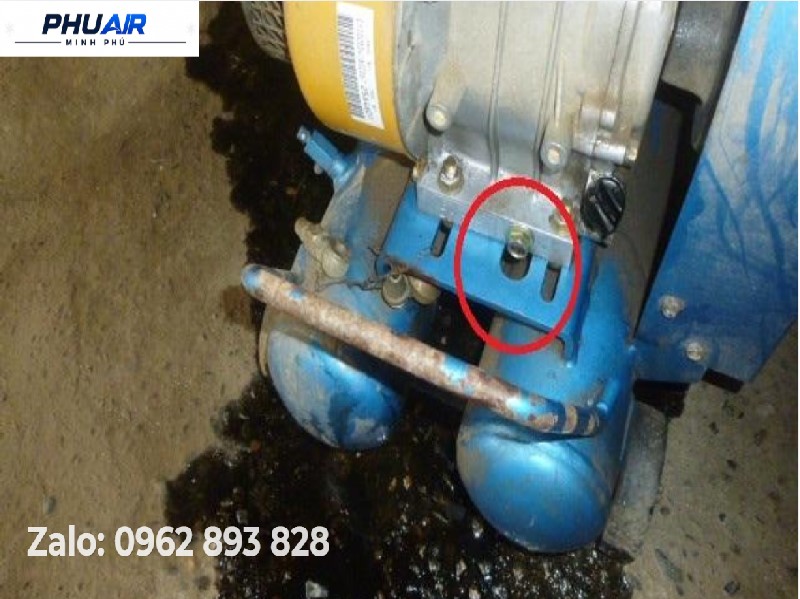
Do not make a decision based on a single symptom alone.
Symptom | What to Check First | Recommended Action |
|---|---|---|
Oil level drops, but the compressor operates normally | Oil replenishment history and external leaks | Identify the source of oil loss |
Oil leaking from the machine housing | Gaskets, seals, fittings, oil drain plug | Locate and repair the leak |
Excessive oil consumption accompanied by slow pressure buildup | Intake/discharge valves, piston rings, piston, cylinder | Check compression performance |
Excessive oil consumption accompanied by overheating | Oil level, oil quality, cooling, operating load | Avoid prolonged operation before identifying the cause |
Excessive oil consumption accompanied by knocking noises or vibration | Piston, piston rings, bearings, and drive mechanism | Stop the machine and conduct a more thorough inspection |
Oil present in the air lines | Source of oil entering the air stream and condition of the compression assembly | Identify the cause before resuming operation |
This table is intended to guide diagnosis and does not replace the specifications and procedures for each machine model.
3. Three Oil Consumption Scenarios That Must Be Distinguished
1. Oil Is Leaking Externally
This is the easiest scenario to observe. Oil may appear around gaskets, seals, fittings, oil lines, or other sealing points.
However, the location where oil is visible is not necessarily where the leak originates. Oil may flow down from a higher point and accumulate in a lower area.
Therefore, do not simply wipe away the oil and conclude that the visible location is the source of the leak. Clean the relevant area and monitor where oil reappears under safe operating conditions.
2. Oil Is Being Carried into the Compression Process
If there are no visible external oil leaks but the oil level continues to drop, investigate whether oil is entering the compression area or being consumed during operation.
In a piston air compressor, the sealing performance of the piston rings plays an important role. When the piston rings become worn or stuck, sealing between the piston and cylinder deteriorates, potentially causing blow-by and reducing compression efficiency.
However, excessive oil consumption alone does not prove that the piston rings are worn. Assess pressure buildup, airflow, signs of gas leakage, oil condition, and other mechanical symptoms together.
3. Oil Loss Combined with Operating Conditions
In some cases, excessive oil consumption does not originate from a single component. The compressor may have an external oil leak while also running for extended periods because of high air demand or reduced compression performance.
When the compressor runs for longer periods, its temperature may rise, potentially worsening oil-related problems. Diagnosis must therefore consider the air system, compressor head, oil, and operating conditions rather than focusing solely on the amount of oil lost.
Is Excessive Oil Consumption Accompanied by Overheating More Dangerous?
Yes. This situation should be prioritized for inspection.
Oil provides lubrication and helps control friction and heat in mechanical assemblies. When the oil level is too low, the oil type is unsuitable, or the oil has degraded, lubrication may no longer be adequate.
If the sealing performance of the piston and piston rings also deteriorates, compression efficiency may decrease, forcing the compressor to run longer to reach the required pressure. This can create an unfavorable cycle: reduced compression performance, increased running time, greater heat accumulation, and further deterioration of mechanical condition.
Do not use the feel of the compressor head's exterior surface to determine the severity of overheating. Assess the temperature under the actual operating conditions and against the specifications for the specific machine model.
Does Excessive Oil Consumption Combined with Slow Pressure Buildup Mean the Piston Rings Are Faulty?
Possibly, but there is insufficient evidence to draw that conclusion.
Slow pressure buildup in a piston air compressor may be related to the piston rings, piston, or cylinder. However, it may also result from faulty intake valves, discharge valves, check valves, air leaks in the piping, or other system problems.
If the piston rings are worn or stuck, compression-chamber sealing deteriorates. Gas may leak into the crankcase, compression efficiency decreases, and the compressor takes longer to reach the required pressure.
Therefore, do not replace the piston rings immediately upon observing excessive oil consumption + slow pressure buildup. Check simpler and more likely causes first, then determine whether compressor-head disassembly is necessary.
4. Inspection Procedure for an Air Compressor Consuming Excessive Oil
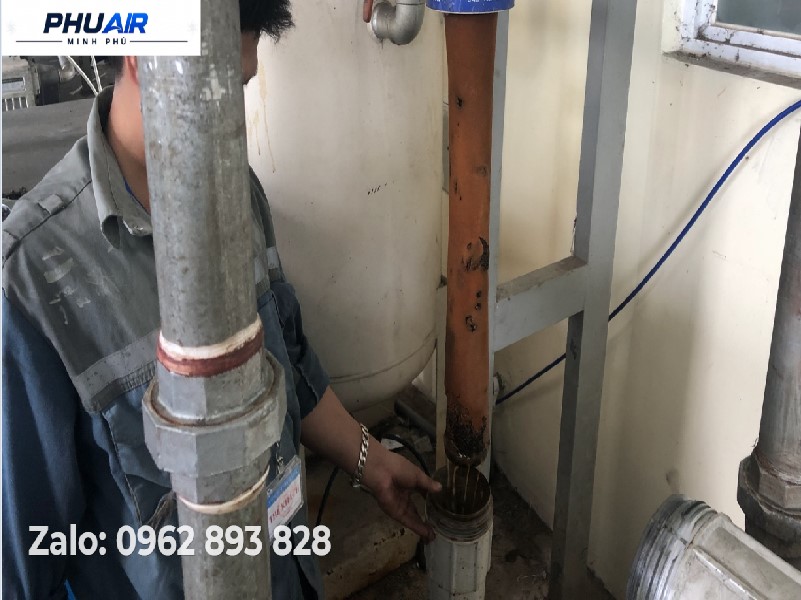
Step 1: Confirm the Oil Level
Check the oil level under the conditions specified by the manufacturer.
If the oil level is low, do not simply top up the oil and allow the compressor to continue running for an extended period. Investigate why the oil level has dropped.
Step 2: Check for External Leaks
Inspect the areas around the crankcase, compressor head, gaskets, seals, oil lines, and fittings.
If oil is found, identify the origin of the leak, rather than simply addressing the area where oil has accumulated.
Step 3: Check Operating Conditions
Record the compressor's running time, pressure buildup rate, operating pressure, and load condition.
If the compressor takes longer than before to reach the required pressure, distinguish between increased air demand, system leaks, and reduced compression performance of the compressor head.
Step 4: Inspect the Valves and Compression Performance
For a piston air compressor that consumes excessive oil and also exhibits slow pressure buildup or reduced compression, inspect the intake and discharge valves and related components before concluding that the piston or piston rings are faulty. Valve faults, piston ring wear, piston/cylinder wear, and leaks in the air lines can all cause the compressor to fail to build pressure or build pressure slowly.
Step 5: Inspect the Piston Rings, Piston, and Cylinder When Sufficient Evidence Is Available
Investigate the piston assembly in greater detail only when previous checks have not explained the problem and the compressor exhibits additional relevant signs, such as reduced compression performance, slow pressure buildup, excessive oil consumption, gas leakage past the piston, or abnormal mechanical noise.
Before disassembling the compressor head, isolate all energy sources and safely release any residual pressure.
Should You Simply Add More Oil and Continue Operating the Compressor?
No.
Adding oil only addresses the low oil level; it does not resolve the cause of the oil loss.
If the cause is a leak, the oil level will continue to drop.
If the cause is inadequate sealing within the piston assembly, the compressor may continue to consume excessive oil and lose compression efficiency.
If the problem is related to unsuitable or degraded oil, adding more oil without confirming the correct oil type and condition will not resolve the issue.
PhuAir technical documentation also advises against simply topping up the oil when a low oil level is detected. The correct oil type and the cause of the low level must first be identified.
5. Common Mistakes That Can Worsen Excessive Oil Consumption
Inspecting Only the Area Where Oil Is Visible
Oil can travel from the original leak point to another location. Identify where the oil first appears.
Replacing the Piston Rings as Soon as Excessive Oil Consumption Is Detected
Excessive oil consumption alone is insufficient evidence that the piston rings are worn. Additional signs of reduced compression performance and mechanical wear must be assessed.
Simply Adding Oil to Keep the Compressor Running
This approach may cause the operator to overlook the actual cause of excessive oil consumption.
Continuing to Operate the Compressor When It Overheats Abnormally
If excessive oil consumption is accompanied by rising temperature, a burning smell, knocking noises, severe vibration, or thermal protection activation, do not repeatedly reset the protection and restart the compressor before identifying the cause.
Disassembling the Compressor Head While It Is Still Pressurized
This presents a serious safety risk. Before opening any components, isolate the energy sources and control residual pressure in accordance with the applicable safety procedures.
When Is It Safe to Continue Operating the Compressor?
There is no universal threshold that applies to every air compressor.
The decision to continue operating depends on the machine model, manufacturer requirements, oil level, cause of oil consumption, temperature, pressure-building performance, and any accompanying abnormal symptoms.
If only a slight drop in oil level is detected and there are no other abnormal signs, identify the cause and replenish the oil with the correct type according to the machine's requirements before resuming operation.
If the oil level drops rapidly or the compressor exhibits abnormal overheating, slow pressure buildup, knocking noises, vibration, a burning smell, or thermal protection activation, stop the machine for inspection.
6. FAQ: Frequently Asked Questions About Excessive Oil Consumption in Air Compressors
Does Excessive Oil Consumption Mean an Air Compressor Is About to Fail?
Not necessarily. Excessive oil consumption may result from external leaks, unsuitable oil, sealing problems, or other causes. Diagnose the problem based on actual symptoms before drawing a conclusion.
Can Excessive Oil Consumption Cause an Air Compressor to Overheat?
It can. If excessive oil consumption is associated with inadequate lubrication or poor sealing, friction and operating time may increase, potentially contributing to higher operating temperatures.
Does a Piston Air Compressor That Consumes Excessive Oil Need New Piston Rings?
Do not replace the piston rings based solely on excessive oil consumption. Further checks are needed to assess pressure buildup, signs of gas leakage, piston and cylinder condition, and other relevant factors.
If an Air Compressor Consumes Excessive Oil but Builds Pressure Normally, Should It Be Stopped?
Identify the cause of the oil consumption before deciding whether operation can continue. If oil is leaking or the oil level continues to drop, do not allow the compressor to operate for extended periods without addressing the problem.
Can the Compressor Continue Running if Oil Needs to Be Replenished Frequently?
Frequent oil replenishment should not be treated as a solution. Identify the cause of the oil loss and reassess the machine's condition.
7. Conclusion
Excessive oil consumption in an air compressor is not always immediately dangerous, but it should not be ignored. The most important step is to determine whether the oil is being lost through external leakage, being carried into the compression process, or issues related to mechanical condition and operating conditions.
If the compressor consumes excessive oil and simultaneously exhibits abnormal overheating, slow pressure buildup, knocking noises, vibration, a burning smell, or thermal protection activation, do not continue operating it for extended periods or rely on topping up the oil as a temporary fix.
For piston air compressors, it is particularly important to distinguish between ordinary oil consumption and conditions in which the piston rings, piston, cylinder, or valves have affected compression performance. Correctly identifying the cause before replacing parts helps avoid unnecessary repairs and reduces the risk of further equipment damage.
If your air compressor is consuming excessive oil, overheating, losing compression, or requiring frequent oil replenishment, PhuAir can help inspect the machine based on its actual condition, identify the cause, and recommend an appropriate solution rather than replacing parts immediately.