

A Piston Air Compressor Runs but Produces No Air: Does the Airend Need an Immediate Overhaul?
1. Quick Answer
If a piston air compressor continues operating (the motor runs and the drive belt operates normally) but produces no compressed air at all, or the pressure in the air receiver fails to increase, this does not necessarily mean that the compressor head is severely damaged or that the cylinders and pistons must be overhauled or replaced immediately.
In most actual cases, a complete loss of pressure is caused by relatively simple mechanical faults or easily replaceable components, such as a broken or loose drive belt, a severely clogged air filter, broken valve plates (reed valves), or a stuck check valve. A major overhaul should only be considered after a qualified technical assessment confirms the need for it following inspection of all these external components.
Common Symptoms | Information to Verify Before Reaching a Conclusion | Recommended Inspection Sequence |
|---|---|---|
The motor runs, but pressure remains at 0; the compressor head fails to deliver air effectively or produces a reverse air-leakage sound | Machine model, photo of the nameplate, drive belt condition, and valve plate assembly condition | Inspect the drive belt and pulleys → Inspect the air filter → Inspect the valve plate assembly (intake/discharge) → Inspect the check valve → Inspect the piston/cylinder assembly in greater detail if necessary |
2. Why Does a Piston Air Compressor Run but Produce No Air?
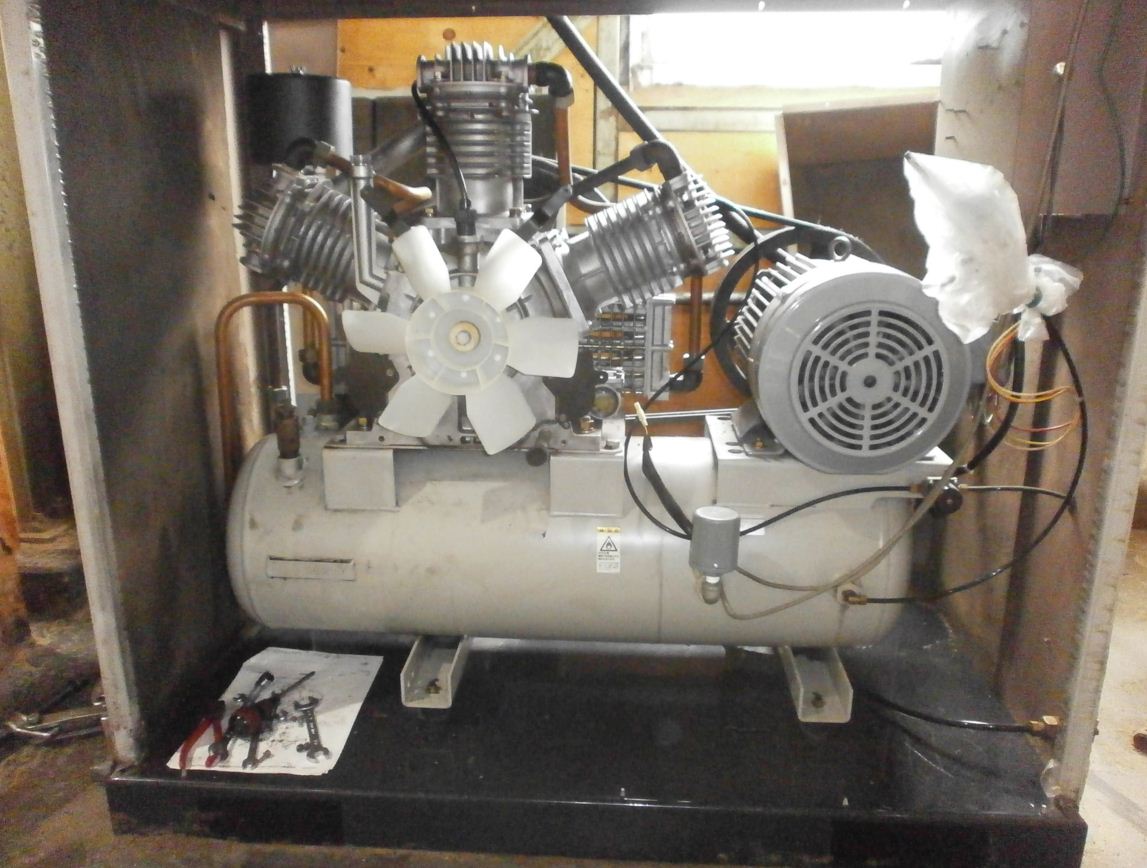
A piston air compressor generates compressed air by moving a piston inside a cylinder to draw in and compress air. The basic process is: Air Intake – Compression – Discharge – Air Receiver.
The main components of a piston air compressor include the motor, belt drive system, compressor head assembly (cylinder, piston, piston rings, and valve plates), and air receiver. If any component in this sequence develops a fault, the machine may continue running but fail to generate sufficient air or produce no air at all.
Common causes include drive belt/drive system problems, faulty intake valves, faulty discharge valves, worn piston rings, worn or damaged pistons, worn cylinders, damaged cylinder head gaskets, clogged air filters, check valve problems, air leaks, and faults in the piping or air receiver.
Therefore, do not immediately conclude that the Airend requires an overhaul.
3. Why Should You Avoid Rushing to the Conclusion That an Airend Overhaul Is Necessary?
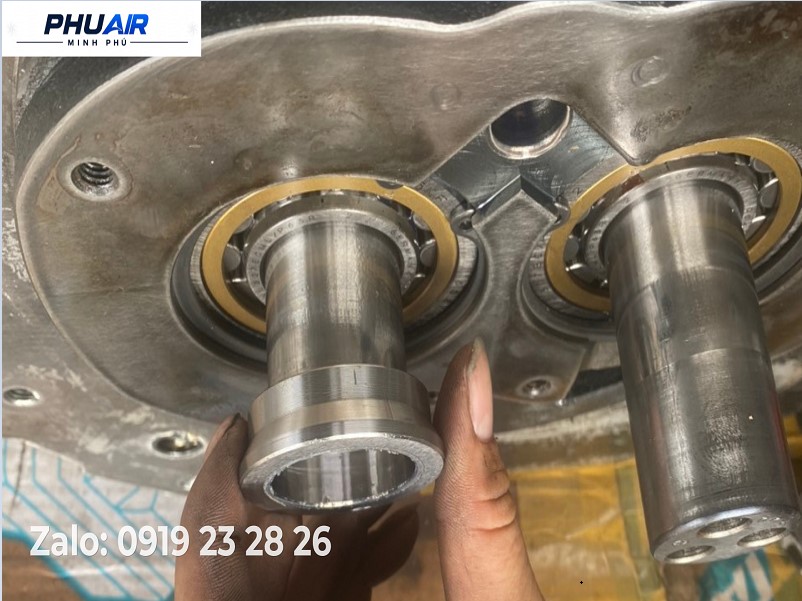
When a machine runs but produces no air, inexperienced technicians often rush to diagnose “worn piston rings” or a “cracked cylinder” and recommend a complete compressor head overhaul at a high cost.
In reality, faults involving the drive system (the drive belt or pulley not rotating) or valve system (broken or stuck-open valve plates) account for many cases of complete pressure loss, rather than internal mechanical damage to the cylinder. Following the correct inspection sequence from the outside inward helps businesses avoid unnecessary repair expenses.
4. When Does a Piston Air Compressor Not Yet Require an Airend Overhaul?
If the cause is limited to external components or individual parts that can be serviced separately, a complete compressor head overhaul is usually unnecessary.
Case 1 – Loose, Slipping, or Internally Broken Drive Belt
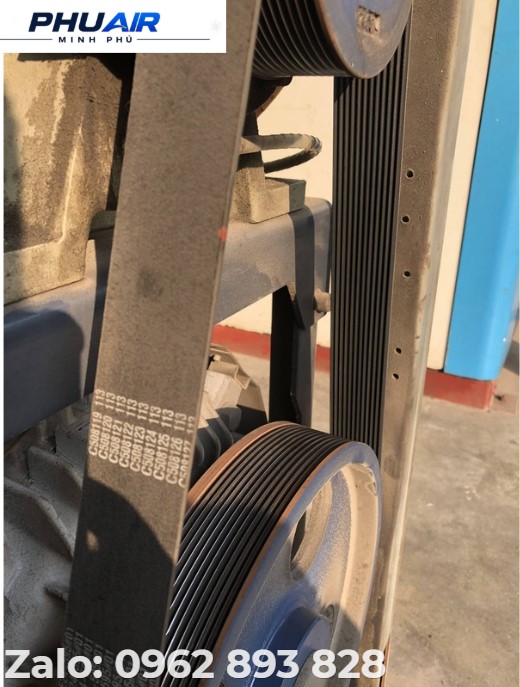
The motor continues spinning rapidly, but the compressor head crankshaft remains stationary or rotates at an insufficient speed, preventing air compression or resulting in very weak compression. This fault is easy to check visually by observing whether the compressor head pulley rotates in sync with the motor. Repair costs are very low, as the solution may simply involve tightening or replacing the drive belt.
Case 2 – Clogged Air Filter
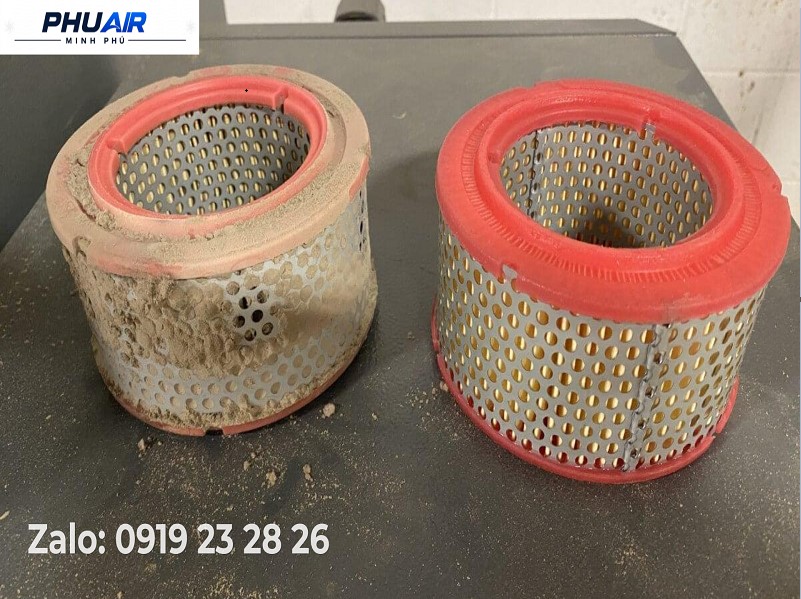
An excessively dirty air filter restricts the amount of air entering the cylinder. If the air filter is identified as the cause, the solution may be to clean it (if appropriate) or replace it with a new filter. There is no need to disassemble and overhaul the compressor head solely because of this issue.
Case 3 – Faulty Intake or Discharge Valve (Valve Plate/Reed Valve)
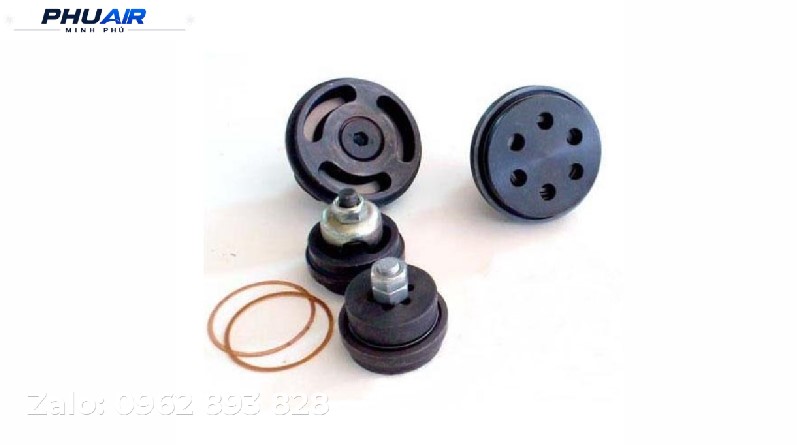
This is the most common cause of a complete loss of pressure in a piston air compressor. If the steel valve plates are warped, broken, or obstructed by foreign objects, air inside the cylinder will move back and forth without being delivered to the air receiver. Replacing or cleaning the valve plates costs significantly less than overhauling the Airend. In this case, the valve assembly should be inspected before concluding that the piston or cylinder is damaged.
Case 4 – Check Valve Failure
The check valve is located at the junction of the air line running from the compressor head to the air receiver. If the valve becomes stuck open or its gasket tears, compressed air may leak back toward the compressor head while the machine is running, preventing pressure from building up in the receiver.
Case 5 – Damaged Gaskets
Damaged cylinder head gaskets or seals at other sealing points can cause air loss. If the gasket is identified as the cause, the repair may only require gasket replacement followed by another leak-tightness check.
5. When Should You Suspect Wear in the Piston Assembly?
If the drive belt, air filter, valves, and gaskets have been inspected but the machine still fails to generate enough air, the piston–cylinder–piston ring assembly should be evaluated.
Watch for the following signs: the machine runs for a long time but pressure increases very slowly; airflow has decreased noticeably compared with previous performance; the machine struggles to reach its operating pressure; the machine must run continuously to fill the receiver; air leaks past components during compression; the machine's noise or vibration changes abnormally; or compression efficiency decreases despite other components operating normally.
6. These Signs Indicate the Need for Further Inspection but Are Not Sufficient to Conclude That an Overhaul Is Necessary.
Can Worn Piston Rings Cause a Piston Air Compressor to Produce No Air?
Yes, this is possible. Piston rings help seal the piston inside the cylinder. When the rings wear, their sealing capability may decrease, allowing some air to leak past the piston instead of being compressed effectively:
The piston continues moving → the machine continues running → but its compression capability decreases.
If the wear is severe, the machine may fail to achieve the required pressure or airflow.
Do Worn Pistons and Cylinders Require an Overhaul?
It depends on the actual condition. If only one component is worn, replacing the necessary part may be sufficient. If multiple components in the compression assembly are worn, disassembly, inspection, and an overhaul may be more appropriate. The following factors need to be assessed: piston wear, piston ring condition, cylinder condition, valve condition, gasket condition, recoverability after repair, machine age, and overall machine condition.
7. When Is a Major Overhaul or Replacement of the Piston Compressor Head Actually Necessary?
The piston compressor head only needs to be disassembled for a major overhaul (involving replacement of cylinders, pistons, piston rings, connecting rods, or crankshaft) when internal mechanical damage has been confirmed by a qualified technician.
A significant reduction in pressure-building capability — the machine operates but can no longer reach its previous pressure under comparable operating conditions.
Reduced airflow — the machine must run longer to reach the same pressure level or fill the air receiver.
Severe, prolonged lubrication deficiency, resulting in seizure and heavy scoring of the cylinder walls and piston body.
Loud metallic knocking sounds caused by a failed connecting rod bearing or excessive crankshaft play.
Pressure remains very low after replacing the valve plate assembly and confirming proper sealing — this may indicate that piston ring and cylinder wall wear has exceeded the permissible technical limits.
Deterioration of the valve assembly alongside multiple other components — if several components in the compressor head have problems, repairing each component individually may no longer be the most cost-effective option.
8. Inspection Procedure Before Overhauling a Piston Air Compressor
To avoid concluding that the compressor head is faulty before performing an inspection, follow the sequence below, working from the outside inward.
Step 0 – Safety Inspection
Completely disconnect the electrical power supply and fully release any residual pressure from the air receiver before disassembling any mechanical components.
Step 1 – Inspect the Drive System (Drive Belt and Pulleys)
Check whether the compressor head pulley is actually rotating at the same speed as the motor. If the drive belt is loose, slipping, or has an internal break, the motor may rotate normally while the compressor head crankshaft remains stationary or rotates at an insufficient speed. This is a quick and simple check that should be performed first.
Step 2 – Inspect the Intake Air Filter
An air filter blocked by a thick layer of dust can completely or partially restrict the flow of fresh air into the compression chamber.
Step 3 – Inspect the Valve Plate Assembly (Intake/Discharge Valves)
This is the most common cause of a complete loss of pressure in a piston air compressor. Check the opening and closing action and sealing condition. Warped or broken valve plates, or plates obstructed by foreign objects, can cause air to move back and forth inside the cylinder without being delivered to the air receiver.
Step 4 – Inspect the Check Valve
Inspect the check valve located between the compressor head and the air receiver. If it is stuck open or its gasket is torn, air will leak back toward the compressor head.
Step 5 – Inspect Gaskets and Potential Air Leakage Points
Ensure that air is not being lost during compression, particularly at the cylinder head gasket.
Step 6 – Inspect the Piston, Piston Rings, and Cylinder
If the preceding steps do not identify the cause, inspect the compression assembly more thoroughly. This is the final inspection stage and should only be performed after all external causes have been ruled out.
Step 7 – Evaluate the Repair Options
Only after the condition has been identified should a decision be made: replace an individual component → repair the assembly → overhaul the compressor head → or consider an alternative solution.
9. What Does a Piston Compressor Head Overhaul Include?
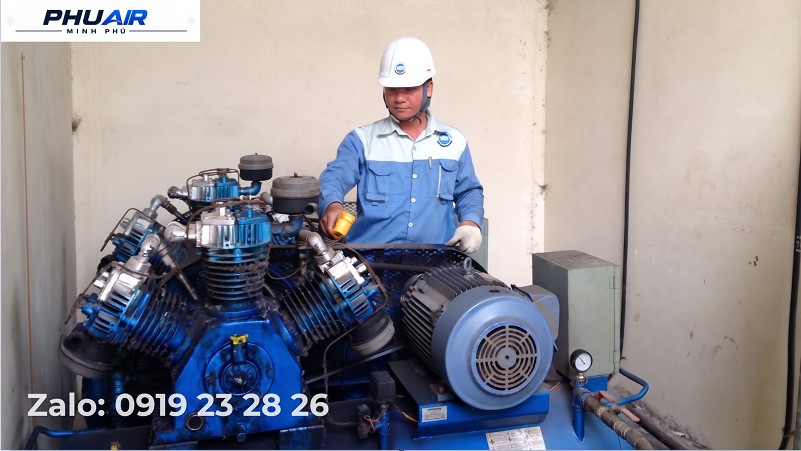
Depending on the design and condition of each machine, an overhaul may include disassembling the compressor head, inspecting the pistons, piston rings, cylinders, intake/discharge valves, and gaskets; cleaning the components; replacing worn parts as necessary; reassembling the unit; checking for leaks; conducting a test run; and verifying its pressure-building and air delivery capabilities.
Not every piston air compressor requires all components to be replaced during an overhaul — the scope of repair must be determined based on the actual condition of the machine.
10. Should You Overhaul or Replace the Piston Air Compressor?
Criteria | Overhaul | Replacement |
|---|---|---|
Condition | Can potentially be restored | Machine is heavily deteriorated |
Cost | Depends on the scope of repair | Depends on the cost of a new machine |
Machine age | Can continue to be used if its condition is suitable | Suitable when the machine is too old |
Spare parts | Replace the necessary components | New machine with a complete, integrated configuration |
Decision | Based on inspection results | Based on cost-effectiveness |
Do not base the decision solely on the immediate repair cost. Consider the expected service life after repair, operating costs, frequency of breakdowns, spare parts costs, and the plant or workshop's current compressed air requirements.
11. Should You Continue Running the Machine When It Produces No Air?
Do not allow the machine to continue running for an extended period before identifying the cause, especially if you notice unusual noises, strong vibrations, abnormal temperature increases, unusual oil or air discharge, continuous operation without reaching the required pressure, or other mechanical abnormalities.
Allowing the machine to continue running under load without sufficient airflow or with insufficient oil can cause the Airend temperature to rise rapidly. This may burn the seals or cause more severe mechanical seizure, turning a minor fault into major damage.
12. What Factors Affect the Cost of a Piston Air Compressor Overhaul?
There is no single price that applies to all piston air compressors. The cost depends on the machine brand, model, power rating, compressor head design, condition of the pistons, piston rings, cylinders, and valves, number of spare parts requiring replacement, scope of disassembly and installation, and repair conditions.
Replacing or cleaning valve plates generally accounts for only a small portion of the cost compared with overhauling the entire compressor head, including replacing the cylinders, pistons, and crankshaft. This is why thoroughly checking external and peripheral causes should always be a priority before deciding on an overhaul.
An on-site inspection is necessary before an accurate quotation can be provided.
13. What Information Should You Prepare for Technical Support?
If your piston air compressor is failing to build pressure and you need to determine whether an overhaul is actually necessary, prepare the following information:
A photo of the machine's nameplate.
The machine model, power rating, and most recent operating hours.
A detailed description of the current condition (for example, whether the drive belt is turning, whether air is leaking from the air filter or compressor head, and whether the machine is overheating).
A short video showing the machine in operation.
14. Frequently Asked Questions (FAQ)
Should I keep running a piston air compressor that produces no air to test it?
No. Allowing the machine to continue running under load without sufficient airflow or with insufficient oil can cause the Airend temperature to rise rapidly, potentially burning the seals or causing more severe mechanical seizure.
How do repair costs for valve plates compare with the cost of an Airend overhaul?
Replacing or cleaning valve plates accounts for only a small portion of the cost compared with overhauling the entire compressor head, including replacing the cylinders, pistons, and crankshaft. Therefore, thoroughly checking external and peripheral causes should always be the first priority.
Does a machine that runs but produces no air always have a faulty Airend?
No. Many cases are caused by a loose or broken drive belt, a clogged air filter, faulty valve plates, or a leaking check valve. These faults generally cost much less to repair than an overhaul.
How can I quickly determine whether the drive belt is the cause?
Observe the compressor head pulley directly while the machine is running. If the pulley does not rotate or rotates significantly more slowly than the motor, the drive belt may be loose, slipping, or internally damaged.
15. Conclusion
A piston air compressor that runs but produces no air does not necessarily require an Airend overhaul.
First, inspect the machine in the following order:
Drive belt/pulleys → Air filter → Intake/discharge valves (valve plates) → Check valve → Gaskets → Pistons, piston rings, and cylinders.
If the cause is limited to the drive belt, air filter, valves, gaskets, or an individual component, a complete overhaul may not be necessary. Conversely, if the pistons, piston rings, cylinders, and other components in the compression assembly have suffered significant wear, an overhaul should be evaluated to restore the machine's air-generation capability.
📞 Is Your Piston Air Compressor Running but Producing No Air?
Provide PhuAir with the machine brand, model, power rating, current pressure, a photo of the nameplate, and a video or description of the machine's condition (whether the drive belt is turning and whether there are unusual hissing or mechanical noises). PhuAir can then assist with inspection and recommend a suitable repair solution.