

Screw Air Compressor Runs but Produces No Air: Does the Airend Need an Immediate Overhaul?
1. Quick Answer
If a screw air compressor remains operational (the motor is running and the electrical system is powered on) but produces no compressed air at all or the pressure remains at 0, this does not necessarily mean that the Airend is severely damaged and must be overhauled immediately.
In most real-world cases, the cause is one of several peripheral faults that are much easier to resolve: the intake valve fails to open, a malfunctioning load-control solenoid valve, a clogged air filter, the machine operating in unloaded mode (UNLOAD), or blocked or leaking control air lines.
An Airend overhaul is a major, high-cost repair, and should only be considered when there is confirmed evidence of internal mechanical damage — after all peripheral faults have been ruled out.
2. Is the Airend Faulty When the Machine Runs but Produces No Air?
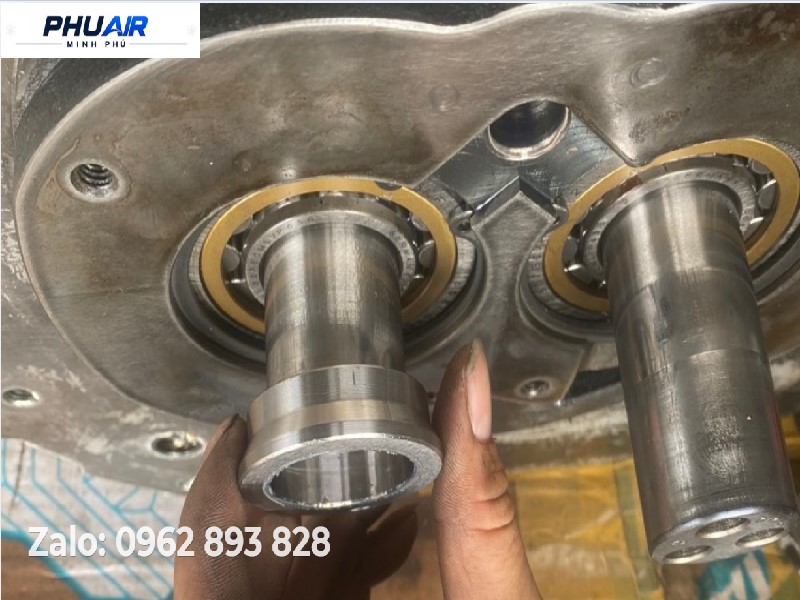
Not necessarily.
A screw air compressor relies on multiple components working together to generate and supply compressed air:
Air Intake → Air Filter → Intake Valve → Airend Assembly → Oil/Air Receiver → Oil Separator → Valves and Piping → Point of Use
A problem with just one component in this sequence can cause the following symptoms: the machine runs but produces no air; the machine runs but pressure does not increase; air output is very weak; the machine fails to load; the machine loads but does not generate sufficient air; or the machine runs continuously but cannot achieve the required pressure.
Therefore, do not conclude that the Airend is faulty based solely on the symptom of the machine running but producing no air.
3. Other Causes That May Prevent the Machine from Producing Compressed Air
Before considering an Airend overhaul, check for more common causes.
3.1. The Intake Valve Does Not Open
The intake valve controls the amount of air entering the compression assembly. If the intake valve is stuck, does not open through its full travel, has a faulty control mechanism, or does not receive a control signal, the machine may continue running without drawing in enough air for compression. This is one of the components that should be inspected before concluding that the Airend is faulty.
3.2. Solenoid Valve Malfunction
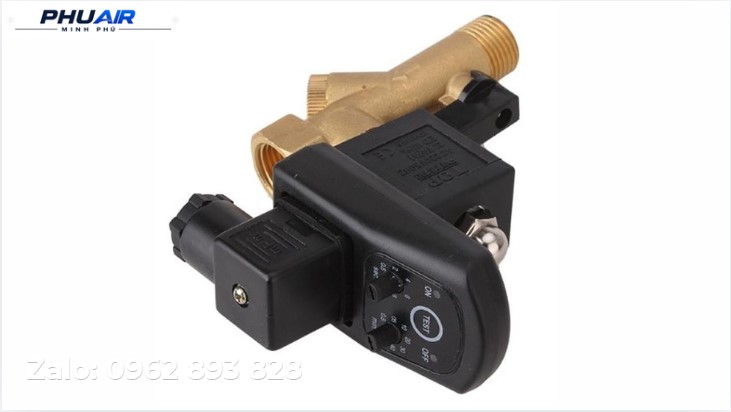
The solenoid valve typically controls the machine's loading and unloading processes. When the solenoid valve malfunctions (burnt-out coil, stuck valve, or problems with the control line or signal), the motor may continue running, but the control system fails to switch the machine into the correct air-generating state. The solenoid valve should be inspected before deciding on major repairs.
3.3. Clogged Air Filter
A dirty or clogged air filter restricts the amount of air entering the machine, resulting in insufficient air output even though the machine continues to operate normally. This is a relatively simple cause that is easy to overlook. An Airend overhaul should not be performed if the actual cause is merely a clogged air filter or a problem with the air intake system.
3.4. The Machine Is Operating in Unloaded Mode (UNLOAD)
The motor may continue running without supplying air according to system demand if the machine is in UNLOAD mode rather than LOAD mode. Check the operating status on the controller before disassembling the machine.
3.5. Leaks or Faults in the Compressed Air System
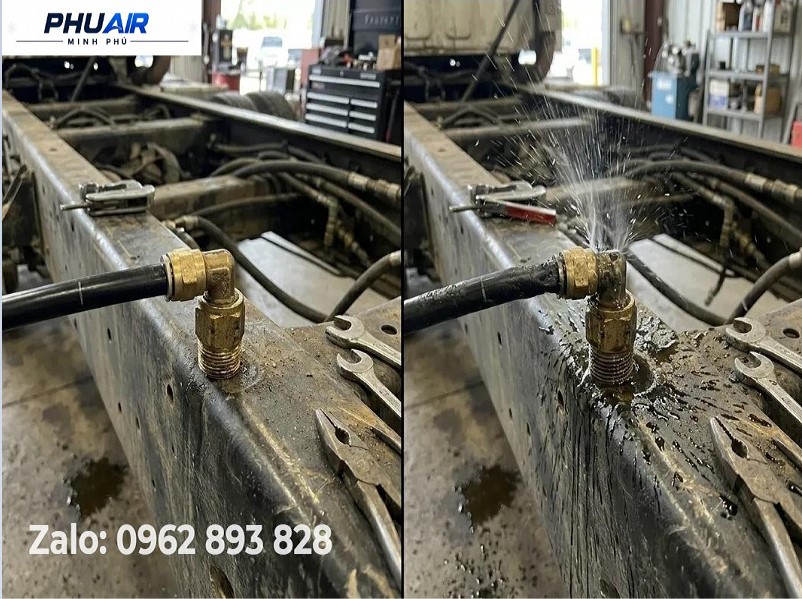
In some cases, the machine may still generate compressed air, but the air is lost through leaks in the piping system (compressor → piping → valves → end-use equipment). If the system has significant leaks, operators may feel that "the machine is running but not supplying enough air," even though the Airend is functioning normally. In this case, overhauling the Airend will not address the root cause.
4. Technical Inspection Procedure Before Considering an Overhaul
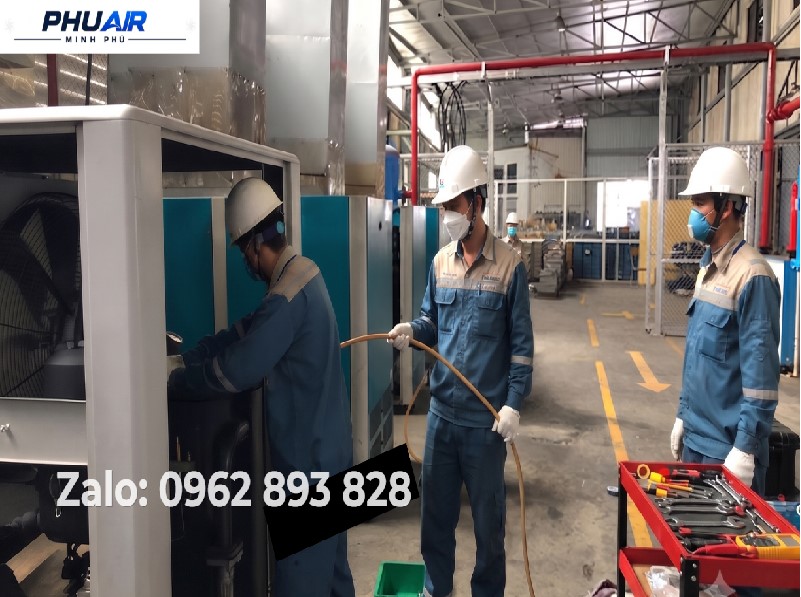
To accurately identify the cause and avoid unnecessary overhaul costs, follow a systematic inspection procedure based on evidence, proceeding from the outside inward — from the electrical and pneumatic control systems to the internal mechanical components.
Step 0 – Safety Inspection
Completely disconnect the power supply and fully release any residual pressure in the system before inspecting any internal components.
Step 1 – Check the Machine's Operating Status
Determine whether the machine is running, whether it is in LOAD or UNLOAD mode, the current pressure, and whether any fault alarms are displayed.
Step 2 – Check the Incoming Air Supply
Inspect the air filter, intake line, and intake valve. Observe whether the intake valve disc or piston moves to the open position when the machine switches to Load mode. In many cases, dirt buildup can cause the intake valve to stick, or a torn valve diaphragm can prevent the intake port from opening completely.
Step 3 – Inspect the Control System
Check the load-control solenoid valve and determine whether it receives an electrical signal to initiate loading. If the solenoid valve is stuck or its coil is burnt out, control air cannot be supplied to open the intake valve. Also inspect the sensors, control signals, and controller.
Step 4 – Inspect the Control Air Lines
Check the small air lines that control the intake valve and unloading valve for kinks, blockages caused by contaminated oil, or leaks.
Step 5 – Check Air Generation and Delivery
Inspect the pressure and flow rate under appropriate operating conditions, along with the relevant valves, oil separator, and piping. Check for leaks in the distribution system that could make the air supply appear insufficient.
Step 6 – Inspect the Airend Mechanically (Manual Check)
After completely disconnecting the power supply and ensuring safety, manually turn the fan (pulley) or shaft coupling, where accessible, to check whether the screw rotors are seized or mechanically jammed.
If the shaft turns smoothly and normally, the Airend is not mechanically seized and does not require an overhaul. This is a quick, straightforward preliminary check that helps rule out shaft seizure before proceeding with a more detailed assessment.
If the external causes identified in Steps 1–5 have been ruled out but the machine still fails to achieve the required performance, a more in-depth inspection of the Airend assembly should then be considered.
5. When Should Airend Performance Deterioration Be Suspected?
Only after ruling out causes related to the control system, valves, filters, and compressed air system should technicians proceed to assess the Airend assembly. The following signs warrant attention:
The machine continues running, but its air generation capacity has clearly decreased — for example, the machine previously met demand effectively, but under the same operating conditions, its air output has now dropped significantly, it must run longer to meet demand, or it can no longer reach its previous pressure level.
The machine runs under load for an extended period but still fails to meet air demand — before concluding that the Airend has weakened, check actual air demand, machine flow rate, system leaks, the intake valve, and the control system. Only after these factors have been ruled out should the performance of the Airend assembly be assessed.
6. When Is an Airend Overhaul Actually Necessary?
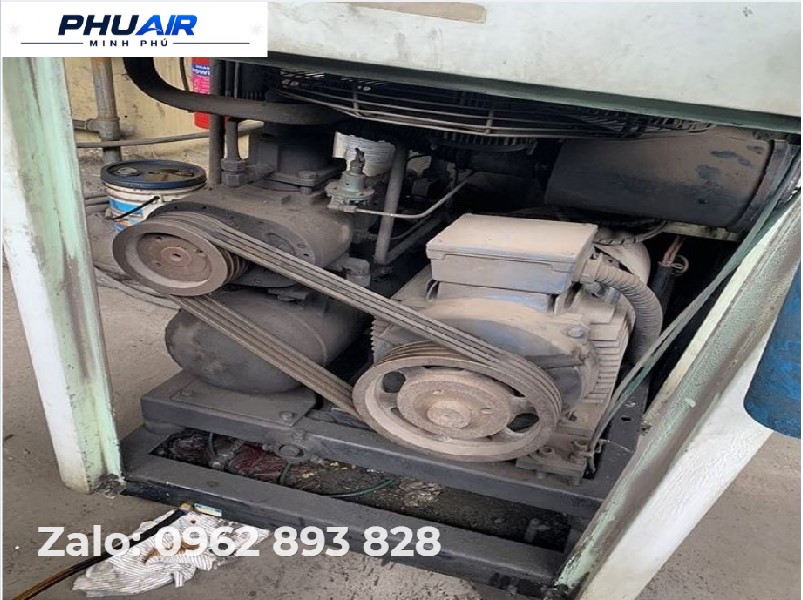
A screw compressor Airend only truly requires disassembly and overhaul when internal damage has been confirmed by a qualified technician, as indicated by the following signs:
The screw rotors are seized or mechanically jammed due to severe lubrication deficiency or foreign objects entering the compression chamber.
The Airend bearings are broken or excessively loose, causing loud metallic impact noises during operation.
The clearances between the two screw rotors, or between the rotors and the housing, have worn beyond permissible limits, resulting in a severe drop in flow rate and pressure even when the intake valve is fully open.
Compression performance has deteriorated significantly, and the machine cannot deliver the required flow rate under appropriate operating conditions.
Abnormal noise or vibration associated with the compression assembly occurs.
Abnormal operating temperatures occur after other possible causes have been ruled out.
Note: A single symptom is not sufficient to conclude that an Airend overhaul is necessary — a technician must confirm the diagnosis based on actual inspection results.
7. What Does a Screw Air Compressor Airend Overhaul Involve?
Depending on the actual condition and the design of each model, an overhaul may include: removing the Airend assembly, inspecting its internal condition, checking rotating components, inspecting bearings, checking seals and related components, cleaning, replacing worn components as necessary, reassembling, inspecting and adjusting, conducting a test run, and reassessing performance.
Not every Airend requires all components to be replaced — the repair approach must be based on actual inspection results.
8. Airend Overhaul or Replacement with a New Airend?
Criteria | Airend Overhaul | Airend Replacement |
|---|---|---|
Condition | Can be restored | Severely damaged or requires replacement |
Cost | Must be assessed based on the extent of damage | May be higher |
Time | Depends on the condition and scope of repair | Depends on model and parts availability |
Spare parts | Replace the necessary components | Replace the assembly according to the selected solution |
Decision | Based on inspection results | Based on condition and economic efficiency |
Do not automatically assume that "no compressed air = the Airend must be replaced." Compare the repair cost + expected service life after repair with the replacement cost + long-term operating efficiency.
9. What Factors Affect the Cost of an Airend Overhaul?
There is no single price that applies to all screw air compressors. The cost depends on the machine brand, model, power rating, Airend condition, degree of wear, components requiring replacement, overhaul scope, disassembly and reassembly costs, and repair conditions at the factory.
For example, an Airend that only requires replacement of a few worn components will require a very different repair approach from one in which multiple internal components have been damaged. Therefore, the machine should be inspected before a quotation is issued. Thoroughly checking external faults before deciding on an overhaul is a mandatory step in helping businesses reduce costs.
10. Should You Continue Running the Machine When It Produces No Compressed Air?
Prolonged operation should be avoided when the machine shows abnormal symptoms and the cause has not yet been identified, especially if additional signs are present, such as an abnormal temperature rise, unusual noise, vibration, fault alarms, abnormal pressure, or continuous operation without meeting demand.
In such cases, stop the machine and inspect it to prevent the damage from becoming more severe. If the intake valve is faulty but the machine is forced to continue running, or if lubrication is insufficient, the temperature can rise rapidly, increasing the risk of the screw rotors seizing.
11. Frequently Asked Questions (FAQ)
Can prolonged operation in unloaded mode or without producing compressed air damage the Airend?
If the machine runs unloaded (Unload) for an extended period, the direct impact on the Airend is generally limited. However, if the intake valve is faulty but the machine is forced to continue running, or if lubrication is insufficient, the temperature can rise rapidly, creating a risk of screw rotor seizure.
Is a screw compressor Airend overhaul expensive?
The overhaul cost depends heavily on the machine's power rating, the extent of bearing and oil seal damage, and the wear condition of the screw rotors. There is no single standard price. Therefore, thoroughly checking external faults before deciding on an overhaul is a mandatory step in reducing costs.
How can you quickly determine whether the Airend shaft is seized without disassembling the machine?
After completely disconnecting the power supply and ensuring safety, try manually turning the fan or shaft coupling, if accessible on the machine. If the shaft turns smoothly and normally, the Airend is not mechanically seized.
Does a machine that produces no compressed air necessarily have an Airend problem?
No. The intake valve, solenoid valve, air filter, LOAD/UNLOAD status, and system air leaks must also be checked before reaching a conclusion.
12. Conclusion
A screw air compressor that runs but produces no compressed air does not necessarily require an Airend overhaul.
First, inspect the machine in the following order:
Air filter → Intake valve → Solenoid valve → LOAD/UNLOAD status → Air leaks and piping → Manual mechanical rotation check → Airend.
Only after the above causes have been ruled out, and there is evidence that the Airend assembly has genuinely deteriorated or sustained damage, should an Airend overhaul be considered.
📞 Is Your Air Compressor Running but Producing No Compressed Air?
Send the following information to PhuAir:
Machine brand, model, and power rating.
Pressure setpoint and actual pressure.
Current operating hours and the most recent maintenance history.
A photo of the machine nameplate.
A description of the current condition (whether the intake valve opens, whether unusual noises are coming from the Airend, and whether the temperature is abnormally high).
A video of the machine's condition, if available.
The PhuAir technical team will help assess the cause and recommend the most accurate and cost-effective solution for your factory. The objective is to fix the actual cause rather than automatically assuming that an Airend overhaul is required.