

Repairing an Air Compressor That Will Not Load: What Determines the Cost?
Article reviewed by the PhuAir Technical Department – Updated: 08/09/2026
When an issue with an air compressor that will not load occurs in the compressor room of a mechanical engineering, plastics, textile, or woodworking factory, the machine may continue running but fail to produce sufficient compressed air or build pressure to meet demand. This can directly affect downstream production lines.
Actual downtime costs depend on production output, how heavily the production line relies on compressed air, and how long the machine must remain shut down. Therefore, for Maintenance Managers and Procurement Departments, the issue is not simply “How much will the repair cost?” but also “Where is the fault, which parts need replacing, and how can unnecessary component replacements be avoided?”
So, how much does it cost to repair an air compressor that will not load? What factors determine the cost?
This article from PhuAir analyzes the cost structure, the components that commonly require inspection, and the safe diagnostic procedure to follow before deciding to replace any parts.
1. Quick Answer
There is no fixed price for an air compressor that will not load.
The cost depends primarily on:
Machine model, power rating, and configuration.
Brand and control system.
Actual cause of the fault.
Whether cleaning/adjustment is sufficient or replacement parts are required.
Whether an individual component or the entire assembly must be replaced.
The scope of work required on-site.
In general, the total repair cost can be divided into three categories:
1.1. Replacement Parts Costs
Depending on the fault, it may be necessary to replace only a single component, such as:
Solenoid valve coil.
O-ring or seal.
Valve diaphragm.
Service kit.
In more severe cases, the entire component or assembly may need to be replaced, including:
Solenoid valve.
Inlet Valve.
Pressure sensor.
Valve assembly or other related components.
1.2. Inspection and Technical Labor Costs
Depending on the scope of work, these costs may include:
Initial condition assessment.
Reading fault codes and controller data.
Checking control signals.
Inspecting the control air system.
Inspecting valve mechanisms.
Inspecting related electrical or mechanical components.
Disassembly, reassembly, adjustment, and post-repair testing.
1.3. Additional Maintenance Costs If Related Issues Are Identified
During the inspection, the technician may identify additional items that require attention, such as:
Dirty air filter.
Oil filter requiring replacement.
Unsuitable or degraded lubricating oil.
Dirt and deposits in the control mechanism.
Leaks in the control air system.
These items should not be replaced or serviced solely because the machine will not load. Their relationship to the actual symptoms must be established before additional costs are incurred.
👉 To obtain a repair estimate that closely matches your machine's actual condition, provide the Model/Serial Number, a photo of the controller screen, and any fault codes. PhuAir can use this information to determine the appropriate inspection approach and identify the parts that need to be verified before preparing a quotation.
2. Which Components Can Affect the Cost of Repairing an Air Compressor That Will Not Load?
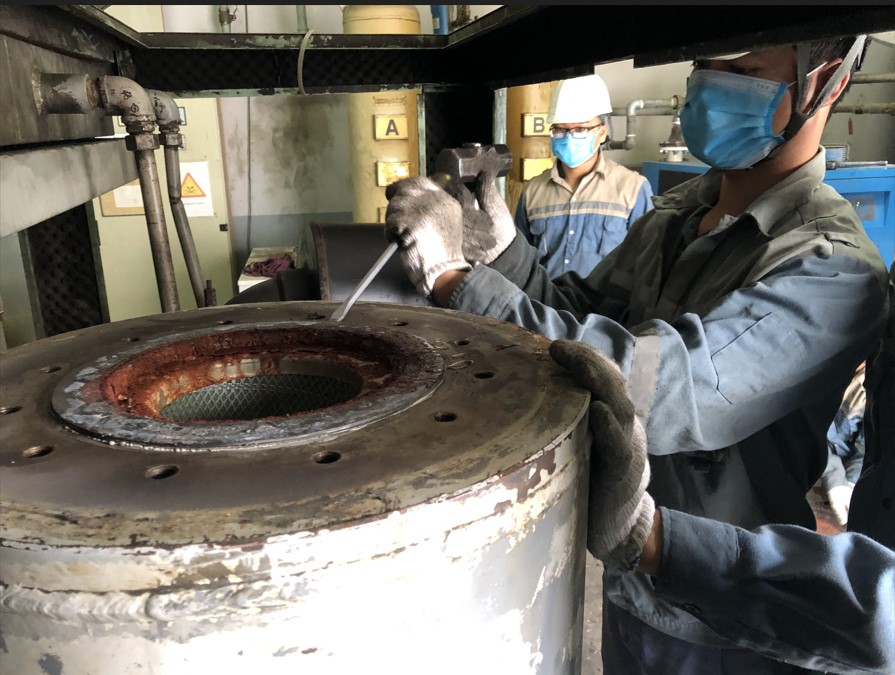
Note: The table above provides diagnostic guidance. The required replacement parts cannot be identified accurately from a single symptom alone. 3. Factors That May Increase Repair Costs3.1. Load Solenoid ValveDepending on the machine design, the solenoid valve may control pilot air flow to the loading mechanism. If the coil, valve body, diaphragm, or control air line develops a fault, the loading mechanism may fail to change state as commanded by the controller. Impact on Repair CostsIf only the coil is faulty and the design allows it to be replaced separately, the cost may be lower than replacing the entire valve assembly. Conversely, if the valve body, diaphragm, or internal components are damaged, a service kit or the complete valve assembly may need to be replaced, depending on the model. Do not conclude that the solenoid valve is faulty simply because no “click” is heard. The control signal and actual machine configuration must be checked. 3.2. Inlet Valve |
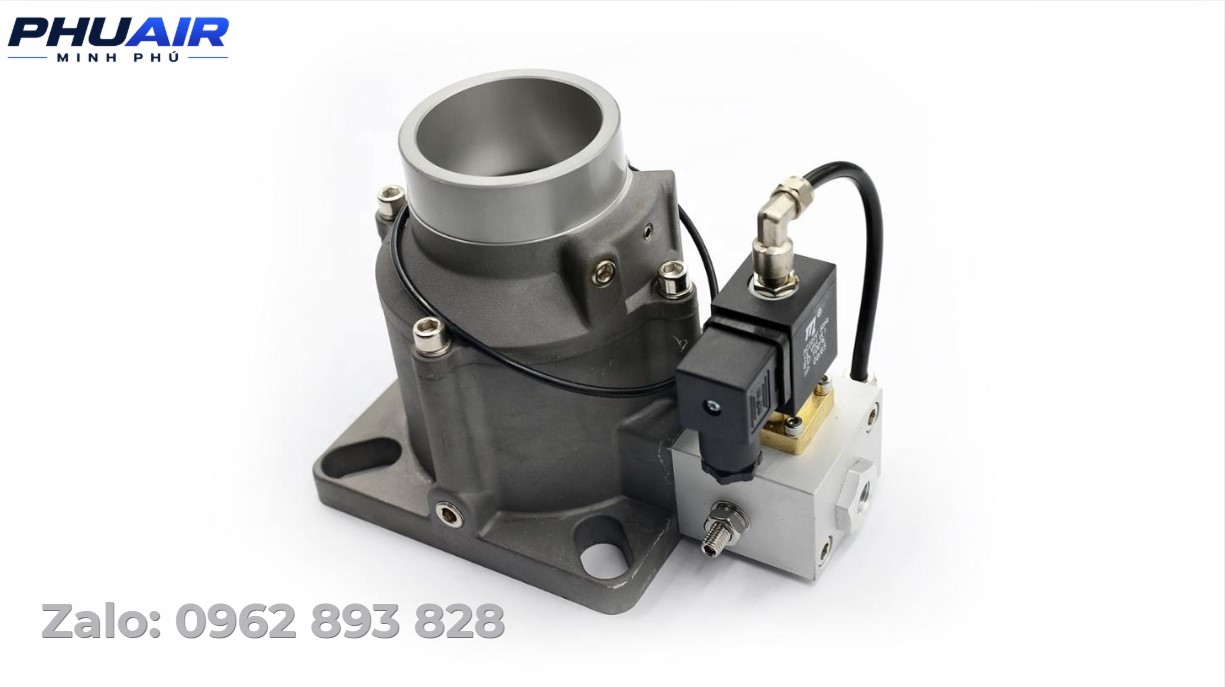
The Inlet Valve regulates the amount of air entering the Airend according to the control mechanism used by each machine series.
During operation, this mechanism may experience:
Dirt and deposits.
Oil buildup.
Deteriorated seals or O-rings.
Damaged valve diaphragms.
Sticking or jammed moving components.
These problems may prevent the valve from completing its required travel and affect the LOAD/UNLOAD transition process.
Impact on Repair Costs
If the valve design allows repair, a service kit for the correct model may be used instead of replacing the entire assembly.
However, service kit selection must be based on the model, part number, and actual configuration. Do not select a kit based solely on the valve's external appearance.
3.3. Minimum Pressure Valve (MPCV)
The MPCV maintains the pressure conditions required within the machine's oil/air system, as specified by the design.
If the MPCV does not operate correctly, abnormalities may occur in:
Internal pressure.
Outlet pressure.
Air supply to the system.
Operating state transitions.
The specific causes and symptoms depend on the position, configuration, and design of each machine model.
Impact on Repair Costs
Depending on the actual condition, the technician may need to:
Inspect the valve mechanism.
Inspect seals/O-rings.
Clean according to the manufacturer's instructions.
Replace the service kit.
Or replace the entire assembly if the components can no longer be restored.
Do not apply oil or chemicals to the MPCV mechanism without first identifying the materials involved and checking the manufacturer's maintenance instructions.
3.4. Pressure Transducer
The pressure transducer sends a signal to the controller so that the machine can determine its operating conditions.
If the sensor signal is inaccurate, intermittent, or inconsistent with the actual pressure, the controller may make incorrect LOAD/UNLOAD decisions, depending on the control logic of the specific model.
Impact on Repair Costs
Before replacing the sensor, check:
Displayed pressure value.
Sensor signal.
Wiring and connectors.
Sensor power supply.
Correlation between the signal and actual pressure.
Controller fault codes.
Replace the sensor only after confirming that the cause lies in the sensor or its associated circuit.
4. Five-Step Inspection Procedure Before Determining Repair Costs
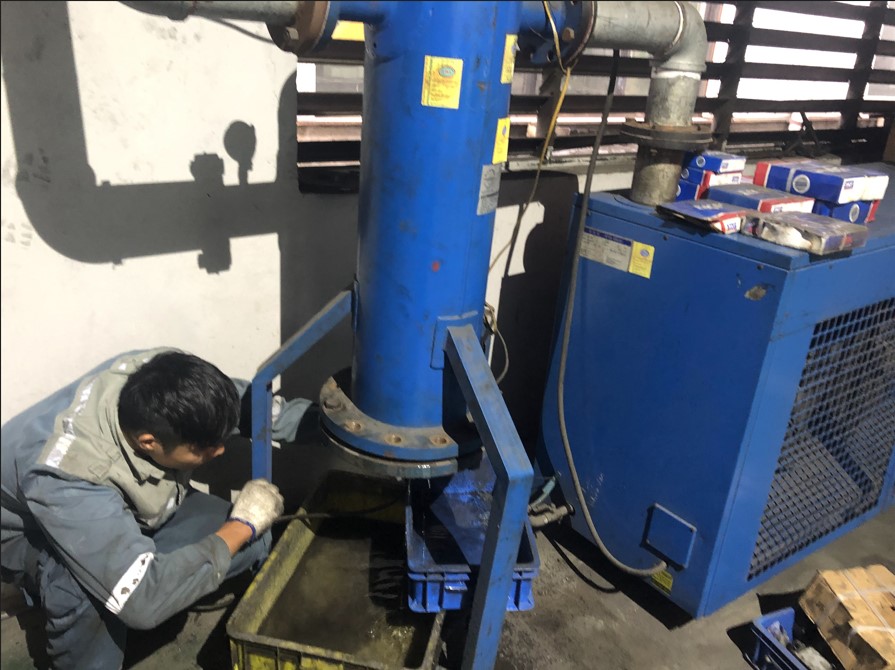
⚠️ Electrical, pressure, and mechanical inspections must be performed by qualified personnel in accordance with the safety procedures and manual for the specific model. Operators should not disassemble valves, electrical cabinets, or drive mechanisms themselves.
Step 1 – Confirm the Exact Symptom
First, determine the following:
Does the machine start normally?
Is the motor running?
Does the machine display LOAD or UNLOAD?
What pressure is displayed?
Does the pressure increase while the machine is running?
Are there any fault codes or warnings?
Does the problem occur continuously or only at certain times?
This helps distinguish between a machine that genuinely fails to load and a situation in which air demand is low or the system is operating normally.
Step 2 – Check Pressure Conditions and Air Demand
Do not immediately conclude that the machine is faulty simply because it is running in UNLOAD mode.
Compare the following:
System pressure → Air demand → LOAD/UNLOAD status → Time of state transition.
If the pressure has reached the control threshold, the machine may remain in UNLOAD mode by design.
Conversely, if air demand increases and pressure drops but the machine still does not switch to LOAD, further inspection of the control system is required.
Step 3 – Check the Load/Unload Signal
The technician must perform checks according to the schematic for the specific model:
Is the controller issuing a LOAD command?
Is the solenoid valve receiving the signal?
Is the coil operating correctly?
Is the pilot air line leaking or blocked?
Are there any faults in the wiring, connectors, or control circuit?
Do not replace the solenoid valve immediately just because the machine will not load.
Step 4 – Inspect the Loading Mechanism and Related Components
After confirming that the problem lies within the control system, the technician may inspect:
Inlet Valve.
Actuator mechanism.
Control air line.
MPCV, if relevant.
Pressure sensor.
Drive system, if there are signs of abnormal operation.
Disassembly, mechanical inspection, or access to moving components must only take place after isolating energy sources and releasing hazardous stored energy in accordance with the applicable procedures.
Step 5 – Identify Required Parts and Perform a Test Run
Only after identifying the cause should the technician decide whether to:
Clean.
Adjust.
Replace the coil.
Replace the seal/O-ring.
Replace the service kit.
Replace the sensor.
Replace the valve assembly.
Or repair another component.
After the repair, the technician must test-run the machine and monitor:
Pressure.
LOAD/UNLOAD status.
Fault codes.
Control signals.
Current and other relevant parameters, in accordance with the manufacturer's instructions.
5. Mistakes That Can Increase Repair Costs
⚠️ 1. Replacing Parts Before Identifying the Cause
An air compressor that will not load does not necessarily have a faulty solenoid valve.
The problem may be related to:
Control signal.
Sensor.
Pilot air line.
Inlet Valve.
Control configuration.
Or the system's operating conditions.
⚠️ 2. Disassembling Valves or the Electrical Cabinet Without Authorization
An air compressor may contain several forms of hazardous energy:
Electrical energy.
Air pressure.
Heat.
Rotating components.
Residual pressure in chambers or pipelines.
Therefore, do not disassemble components before completing the energy isolation procedure and verifying that the equipment is in a safe condition.
A pressure gauge reading of 0 must not be treated as the sole condition for confirming safety.
⚠️ 3. Ignoring the Risk of Auto Restart
Some machines are configured to restart automatically.
Therefore, before accessing electrical or mechanical components, you must:
Isolate energy sources.
Apply LOTO in accordance with the plant's procedures.
Prevent unexpected machine startup.
Release residual pressure as instructed.
Verify the safe condition before proceeding.
⚠️ 4. Bypassing Protection Functions
Do not short-circuit or disable the following without authorization:
Overtemperature protection.
Overcurrent protection.
Interlocks.
Other protective devices.
Bypassing protection can conceal the actual cause and increase the risk of serious damage.
⚠️ 5. Using Oil or Spare Parts That Do Not Meet Requirements
Lubricating oil and spare parts must be compatible with the machine model and the manufacturer's requirements.
Do not assume that one type of oil or service kit is suitable for all air compressors.
Using unsuitable materials may affect sealing performance, valve control, and system reliability.
6. Frequently Asked Questions
Does an air compressor that will not load definitely need a new solenoid valve?
No.
The solenoid valve is only one of the components that may require inspection. The cause may lie in the control signal, coil, pilot air line, Inlet Valve, sensor, control configuration, or other related components.
Diagnose the problem before deciding which parts to replace.
If the machine runs but fails to build pressure, does that mean the Airend is worn?
Not necessarily.
The following must also be checked:
Inlet Valve.
Load/Unload system.
Air leaks.
Air demand.
Sensor.
Control air line.
Related components.
The Airend should only be identified as the problem after other possible causes have been ruled out.
Can I disassemble the MPCV or Inlet Valve for cleaning myself?
This is not recommended without the necessary expertise and appropriate procedures.
These components may involve pressure, oil, spring-loaded mechanisms, and other energy sources. Disassembly and reassembly must follow the manual for the specific model and the plant's safety procedures.
What is an acceptable motor insulation resistance value?
A single threshold should not be applied to every motor.
Measurements must be based on:
Motor specifications.
Voltage.
Applicable standards.
Measurement conditions.
Measurement method.
Manufacturer's instructions.
The results must be evaluated by qualified personnel before deciding whether the motor can be energized and operated.
How can I determine the exact cost of repairing an air compressor that will not load?
The most accurate approach is to identify the model + actual condition + root cause + parts requiring replacement.
PhuAir recommends providing the following information:
Photo of the Model/Serial nameplate.
Photo of the controller screen.
Fault code, if available.
Current pressure.
Description of when the machine first started failing to load.
Video of the issue, if available.
This information helps technicians narrow down the possible causes before recommending spare parts and estimating costs.
7. Conclusion
There is no fixed repair cost for an air compressor that will not load.
The cost depends on the machine model, control configuration, actual root cause, extent of damage, and parts requiring replacement.
The most important principle is not to replace components based on an isolated symptom. A failure to load may be related to the solenoid valve, Inlet Valve, sensor, control air line, MPCV, or other system conditions.
In addition, all electrical, pressure, and mechanical work must follow the safety procedures and technical documentation for the specific model.
📩 Need to determine the repair cost for your machine?
Send the following information to PhuAir:
Machine Model/Serial Number
Photo of the machine nameplate
Photo of the controller screen
Fault code, if available
Description of the failure-to-load symptom
The PhuAir technical team will use the actual information to narrow down the cause, identify compatible spare parts, and recommend a repair approach, helping reduce incorrect part replacements and unnecessary additional costs.
Technical Verification Sources
Specifications, disassembly procedures, and spare-part requirements must be checked against:
Operation Manual for the specific machine model.
Maintenance Manual.
Parts Manual / Parts List.
Electrical & Pneumatic Schematic.
Documentation for the corresponding controller.
The plant's LOTO and safety procedures.
PhuAir's internal technical SOP.
Note: Do not automatically apply specifications from one model to another without checking the manufacturer's documentation.