

Screw Air Compressor Fails to Build Pressure: Causes and Technical Inspection Sequence
Article reviewed by PhuAir Technical Department - Updated: August 28, 2026
Screw air compressor failure to build pressure is a common issue in which the main motor continues to run normally, but compressed air pressure does not increase, disrupting the entire production line. A screw air compressor that fails to build pressure can result from various causes - ranging from an inlet valve malfunction or solenoid valve failure to piping leaks or a clogged oil separator. The following article summarizes a technically sound diagnostic procedure to help identify the correct cause before deciding to replace any components.
1. Quick Answer
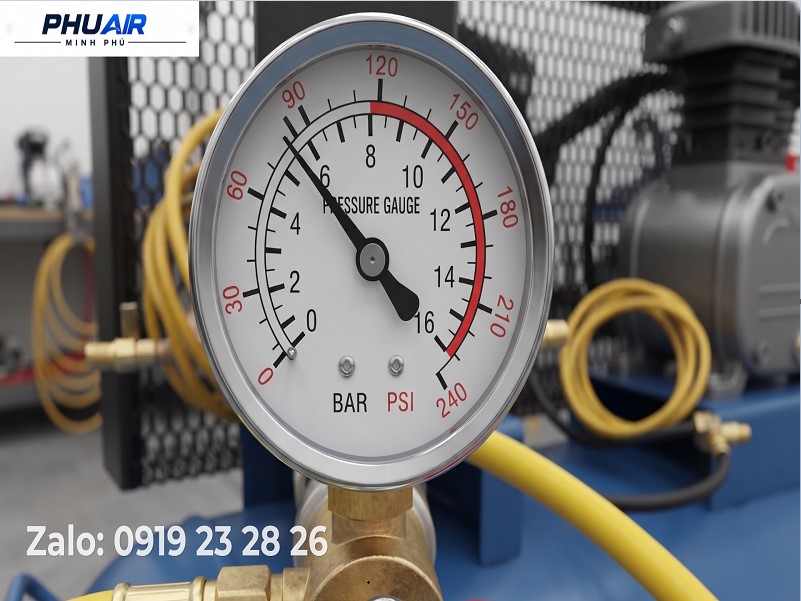
When a screw air compressor runs but fails to build pressure (the pressure gauge remains at 0 bar or does not increase when the compressor switches to loaded mode), the issue is generally attributable to 3 main groups of causes: the inlet valve does not open, the solenoid valve/control circuit has failed, or the blow-off valve does not close properly. For accurate diagnosis while maintaining occupational safety, technicians should proceed in sequence from the electrical control system to the pneumatic actuating mechanism after completely isolating the electrical power supply.
2. Quick Diagnostic Summary Table
Based on hundreds of actual cases, PhuAir engineers have compiled the following quick diagnostic table:
Identified Symptoms | Suspected Technical Component | Next Action |
|---|---|---|
Motor running, solenoid valve not actuating, pressure = 0 bar | Control Circuit / Solenoid Valve / Fuse | Measure the voltage supplied to the solenoid valve coil; check the signal from the control board. |
Solenoid valve actuates but the inlet valve disc does not open | Inlet Valve Assembly / Control Cylinder | Check the control air line; check whether the valve stem is mechanically stuck or the cylinder seal is damaged. |
Compressor runs under load but air continuously escapes through the light exhaust line | Blow-off/Unload Valve | Check the blow-off valve spring, return spring, or valve diaphragm for damage. |
Pressure increases very slowly, motor runs heavily, high differential pressure | Oil Separator / Discharge Air Line Blockage | Measure the differential pressure before and after the oil separator; check the minimum pressure valve (MPV). |
📌 Have you identified the suspected component? [View the corresponding genuine spare parts here] or contact us via Zalo for quick consultation before placing an order.
3. Why Does a Screw Air Compressor Fail to Build Pressure?
During a standard compression cycle, ambient air is drawn into the airend through the air intake filter and inlet valve. Inside the compression chamber, the pair of screw rotors mesh together as they rotate, compressing the air by reducing its volume and increasing its pressure. The resulting air-oil mixture is then discharged into the oil separator vessel for separation. The inlet valve regulates the intake airflow according to changes in the load demand.
When a screw air compressor enters a no-pressure-build condition, the inlet valve disc is often stuck completely closed, or the blow-off valve fails to close properly. As a result, the airend cannot draw in air for compression, or all compressed air generated is discharged completely back into the atmosphere, preventing system pressure from accumulating.
4. Causes of a Screw Air Compressor Failing to Build Pressure
Inlet Valve Fails to Switch to Loaded Condition
In most screw air compressor models, the inlet valve regulates the amount of intake air. When the compressor starts in unloaded mode, the valve remains almost completely closed. If the control cylinder assembly is stuck, the valve stem seal has hardened, or control air is not supplied, the inlet valve cannot open when the compressor switches to the Loaded condition, preventing the compressor from drawing in air to generate pressure.
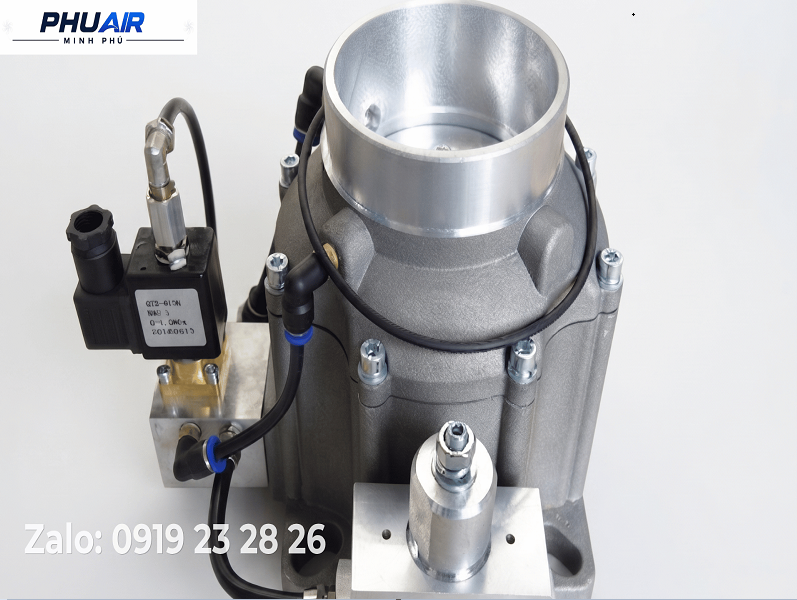
Electrical Control Circuit or Solenoid Valve Failure
The solenoid valve is an intermediate component that receives commands from the control board to open/close the control air path to the inlet valve. If the solenoid valve coil burns out, the relay contact fails, or the signal wire is broken, control air will not be supplied to the inlet valve. Depending on the design of each machine model, this control voltage is typically 24VAC, 220VAC, or 24VDC.
Blow-off Valve Stuck in the Open Position
The blow-off valve is responsible for releasing residual pressure from the oil separator vessel to the atmosphere when the compressor operates in unloaded mode, thereby reducing the load on the motor. If this valve becomes stuck open due to dirt deposits, a damaged valve diaphragm, or a seized spring, all compressed air generated will continuously escape to the atmosphere instead of being supplied to the receiver.
Severe Blockage in the Air Treatment and Filtration System:
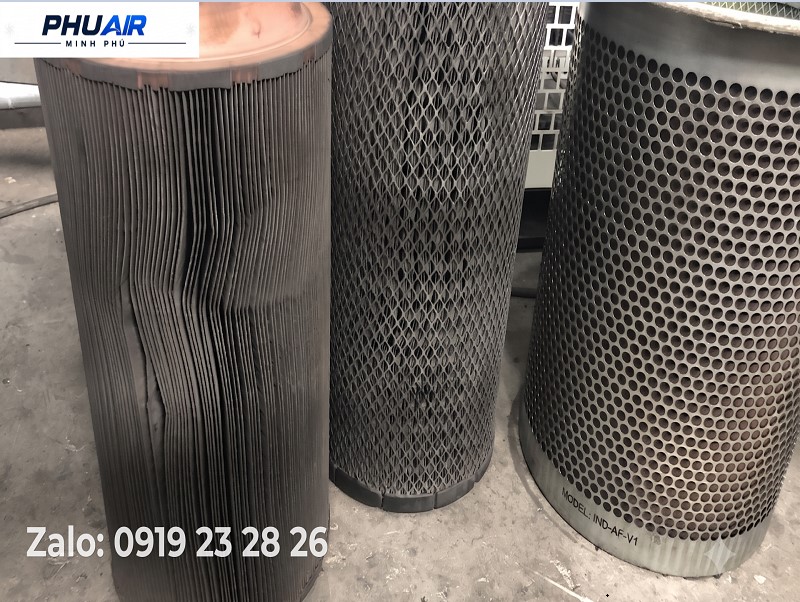
The primary Air Intake Filter is clogged with textile dust and cement particles, blocking the intake airflow. The oil separator element is clogged with degraded, contaminated oil that has formed oil deposits.
If the internal compressed air piping is cracked or broken, the minimum pressure valve diaphragm is torn, or the MPV spring is broken, pressure in the oil separator vessel cannot accumulate to the minimum pressure level (typically 3.5 – 4.5 bar) required to maintain the lubricating oil circulation and supply air to the system.
5. Safe On-Site Inspection Sequence (5-Step SOP)
Step 1: Safely Isolate Energy (LOTO)
Before performing any mechanical inspection, completely disconnect the main power supply, switch off the circuit breaker, lock the electrical cabinet, and release all residual system pressure to 0 bar.
Step 2: Visually Inspect the Drive System
Observe the condition of the drive belt (for belt-driven compressors) or flexible coupling (for direct-drive compressors). Check whether the belt is broken/slipping or whether the coupling is damaged. Only manually rotate the airend shaft for inspection if the manufacturer's operating manual and safety procedure permit this.
Step 3: Measure the Control Voltage to the Solenoid Valve
Open the electrical control cabinet and power on the compressor in test mode. Use a voltage meter (VOM) to measure across the two wires supplying the coil of the load-control solenoid valve. Compare the measured value with the technical specification indicated on the solenoid valve body of the machine model in operation.
Step 4: Inspect the Inlet Valve Mechanism and Control Air Line
If the voltage supplied to the solenoid valve is normal but the inlet valve still does not open, inspect the compressed air control line from the solenoid valve to the inlet valve cylinder for kinks, punctures, or blockages.
Step 5: Check the Tightness of the Blow-off Valve and Piping
When the compressor is operating in the loaded mode, observe the blow-off valve exhaust port. If compressed air is discharged strongly and continuously from this exhaust port, shut down the compressor and remove the blow-off valve assembly to inspect the diaphragm and internal spring.
6. Mistakes to Avoid - Technical Recommendations
Do not arbitrarily increase the pressure setting on the display: Increasing the Set Pressure parameter when the compressor is experiencing a mechanical fault will not help the compressor build pressure. On the contrary, it may cause the system to operate outside its designed parameters, increasing the risk of motor overload or activation of the safety valve discharge mechanism.
Do not arbitrarily add lubricating oil: Low oil level is primarily associated with high-temperature and lubrication issues. Hastily adding oil when the compressor fails to build pressure may result in an overfilled oil system and oil carryover into the compressed air line when the inlet valve opens again.
Do not skip the residual pressure release step: Although the pressure gauge reads 0 bar, some internal chambers may still retain pressure due to localized blockages. Disassembling a valve before completely releasing residual pressure presents a serious risk of occupational injury.
7. Frequently Asked Questions (FAQ)
Can a clogged oil separator cause the compressor to completely fail to build pressure?
A clogged oil separator generally causes high differential pressure, heavy compressor loading, increased temperature, or weak air delivery. A completely blocked oil separator causing the outlet pressure to reach 0 bar is relatively rare and is typically accompanied by activation of the safety valve on the oil separator vessel due to excessively high internal pressure.
Why does the solenoid valve still make a "click" but pressure does not increase?
The "click" only confirms that the solenoid coil has attracted the valve core. However, if the orifices inside the solenoid valve body are clogged with dirt or deposits, control air may still be unable to pass through and push the inlet valve stem open.
What information should I prepare when contacting PhuAir for remote diagnosis support?
To help PhuAir technicians quickly narrow down the fault, you should prepare: a photo of the machine nameplate (Model/Serial), a photo of the controller display (including any fault codes, if available), and a short video showing the pressure gauge condition and the machine's operating sound when the start button is pressed.
8. Technical Support from PhuAir
Is your air compressor still unable to build pressure after performing the inspection steps above?
Take photos of the machine nameplate, controller display/fault code, and pressure gauge, then send them directly to PhuAir. The PhuAir technical team will refer to the schematic diagram and actual technical data for the specific machine model to guide you through the next safe troubleshooting steps.