

Screw Air Compressor Will Not Run: Causes and Inspection Methods
Article reviewed by the PhuAir Technical Department - Updated: 05/09/2026
An air compressor that will not run or cannot start may be caused by various issues, ranging from power loss, a tripped circuit breaker (CB), and phase loss to problems with the contactor, inverter, sensors, or controller. This is a no-start fault, which is completely different from a condition where the machine is still running but cannot build pressure. If your machine still starts and runs normally but pressure does not increase or builds slowly, see the article [Screw Air Compressor Builds Pressure Slowly or Has Low Pressure: Minor Issue or Sign of Major Failure?] for guidance specific to that issue.
Do not repeatedly turn the compressor on and off to attempt a restart before identifying the cause. The correct approach is to inspect step by step: power supply → control panel → fault code → control circuit → motor and related components. The following article explains how to identify possible causes and the basic inspection steps to perform before calling a technician to repair the air compressor.
1. Quick Answer
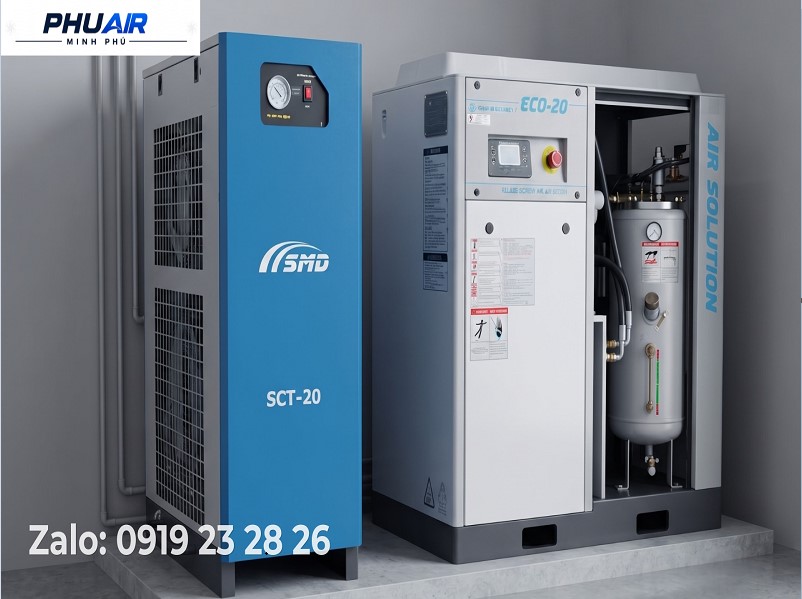
An air compressor that will not run is commonly caused by one of four groups of issues: power supply and phase loss, safety system/start conditions, contactor and control circuit faults, or inverter and sensor faults. Common signs include:
- The machine has no power supply, and the display does not light up.
- The CB/circuit breaker trips or switches off during startup.
- The machine has phase loss or phase reversal, or the voltage is not suitable.
- The Emergency Stop button is activated.
- The machine has an unresolved Alarm/Fault.
- The thermal relay or overcurrent protection (EOCR) has tripped.
- The contactor or control circuit has a fault.
- The inverter reports a fault (for machines equipped with an inverter).
- The sensor or control signal is not operating correctly.
Important: The same symptom of an "air compressor that will not run" can have completely different causes depending on the manufacturer and model. Therefore, components should not be replaced based only on external symptoms without first reading the specific fault code.
2. Quick Diagnostic Table for an Air Compressor That Will Not Run
Symptom | Possible Cause | Inspection Method |
|---|---|---|
Display does not light up. | Power loss, CB, fuse, or control power supply. | Check the incoming power supply. |
Power is available but the machine does not run when START is pressed. | Alarm, Emergency Stop, or Start conditions not satisfied. | Check the display and machine status. |
CB trips during startup. | Overcurrent, phase loss/phase reversal, motor, or electrical circuit issue. | Check the power supply and motor. |
Machine reports Overload. | Overload or a power supply/motor/mechanical issue. | Check the cause of the overload. |
Machine reports Inverter Fault. | Inverter fault or a related system fault. | Read the inverter fault code. |
Machine starts and then stops automatically. | Thermal, pressure, motor protection, or operating condition. | Check the Alarm and operating parameters. |
Machine does not restart automatically after a power outage. | Auto Restart setting, Alarm, or Start condition. | Check the operating mode and settings. |
Machine runs but does not load. | Inlet valve, control valve, sensor, or controller. | See the article [Air Compressor Does Not Build Pressure]. |
The table above is intended only as a diagnostic guide. Accurate identification of the cause requires consideration of the machine manufacturer, model, fault code, and actual machine condition.
3. Main Groups of Causes That Prevent an Air Compressor from Running
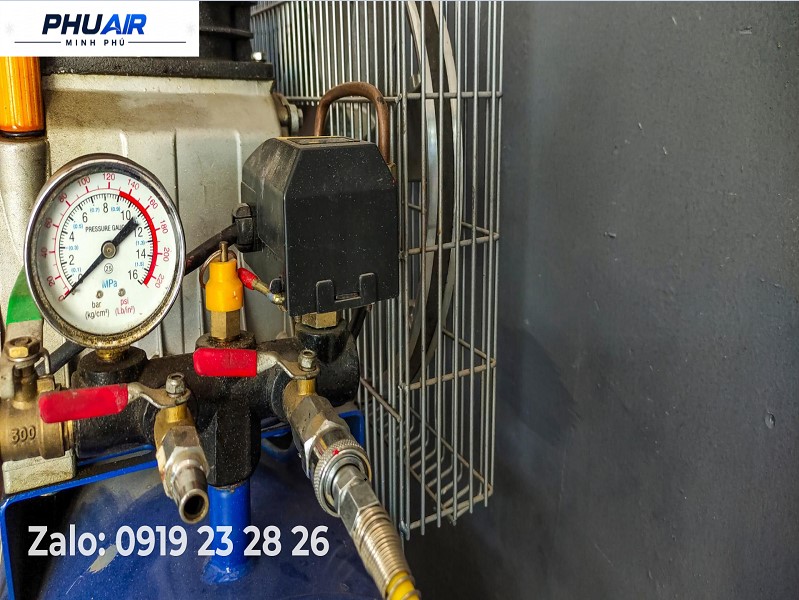
Group 1: Power Supply and Phase Loss Issues
Complete power loss: The display does not light up, and indicator lights do not operate. Check the power supply CB/circuit breaker, fuses, the plant's main power supply, the voltage supplied to the machine, wiring, and connections.
CB/circuit breaker trips during startup: This may be caused by excessive starting current, phase loss/phase reversal, a motor problem, loose electrical wiring, or improperly configured protection devices. Do not arbitrarily increase the CB rating or bypass protection devices to force the machine to run.
Phase loss or phase reversal: Industrial air compressors commonly use a three-phase power supply. Loss of one phase may prevent the motor from starting or cause the protection device to trip immediately. Phase reversal (reversed phase sequence) is more dangerous because it causes the motor to rotate in the wrong direction - for a screw air compressor, even running in the reverse direction for only a few seconds can seriously damage the airend because lubricating oil is not circulated in the correct direction. Three-phase electrical inspections should be performed by qualified personnel.
Air compressor thermal relay / EOCR overcurrent protection trips: When the motor is overloaded, the thermal relay or Electronic Over Current Relay (EOCR) will shut down the machine to protect the motor. The cause of the overload may be related to supply voltage, phase loss, a seized transmission mechanism, or an improperly configured protection setting.
Group 2: Safety System and Start Condition Issues
Emergency Stop is activated: Check whether the emergency stop button has been properly released and whether an Emergency warning is still displayed on the screen. Do not reset or bypass the Emergency Stop before clearly determining why it was activated.
The machine is displaying an unresolved Alarm/Fault: Warnings may be related to high temperature, oil pressure, motor overload, inverter faults, sensors, or the cooling system. Read the fault code and determine the cause before resetting - repeatedly resetting the machine without addressing the root cause will cause the fault to recur.
Start conditions are not satisfied: The machine may be in a mode that prevents startup due to Auto/Manual settings, the Auto Restart function, or Start conditions specific to the configuration of each model.
Group 3: Contactor and Control Circuit Issues
For machines using direct-on-line or star-delta starting systems, the contactor and control circuit are components that need to be inspected when the machine has power but does not start. Common signs include: pressing START but the contactor does not close, the contactor closes intermittently, the machine runs intermittently, a control signal is present but power is not supplied to the motor, or the contacts are burned/degraded. Contactor inspection must be performed inside the electrical cabinet with strict electrical safety measures in place.
Group 4: Inverter and Sensor Issues
Inverter reports a fault (for VSD machines): Common fault groups include overcurrent, overvoltage, undervoltage, overheating, motor faults, communication faults, or control faults. Do not arbitrarily replace the inverter simply because the machine will not run - read the fault code and check the power supply, motor, and control signals before reaching a conclusion.
Incorrect sensor or control signal: Modern air compressors use multiple sensors (pressure, temperature, differential pressure, and oil system sensors) to monitor operation. If a sensor sends an inaccurate signal, the controller may interpret the machine as being in an unsafe condition and lock out the start function.
Reduced motor insulation resistance: After a long period of shutdown or in a humid environment, the motor's insulation resistance may decrease, causing a ground fault or electrical leakage. Qualified technicians can use a Megger to measure the insulation resistance and determine whether the motor is safe to operate before re-energizing it.
4. On-Site Safety Inspection Procedure (SOP)
Step 1 - Ensure Electrical Safety Before Inspection
Do not open the electrical cabinet or directly measure voltage if you are not qualified to work with electrical systems. If the electrical cabinet needs to be opened, the power supply must be properly isolated, the lockout/tagout (LOTO) procedure must be followed, and measurements must only be performed by personnel with appropriate electrical qualifications.
Step 2 - Check the Incoming Power Supply
Confirm that the machine has power and that the voltage is appropriate: CB/circuit breaker, fuses, main power supply, wiring condition, and connections.
Step 3 - Check the CB/Circuit Breaker and Emergency Stop
Check whether the CB has switched off or tripped, and ensure that the emergency stop button is not activated.
Step 4 - Read the Status and Fault Code on the Control Display
Check what status the machine is displaying (Ready, Stop, Alarm, Fault, Overload, Inverter Fault...). If a fault code is present, record it accurately before resetting - this information is very useful for the diagnostic process.
Step 5 - Check the Start Conditions
Check the Auto/Manual mode, Auto Restart function, and Start conditions according to the machine model's instructions.
Step 6 - Check the Protection Devices
If there are signs of overload, phase loss/phase reversal, or a protection device (thermal relay, EOCR) has tripped, identify the root cause before restarting the machine rather than simply resetting it and continuing operation.
Step 7 - Check the Control Circuit, Contactor, Inverter, and Motor
If no abnormality is identified in the steps above, a more in-depth inspection is required: contactor, relay, inverter, sensors, motor insulation resistance, and related components.
5. Common Mistakes to Avoid When Handling an Air Compressor That Will Not Run
⚠️ Repeatedly Pressing Start Before Identifying the Cause
Repeatedly turning the machine on and off before determining the cause may increase the risk of equipment damage, particularly when the issue is related to voltage or the motor.
⚠️ Repeatedly Resetting the Alarm/Fault Without Addressing the Root Cause
For example: motor overload → protection relay trips → machine stops → reset → machine continues operating under overload → machine stops again. Repeated resetting does not resolve the root cause and may result in more severe damage over time.
⚠️ Arbitrarily Increasing the CB Rating or Bypassing Protection Devices to Force the Machine to Run
This is a dangerous mistake that increases the risk of equipment damage and serious electrical safety hazards.
6. When Should You Call a Technician Instead of Inspecting the Machine Yourself?
Do not open the electrical cabinet or perform in-depth intervention if you do not have the required expertise. Contact a technician immediately when:
The machine repeatedly trips the CB.
There is a burning smell or signs of electrical burning.
The motor produces abnormal noises.
The machine reports a serious fault or the inverter repeatedly reports a Fault.
The machine overheats or shows signs of an electrical short circuit.
The machine has been reset but the fault reappears.
The cause cannot be identified after completing the basic inspection steps in Section 4.
7. Information to Prepare When Contacting a Technician
If you need remote technician support or a repair quotation, prepare as much information as possible:
- Machine brand (for example: Hitachi, Kobelco, Fusheng, KyungWon, Atlas Copco...).
- Machine model and power rating (for example: 22 kW).
- Machine serial number.
- Current condition: no power / power available but machine does not run / starts and then stops / does not load.
- Fault code displayed on the screen, if any.
- Photos of the control panel and machine nameplate.
- A short video showing the fault condition, if available.
This information helps technicians narrow down the possible causes before arriving on site and reduces the risk of incorrect diagnosis based only on a general symptom.
8. Frequently Asked Questions About an Air Compressor That Will Not Run
Q: What should I do if the air compressor has power but will not run?
Answer: First, check the status on the control display, the Alarm/Fault code, the Emergency Stop button, and the start conditions. If no fault is displayed, continue by checking the control circuit, protection devices, contactor, inverter, sensors, and motor depending on the machine configuration.
Q: What if the air compressor loses power and then does not restart automatically when power is restored?
Answer: This may be related to the Auto/Manual mode, Auto Restart function, an unresolved Alarm, or the machine not meeting the conditions required for startup. The specific settings depend on the manufacturer and model, so it should not be assumed that the machine must automatically restart after power is restored.
Q: If the air compressor trips the CB during startup, should I switch it back on immediately?
Answer: Do not repeatedly close the CB to try again. The cause of the CB trip must be identified, particularly if the machine trips the CB immediately upon startup or shows abnormal electrical symptoms.
Q: Does an air compressor that will not run mean that the motor has failed?
Answer: Not necessarily. The motor is only one of many possible causes. The power supply, protection devices, control circuit, contactor, inverter, sensors, and start conditions should be checked before concluding that the motor has failed.
Q: What is the difference between an air compressor that will not run and an air compressor that will not build pressure?
Answer: An air compressor that will not run is a condition in which the motor/airend cannot operate (fails to start), commonly due to electrical faults, contactor issues, inverter faults, or safety conditions. In contrast, an air compressor that will not build pressure is a condition in which the machine is already running normally but fails to generate pressure, commonly due to valve, filter, or air leakage issues. See more details in the article [Air Compressor Does Not Build Pressure: Should You Repair It or Replace It?].
9. Conclusion
An air compressor that will not run does not necessarily mean that the motor or airend has failed. The cause may start with simple issues such as power loss, a tripped CB, or an activated Emergency Stop, but it may also involve phase loss, overload, the contactor, inverter, sensors, or controller.
PhuAir provides air compressor-related services including troubleshooting and fault diagnosis, repair of air compressors that fail to start, inspection of electrical and control systems, inspection of motors/contactors/relays/inverters, inspection of sensors and protection systems, periodic maintenance, and supply of spare parts according to the correct model. Rather than replacing components based on assumptions, PhuAir prioritizes identifying the cause - verifying the model - checking the required spare parts - and proposing an appropriate solution.
👉 Is your air compressor not running? Send PhuAir a photo of the fault display, machine nameplate, and the information listed in Section 7 via Zalo for support with inspection and the fastest possible troubleshooting solution.