

1. Why Does a Piston Air Compressor Consume Excessive Oil?
Excessive oil consumption in a piston air compressor may be related to worn piston rings, piston or cylinder wear, unsuitable lubricating oil, or leaks at sealing points. However, a drop in oil level alone is not sufficient evidence to conclude that the piston rings have failed.
In a piston air compressor, lubricating oil is primarily contained in the crankcase, where it lubricates moving components. When sealing between the piston, piston rings, and cylinder wall deteriorates, oil may enter the compression chamber and be carried along with the compressed air. Conversely, if oil leaks externally through gaskets, seals, or other sealing points, the oil loss has an entirely different cause.
Therefore, when a piston air compressor consumes excessive oil, first determine where the oil is being lost and how it is being lost before deciding on repairs or replacement parts.
2. Signs That a Piston Air Compressor Is Consuming Excessive Oil
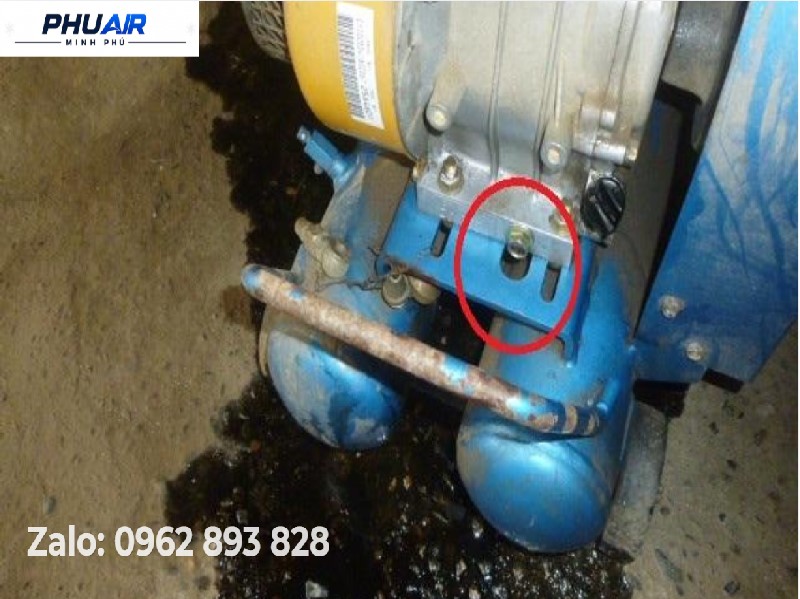
Do not assess excessive oil consumption based on intuition or the need to top up the oil just once. Monitor the oil level over time and evaluate it alongside other symptoms.
Symptom | Possible Cause | What to Check |
|---|---|---|
Rapid drop in crankcase oil level | Oil leakage or excessive oil consumption | Crankcase, gaskets, seals, piston rings |
Oil visible on the exterior of the machine | Oil leakage | Gaskets, seals, joint surfaces, drain plug |
Excessive oil consumption accompanied by slow pressure buildup | Possible loss of compression-chamber sealing | Piston rings, piston, cylinder, valves |
Compressor takes a long time to reach the required pressure | Compression efficiency may be reduced | Piston rings, piston, intake/discharge valves |
Oil turns black or shows abnormal signs | Oil degradation, contamination, or a mechanical problem | Oil, crankcase, piston rings |
Signs of gas leaking into the crankcase | Blow-by | Piston and cylinder sealing condition |
Compressor overheating accompanied by excessive oil consumption | Multiple causes may be present simultaneously | Oil, cooling system, valves, piston rings |
A single symptom is not sufficient to conclude that the piston rings or piston are worn. PhuAir technical documentation also emphasizes that pressure-building performance, airflow, oil consumption, and signs of gas leakage must be assessed together when evaluating piston ring condition.
1. Worn Piston Rings Causing Excessive Oil Consumption in a Piston Air Compressor
This is one of the key causes to consider when a piston air compressor exhibits both excessive oil consumption and reduced compression or slow pressure buildup.
Piston rings are located between the piston and the cylinder wall and help maintain sealing during compression. When the piston rings are worn, lose their elasticity, or become stuck in the piston grooves, the seal between the piston and cylinder may deteriorate.
This can cause gas to leak into the crankcase, a phenomenon commonly known as blow-by. At the same time, oil from the lubrication area may enter the compression chamber and be consumed during the compression process.
PhuAir's internal technical documentation notes that piston rings can become worn, lose their elasticity, or become stuck due to oil deposits. These conditions reduce sealing between the piston and cylinder, allowing gas to leak into the crankcase.
When Should You Suspect Worn Piston Rings?
This possibility becomes more significant when the compressor exhibits the following symptoms simultaneously:
Abnormal oil consumption + slow pressure buildup + extended running time + signs of blow-by.
If the compressor only consumes excessive oil but still maintains normal pressure, airflow, and operating conditions, there is insufficient evidence to conclude that the piston rings are worn.
2. Worn Piston or Cylinder
Piston rings are not the only components involved in maintaining compression-chamber sealing.
If the piston or cylinder wall is worn, scratched, or mechanically damaged, the clearance between the piston and cylinder may increase. This can reduce sealing performance, cause gas leakage, and affect oil control.
In such cases, replacing only the piston rings may not resolve the problem completely if the piston or cylinder surface has already been damaged.
Therefore, during disassembly and inspection, assess the piston rings, piston, and cylinder wall together rather than focusing on a single component.
PhuAir technical documentation also identifies damaged piston rings or a scratched cylinder wall as potential causes of reduced compression performance in a piston air compressor.
3. Oil Entering the Compression Chamber Due to Reduced Sealing Performance
During operation, the piston moves continuously inside the cylinder. If the sealing system between the piston and cylinder no longer functions properly, oil may pass from the lubrication area into the compression chamber.
Depending on the compressor's design, the oil may be burned, carried along with the compressed air, or accumulate in areas downstream of the air passage.
The important point is to distinguish this condition from external oil leakage.
If oil is visible on the floor or machine housing, prioritize identifying the external leak source.
If there are no visible external leaks but the oil level continues to drop, accompanied by symptoms associated with reduced compression-chamber sealing, investigate further to determine whether oil is entering the compression chamber.
4. Leaking Gaskets, Seals, or Oil Drain Plug
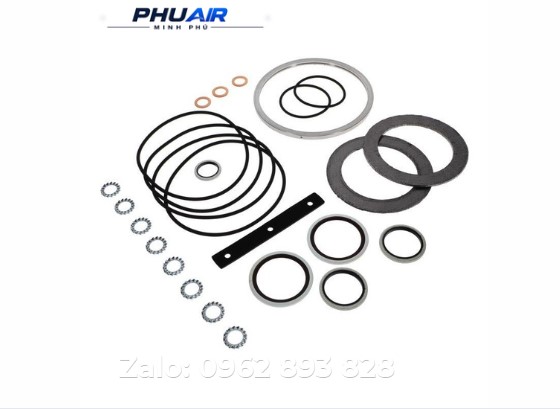
Not every case of excessive oil consumption in a piston air compressor is caused by a problem inside the compressor head.
Oil can be lost through the following points:
Location | Signs to Look For |
|---|---|
Crankcase gasket | Oil seeping or flowing around the joint surface |
Shaft seal | Oil appearing around the rotating shaft |
Oil drain plug | Oil leaking at the drain plug |
Compressor head/crankcase joint | Oil seeping around the joint |
Oil lines or fittings | Oil traces around the connections |
One important point to note is that the location where oil is visible is not necessarily the point where the leak originates.
Oil may flow from a higher point to a lower area. Therefore, clean the suspected area and identify where oil reappears before replacing any gaskets or seals.
5. Unsuitable or Degraded Lubricating Oil
Lubricating oil directly affects the condition of the mechanical components in a piston air compressor.
If the oil does not meet the machine's requirements, has degraded, or is contaminated, lubrication performance may be affected, and oil deposits may form on components.
In particular, PhuAir technical documentation notes that oil deposits may be associated with piston rings becoming stuck in the piston grooves.
When investigating excessive oil consumption, check the following:
The type of oil currently in use.
Operating time since the last oil change.
Maintenance history.
Oil condition inside the crankcase.
Signs of deposits or oil degradation.
Do not change or mix oil types without first confirming their suitability for the specific machine model.
6. Piston Rings Stuck Due to Oil Deposits
One important point is that piston rings do not necessarily have to be completely worn out to cause problems.
Oil deposits can cause piston rings to become stuck in the piston grooves. When the rings can no longer function as designed, the sealing performance of the compression chamber may decrease.
This condition can result in a combination of excessive oil consumption, blow-by, and reduced compression efficiency.
Therefore, if the compressor has a history of using unsuitable oil or operating with degraded oil, inspect the condition of oil deposits when checking the piston rings rather than assessing wear alone.
7. Extended Compressor Running Time Due to Other Causes Can Be Mistaken for Piston Ring Wear
One easily overlooked point is that extended running time does not necessarily mean the piston rings are worn.
If air demand increases, the piping system develops leaks, or the intake/discharge valves do not operate correctly, the piston air compressor may need to run longer to reach the required pressure.
The operator may then notice higher temperatures and faster oil-level reduction and immediately suspect a piston ring fault.
PhuAir documentation also notes that if the compressor runs for extended periods because of increased air demand or system leaks, repairing the compressor head may not resolve the underlying cause of the extended running time.
Therefore, check air demand and the system for leaks before concluding that the problem lies entirely inside the compressor head.
3. How to Inspect a Piston Air Compressor That Consumes Excessive Oil
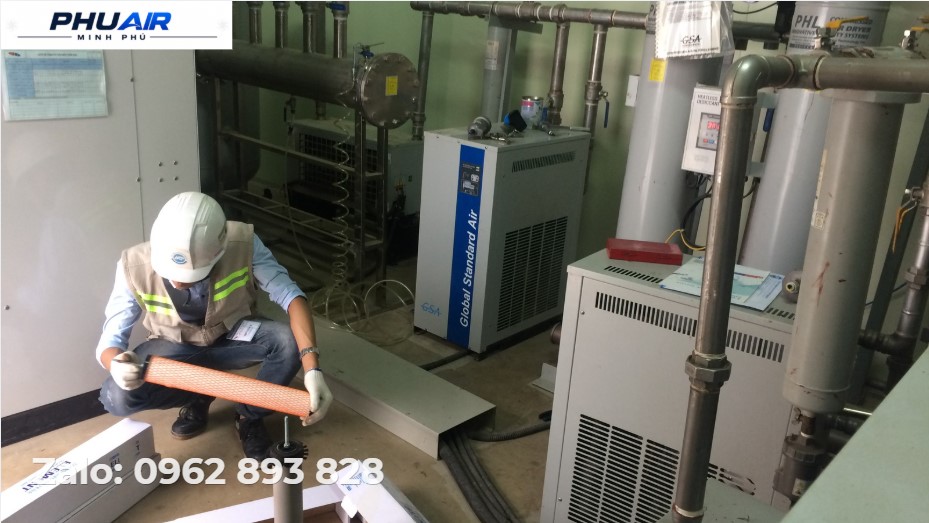
Step 1: Confirm the Oil Level
Check the oil level under the conditions specified by the manufacturer.
Record the oil level and monitor its downward trend during operation rather than relying on a single observation.
Step 2: Check for External Oil Leaks
Inspect the crankcase, gaskets, seals, drain plug, and joint surfaces.
If oil is found on the exterior, identify the leak's origin before disassembling or repairing the machine.
Step 3: Check Pressure-Building Performance
Monitor how long the compressor takes to reach the required pressure.
If the compressor consumes excessive oil and also builds pressure slowly, runs for extended periods, or fails to reach the required pressure, investigate causes related to the sealing performance of the compression chamber.
Step 4: Inspect the Intake and Discharge Valves
Faulty intake or discharge valves can also cause slow pressure buildup or prevent the compressor from reaching the required pressure. Therefore, not all loss of compression should be attributed to the piston rings.
PhuAir notes that cracked, contaminated, or improperly sealing intake/discharge valves can reduce the compression efficiency of a piston air compressor.
Step 5: Assess Signs of Blow-by
If there are signs of gas leaking into the crankcase, assess the sealing condition of the piston, piston rings, and cylinder.
This is far more informative than simply observing a drop in the oil level.
Step 6: Disassemble for Inspection Only When Sufficient Evidence Is Available
If the symptoms are consistent with a mechanical fault, a technician can then disassemble the compressor to inspect the piston rings, piston, and cylinder in accordance with the procedure for the specific model.
Do not disassemble the compressor head solely because the machine is consuming excessive oil.
4. Quick Diagnostic Table for Excessive Oil Consumption in Piston Air Compressors
Combined Symptoms | Primary Causes to Investigate |
|---|---|
Excessive oil consumption with visible external oil | Gaskets, seals, drain plug, joint surfaces |
Excessive oil consumption + slow pressure buildup | Piston rings, piston, cylinder, valves |
Excessive oil consumption + signs of blow-by | Piston–piston ring–cylinder sealing condition |
Excessive oil consumption + excessive oil deposits | Degraded oil, oil deposits, piston rings |
Excessive oil consumption + high temperature + extended running time | Check oil, cooling, valves, and sealing condition together |
Excessive oil consumption while the compressor still reaches normal pressure | Insufficient evidence to conclude that the piston rings are faulty |
Extended running time without confirmed excessive oil consumption | Check air demand, air leaks, and compression performance first |
Should You Replace the Piston Rings Immediately When a Piston Air Compressor Consumes Excessive Oil?
No.
Piston rings are an important potential cause, but they are not the only one.
If excessive oil consumption is caused by leaking gaskets or seals, replacing the piston rings will not solve the problem.
If the piston or cylinder is worn, replacing only the piston rings may not resolve the issue completely.
If the compressor runs for extended periods because of increased air demand or system air leaks, repairing the compressor head may not resolve the operating problem.
The appropriate approach is to identify the symptoms, inspect external causes and easily accessible components first, and then assess the sealing condition of the piston–piston ring–cylinder assembly.
5. Common Mistakes When Addressing Excessive Oil Consumption in Piston Air Compressors
Replacing the Piston Rings as Soon as Excessive Oil Consumption Is Detected
Excessive oil consumption can originate from multiple locations. Supporting evidence is needed before concluding that the piston rings are worn.
Simply Adding Oil and Continuing to Operate the Compressor
If oil is leaking or being consumed abnormally, adding more oil only replenishes what has been lost without addressing the root cause.
Checking Only the Oil Level Without Checking Pressure-Building Performance
Pressure-building performance and signs of gas leakage can provide important information for assessing the sealing condition of the compression chamber.
Ignoring the Intake and Discharge Valves
Faulty intake or discharge valves can also cause reduced compression, slow pressure buildup, and extended operating time. These issues must be distinguished from piston ring faults.
Repeatedly Test-Running the Compressor Despite Abnormal Symptoms
If the compressor simultaneously exhibits excessive oil consumption, abnormal overheating, poor pressure buildup, unusual noise, or vibration, stop the machine and investigate the cause rather than continuing repeated test runs.
6. FAQ: Excessive Oil Consumption in Piston Air Compressors
Is Excessive Oil Consumption in a Piston Air Compressor Caused by the Piston Rings?
Possibly, but not necessarily. Worn or stuck piston rings can reduce the seal between the piston and cylinder, causing blow-by and contributing to oil consumption. However, external oil leaks, piston/cylinder condition, lubricating oil, and other operating-related causes must also be ruled out.
Can Worn Piston Rings Cause Excessive Oil Consumption?
Yes. When piston rings can no longer maintain an adequate seal, oil may enter the compression chamber, and blow-by may occur at the same time. However, other symptoms must be considered to confirm the cause.
If a Piston Air Compressor Consumes Excessive Oil but Builds Pressure Normally, Should the Piston Rings Be Replaced?
There is insufficient evidence to justify replacement. If the compressor still reaches the required pressure and shows no signs of reduced compression-chamber sealing, inspect external oil leaks and sealing points first.
Are Excessive Oil Consumption and Slow Pressure Buildup Related in a Piston Air Compressor?
They can be. Wear of the piston rings, piston, or cylinder can reduce sealing performance and compression efficiency. However, faulty intake/discharge valves and other causes can also lead to slow pressure buildup.
How Can You Tell Whether the Piston Rings in an Air Compressor Are Worn?
Do not rely solely on the oil level or compressor-head temperature. Consider pressure-building performance, airflow, oil consumption, signs of blow-by, and the results of an actual mechanical inspection performed during disassembly in accordance with the correct procedure.
Can a Piston Air Compressor Continue Running When It Consumes Excessive Oil?
If only a low oil level is detected, first identify the cause. If the compressor also exhibits rapid oil loss, abnormal temperature, unusual noise, vibration, poor pressure buildup, or other mechanical warning signs, stop the machine and inspect it before resuming operation.
7. Conclusion
Excessive oil consumption in a piston air compressor does not necessarily mean that the piston rings are worn.
Potential causes include external oil leaks, worn or stuck piston rings, piston/cylinder wear, unsuitable or degraded lubricating oil, and issues related to operating conditions.
If the compressor exhibits excessive oil consumption + slow pressure buildup + extended running time + signs of blow-by, pay particular attention to the sealing condition of the piston–piston ring–cylinder assembly.
Conversely, if the oil level is dropping but there are no signs of reduced compression performance, inspect external leak points and oil condition before deciding to disassemble the compressor head.
PhuAir recommends identifying the actual cause before replacing piston rings, the piston, or the cylinder.
If you need inspection support, provide the machine model, a photo of the nameplate, the oil-level condition, operating hours, pressure-building performance, and photos of suspected oil leak areas so that a technician can narrow down the possible causes.