

Why Does a Screw Air Compressor Consume Excessive Oil? Causes and Inspection Methods
1. Why Does a Screw Air Compressor Consume Excessive Oil?
Excessive oil consumption in a screw air compressor is not necessarily caused by the oil separator alone. When the oil level drops rapidly or oil needs to be replenished frequently, first determine whether the oil is leaking externally, being carried out of the machine with the compressed air, or being consumed due to operating conditions and the internal condition of the system.
In an oil-injected screw air compressor, oil is used not only for lubrication but also to provide sealing and help remove heat from the compression element. Therefore, an abnormally low oil level requires investigation to identify the cause, rather than simply adding more oil and continuing to operate the machine.
The main areas to prioritize for inspection include the oil lines and sealing points, oil separator, oil return line, oil condition, oil filter, and the machine's operating conditions.
2. What Are the Signs That an Air Compressor Is Consuming Excessive Oil?
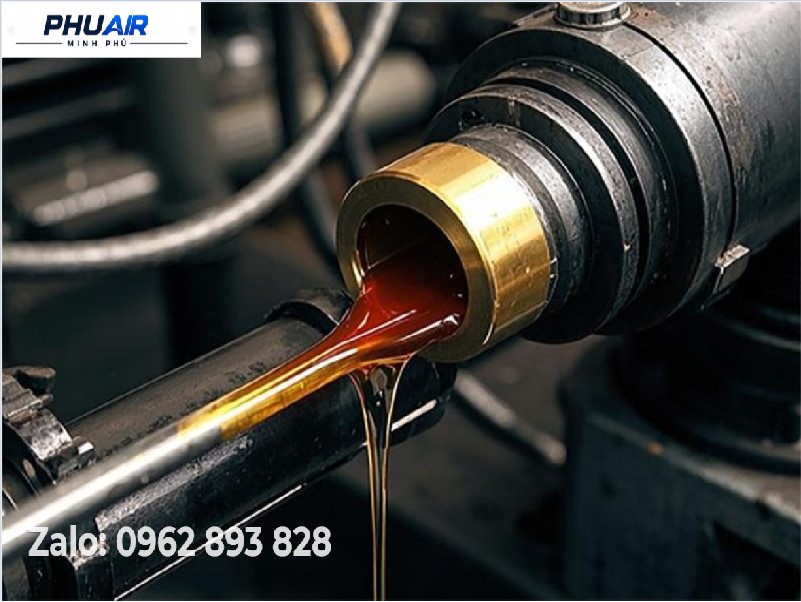
Do not conclude the cause solely from a decrease in the oil level in the reservoir. The actual oil consumption rate must be assessed together with any accompanying symptoms.
Observable Symptom | What to Check | Possible Cause |
|---|---|---|
Oil level drops, and oil is visible on the outside of the machine | Oil lines, fittings, gaskets, seals, and sealing points | External oil leakage |
Oil level drops, and there are signs of oil near the air discharge | Compressed air output, downstream piping, and water/oil separation equipment | Oil carryover into the compressed air |
Oil level drops after an oil change or maintenance | Oil type, amount added, and maintenance procedure | Incorrect oil type, oil level, or maintenance procedure |
Oil level drops alongside an increase in operating temperature | Oil, oil filter, cooler, and cooling conditions | Oil system or cooling system problem |
Excessive oil consumption occurs alongside changes in load conditions | LOAD/UNLOAD mode, air demand, and load-running time | Operating conditions |
Excessive oil consumption persists after the oil separation system has been inspected | Compression element and related oil circuits | Further diagnosis required |
2.1. External Oil Leaks Causing a Drop in Oil Level
This is the first cause to investigate because it is relatively easy to identify.
Oil may leak from oil line fittings, gaskets, flanges, seals, or other sealing points. However, the location where oil is visible on the floor or machine housing is not necessarily where the leak originates.
Oil may flow from a higher location to lower areas before dripping onto the floor. Therefore, simply looking at an oil stain and immediately replacing a component in that area creates a considerable risk of addressing the wrong location.
What Needs to Be Checked
Clean the suspected area, then monitor where oil reappears under safe operating conditions.
Inspect fittings, oil lines, gaskets, mating surfaces, and any locations showing signs of oil seepage.
If an external oil leak is identified, address the cause of the leak before continuing to assess oil consumption.
2.2. Oil Separator Operating Ineffectively
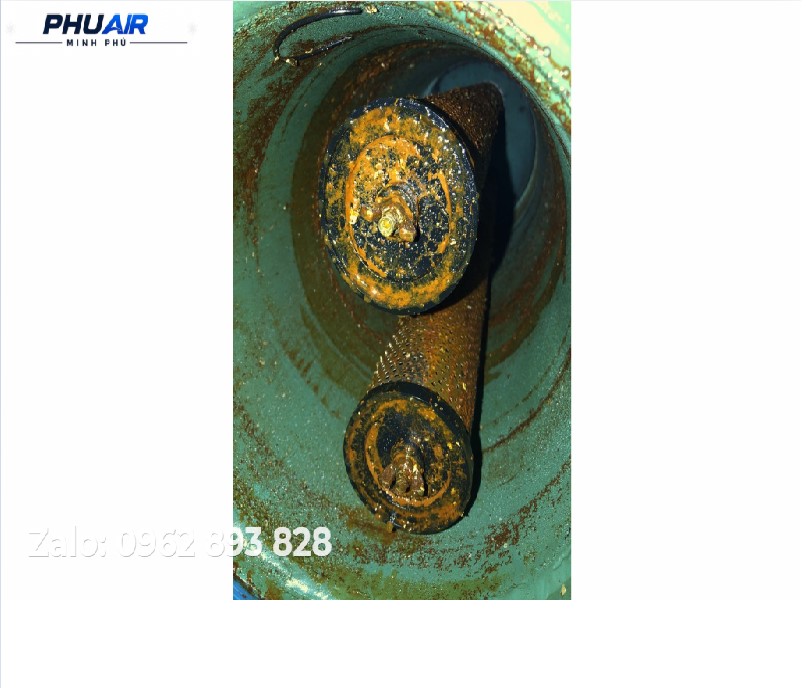
For oil-injected screw air compressors, the oil separator separates oil from the air-oil mixture after compression, retaining the oil so that it can return to the system.
Therefore, when oil is being carried into the compressed air, the oil separator is one of the components that should be inspected.
However, do not immediately conclude that the oil separator has failed simply because the machine is consuming excessive oil.
Assess the actual condition of the oil separator, maintenance history, and relevant operating parameters before deciding whether replacement is necessary.
PhuAir's internal documentation also identifies the “air compressor oil separator” as an important component group within the system, responsible for separating oil from compressed air and reducing oil consumption.
When the Oil Separator Is Suspected
Inspect the oil separator according to the instructions for the specific machine model.
If the model has differential-pressure monitoring or related alarms, compare the actual data with the manufacturer's specifications.
Review the oil separator replacement history and the machine's operating conditions.
Do not apply a single differential-pressure value or fixed replacement interval to every brand and model.
2.3. Restricted or Improperly Functioning Oil Return Line
In oil-injected screw air compressor systems, the separated oil must be returned to the oil system.
If the oil return line is restricted, blocked, or associated components do not function correctly, oil return may be affected.
This is why, when a machine consumes excessive oil, the inspection should not focus solely on the oil separator element while overlooking the oil return line.
What Needs to Be Checked
Inspect the oil return line according to the diagram for the specific model.
Check the condition of the piping, fittings, and related components.
Review the maintenance history to determine whether the excessive oil consumption began after disassembly, reassembly, or servicing.
2.4. Incorrect Oil Level Measurement or Oil Filling
One easily overlooked issue is that the actual oil level may not have been assessed under the correct inspection conditions.
The oil level must be checked under the conditions specified by the manufacturer for the particular model. If the machine is inspected in the wrong operating state or oil is added based on guesswork, the operator may incorrectly conclude that the machine is consuming excessive oil.
In particular, when the oil level is low, do not simply top up the oil without further investigation.
PhuAir's internal technical documentation also emphasizes that when the oil level is low, external leaks, abnormal oil consumption, oil level inspection conditions, and maintenance history should be considered before continuing operation.
2.5. Unsuitable or Degraded Oil
Oil in an oil-injected screw air compressor serves several functions. In addition to lubrication, it also contributes to sealing and removing heat from the compression element.
If the oil has degraded, become contaminated, or does not meet the manufacturer's specified oil requirements, system performance may be affected.
What Needs to Be Checked
The type of oil currently in use.
Operating hours since the last oil change.
Oil change and maintenance history.
Operating temperature and working environment.
Signs of oil degradation or contamination.
Do not mix two different oil types without first confirming their compatibility with the manufacturer or a qualified technical service provider.
2.6. Oil Filter Problems
The oil filter removes contaminants from the oil circuit.
If the oil filter becomes clogged, oil flow may be affected depending on the system design and the bypass configuration of the specific model. PhuAir's technical documentation also highlights the need to assess oil filter condition, differential pressure or alarms where monitoring is available, and filter replacement history.
An oil filter problem should not be treated as the sole cause of excessive oil consumption. However, if the machine also exhibits an abnormal oil level, high temperature, or an unclear filter maintenance history, the filter should be included in the diagnostic process.
2.7. Operating Conditions That Cause Abnormal Oil Consumption
Not every case of excessive oil consumption originates from a failed component.
The machine's operating conditions should also be considered, particularly if the problem appeared after a change in air demand, load-running time, or compressor room conditions.
For example, if the machine must operate under high load for extended periods, its operating temperature and oil system condition should be assessed together.
In oil-injected screw air compressors, oil helps cool and seal the compression element. Therefore, when the oil level drops abnormally, operating conditions must also be considered rather than focusing solely on the oil reservoir.
2.8. Signs of Wear in the Compression Element
If external oil leaks, the oil separator, oil return line, oil, and related components have been inspected but excessive oil consumption continues, a more detailed assessment of the compression element may be necessary.
However, this conclusion cannot be reached based solely on the fact that “the machine is consuming excessive oil.”
Additional data should be considered, including operating conditions, temperature, pressure, airflow, maintenance history, and other abnormal symptoms, before drawing conclusions about the condition of the compression element.
In particular, do not replace the compression element simply because the oil level is dropping without first identifying the mechanism responsible for the oil loss.
3. How to Inspect a Screw Air Compressor That Consumes Excessive Oil
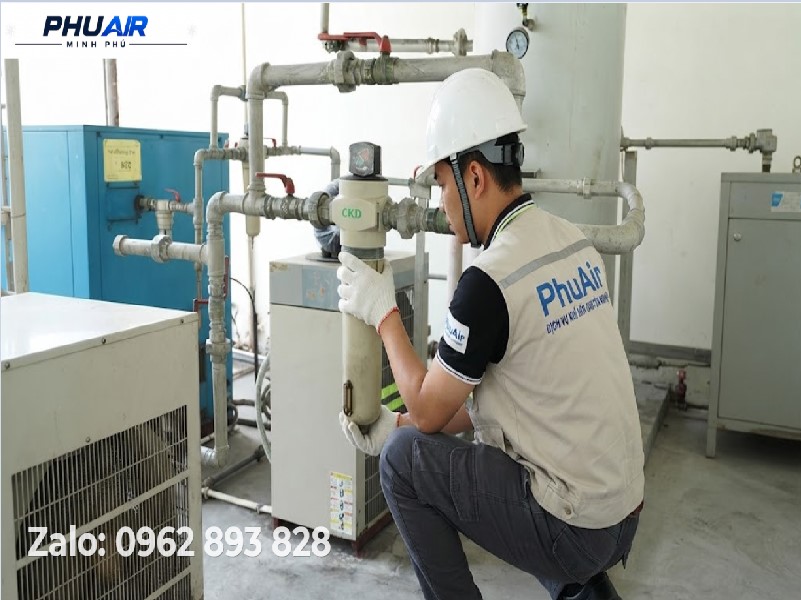
A sound diagnostic procedure should proceed from causes that are easy to inspect to those requiring more extensive intervention.
Step 1: Confirm That the Machine Is Actually Consuming Excessive Oil
Record the oil level under the inspection conditions specified by the manufacturer.
Do not assess the situation based on a single observation.
Monitor the oil level over a sufficient period of operation to establish a trend.
Step 2: Check for External Oil Leaks
Inspect the entire oil reservoir area, oil lines, fittings, mating surfaces, gaskets, and sealing points.
If oil is present on the outside of the machine, identify the point where the leak originates, rather than addressing only the location where oil is dripping.
Step 3: Check for Signs of Oil Carryover into the Compressed Air
If the outside of the machine is dry but the oil level continues to drop, investigate the possibility that oil is being carried along with the compressed air.
In particular, inspect the downstream piping and equipment when there are signs of oil entering the compressed air system.
Step 4: Inspect the Oil Separator and Oil Return Line
Check the condition of the oil separator, its replacement history, and any monitoring parameters available on the specific model.
Then inspect the oil return line and related components in accordance with the machine's technical documentation.
Step 5: Check the Oil and Oil Filter
Verify the oil type, oil change history, oil condition, and oil filter condition.
If the machine has recently undergone maintenance, pay particular attention to the oil type, oil quantity, and any areas that were dismantled or reassembled.
Step 6: Check Operating Conditions
Review load-running time, air demand, ambient temperature, compressor room ventilation, and alarm history.
If excessive oil consumption occurs alongside high temperature, assess both the cooling system and the oil. PhuAir notes that operating temperature may be affected by oil level, oil quality, the oil filter, and cooling conditions.
What Should You Avoid When an Air Compressor Consumes Excessive Oil?
Do not keep adding oil simply because the level is low. If oil is leaking or being carried into the compressed air, topping it up only addresses the symptom.
Do not replace the oil separator immediately without inspection. Excessive oil consumption may be related to several parts of the system.
Do not change oil types or mix different oils without authorization. Compatibility with the specific machine model must be confirmed.
Do not dismantle oil lines or the oil separator while the machine is still pressurized or at a high temperature.
Before conducting an in-depth inspection, stop the machine, isolate its energy sources, release residual pressure to a safe level, and allow hot components to cool according to the equipment's safety procedures.
4. Quick Diagnostic Table for Excessive Oil Consumption in Screw Air Compressors
Symptom | Priority Inspection Areas |
|---|---|
Oil visible on the outside of the machine | Oil lines, fittings, gaskets, seals, and mating surfaces |
Machine is dry externally, but oil is present in the compressed air | Oil separator, oil return line, and compressed air system |
Excessive oil consumption after maintenance | Oil type, oil quantity, assembly procedures, and sealing condition |
Excessive oil consumption accompanied by high temperature | Oil, oil filter, cooling system, and compressor room conditions |
Excessive oil consumption persists after oil separation issues have been addressed | Oil return line, operating conditions, and compressor element diagnosis |
Abnormally low oil level | First verify the oil level measurement procedure, then investigate the cause of oil loss |
5. Frequently Asked Questions: Excessive Oil Consumption in Screw Air Compressors
Is Excessive Oil Consumption Caused by the Oil Separator?
It is possible, but excessive oil consumption alone is not enough to establish the cause. External oil leaks, the oil separator, oil return line, oil, oil filter, and operating conditions should all be checked.
Why Does the Machine Consume Oil Even Though There Are No External Oil Leaks?
One possibility to investigate is oil carryover into the compressed air. In this case, inspect the oil separator, oil return line, and relevant operating conditions.
Should the Oil Separator Be Replaced Immediately When the Machine Consumes Excessive Oil?
Do not replace it based on an assumption. Verify the actual condition of the oil separator and investigate related causes before deciding whether replacement is necessary.
Can Adding Oil Resolve Excessive Oil Consumption?
No. Adding oil only replenishes what has been lost. If the underlying cause is an oil leak, oil carryover into the compressed air, or a problem with the oil system, the root cause will remain.
Is Degraded Compressor Oil Related to Excessive Oil Consumption?
Degraded oil can affect the system's protection, sealing, and temperature control performance. Therefore, check the oil type, service life, maintenance history, and operating conditions when the machine exhibits abnormal symptoms.
6. Conclusion
Excessive oil consumption in a screw air compressor should not automatically be diagnosed as an oil separator failure.
The correct approach is to determine how the oil is being lost: through external leakage, carryover into the compressed air, or issues related to the oil system and operating conditions.
Only then should the oil separator, oil return line, oil, oil filter, and related components be inspected systematically. If the available evidence is insufficient, do not rush to replace parts or conclude that the compressor element has failed.
If diagnostic support is required, provide the machine model and serial number, a photo of the controller display, the oil level condition, oil and oil separator replacement history, and photographs of suspected leak locations. PhuAir can use this information to help determine an appropriate inspection approach for the specific machine model.
PhuAir – Air Compressor Diagnostic Supportoán đúng nguyên nhân trước khi thay phụ tùng.